
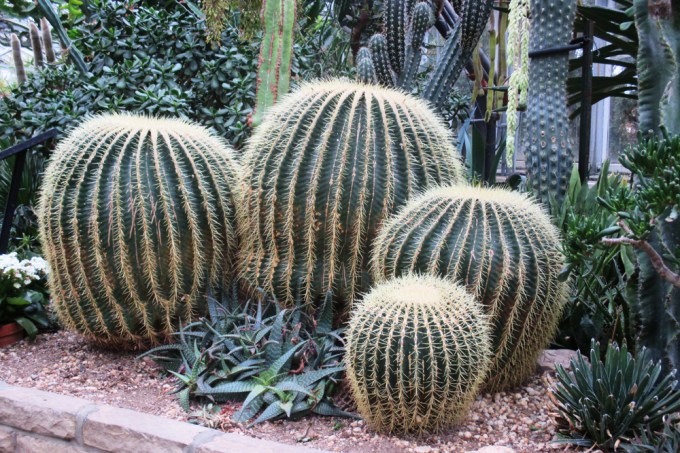
The wonderful thing about Allan Gardens Conservatory is you can be satisfied and invigorated by visiting for just 15 minutes or by spending as long as 45. Take a quick walk through the entire complex to enjoy the colours, fragrance and humid air, or, leisurely stroll the meandering pathways, examining the large and sometimes tiny specimens, many of them exotics (for Ontario), all of them meticulously cared for. The city horticulturalists pack hundreds of species into the half dozen greenhouses; some seem to have been there forever and some are obviously seasonal. Here are a few of my favourites from the permanent collection and the current Spring Blooms installation.
From the spring show – lots of Muscari, Narcissus, Hyacinth and Tulips, plus the occasional surprise, like Winter Aconite.


Also in bloom is Agapanthus – I’ve heard it being called a weed in more tropical parts of the world but here, not so much! I love the blue flowers. And this variegated Brugmansia is quite spectacular.


Surprising for me was this patch of kale, left to flower – the yellow flowers are really quite beautiful when massed like this – and the lemon tree! I wonder if the staff enjoy G&T’s after closing time…


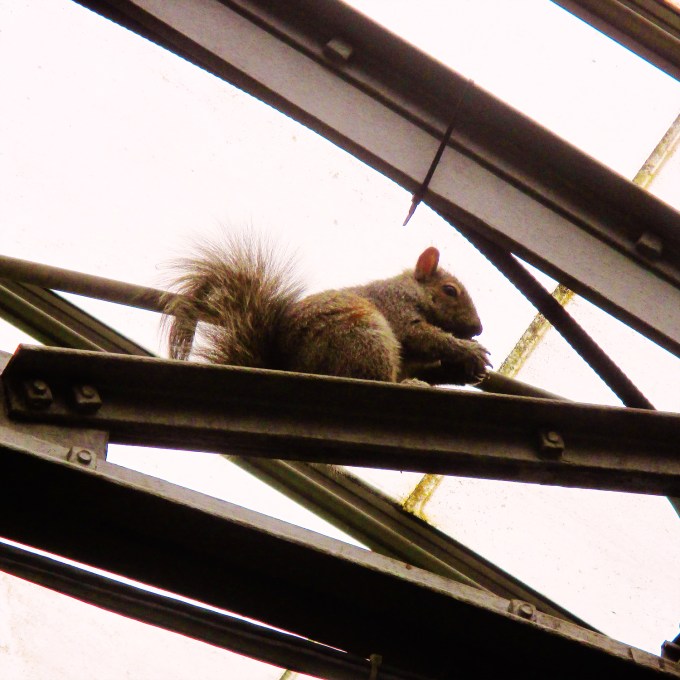
Seen in the metal roof struts; I wonder what he’s found to chomp on…
 County Gardening
A conservatory visit is a must this time of year. We visited our local bulb show on Friday – very well attended! Made for a short visit. 😉
LikeLike
Yes, sometimes everyone has the same idea at the same time!
LikeLiked by 1 person
Can’t blame ’em!
LikeLiked by 1 person
Beautiful post! Thank you for sharing!
LikeLike
Thank you very much!
LikeLiked by 1 person
Agapanthus is a very common and ‘cheap’ perennial, but I would not say that it is a weed. It is very reliable and easy to grow. Those who dislike it need not plant it. It does not spread.
LikeLike
Apparently it does (via seed) in New Zealand and Australia, where in some communities it’s listed as a noxious weed. Hard for us northerners to imagine!
LikeLiked by 1 person
Well, not so far fetched. They also have a problem with various specie of yucca there too. I can not imagine yucca of any specie being invasive, especially without their natural pollinators. They are not invasive here near where they are native, with plenty of their pollinators.
LikeLiked by 1 person