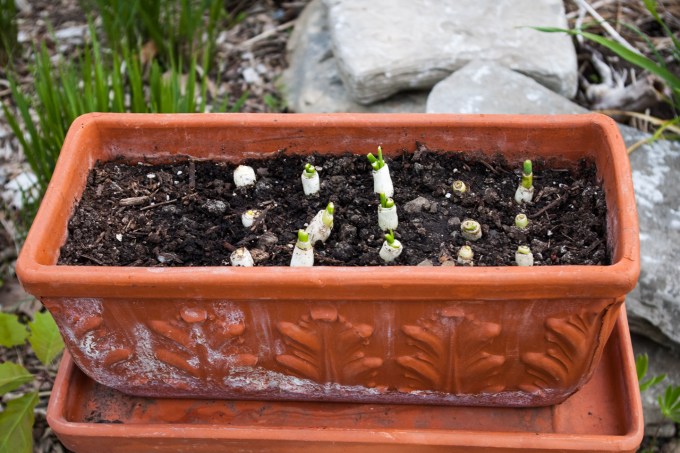
While visiting my neighbour, John, last summer, I noticed, in his kitchen, a saucer on the window sill. In it was a bit of water and a few green onion nubs – you know, the white tips with tiny shriveled root stubs. You generally just throw these in the compost because you sure don’t want to be adding them to a salad!
When I asked about them, John said he plants them. They grow new leaves. Saves a few dollars. Small bunches of green onions – sometimes called scallions – cost between 49 and 99 cents hereabouts, depending on season and store. Ever eager to justify spending $2 for a cup of coffee by saving money elsewhere, I thought I’d give it a try. Last year I planted just a few in a small raised bed I have by the back door, and they grew!
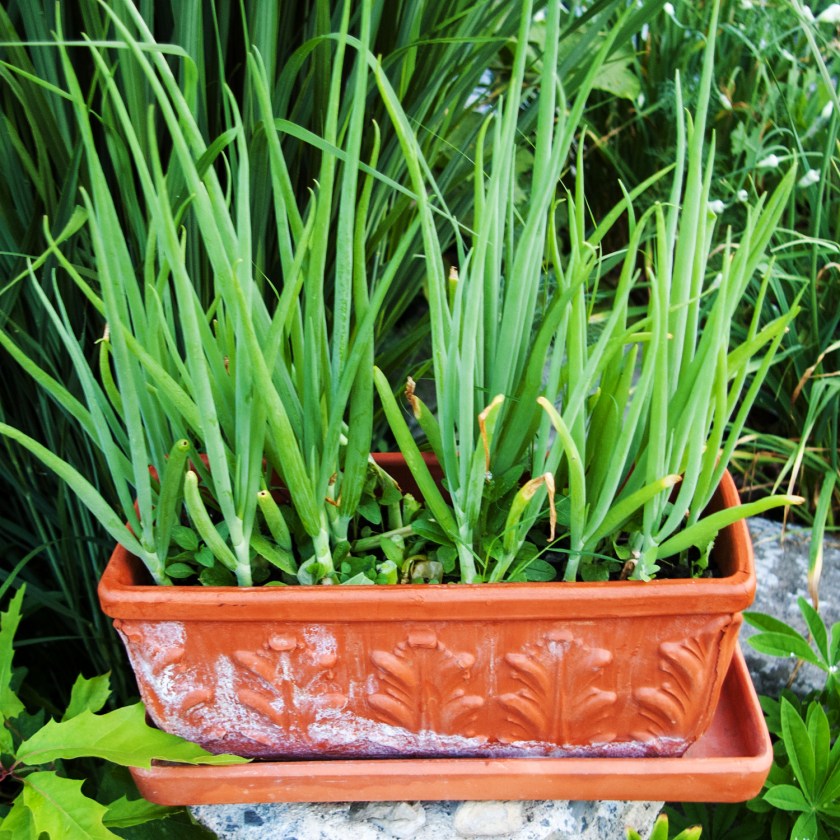
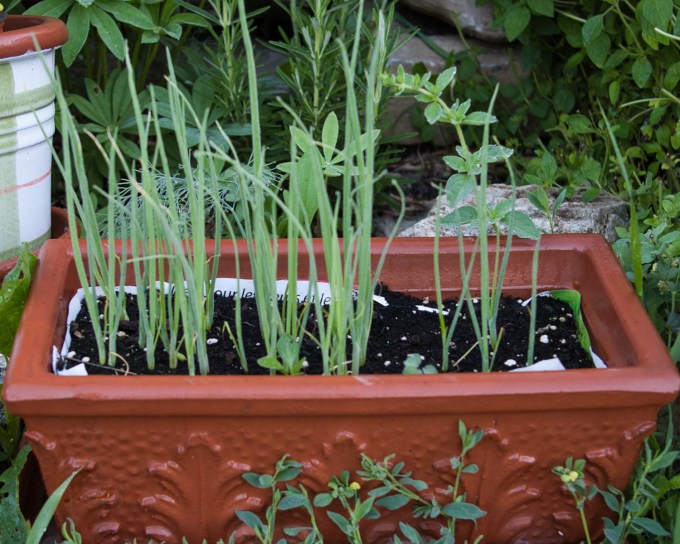
I was more ambitious this year – at the end of May I started planting out green onion tips in a clay trough, and, last weekend, we started eating them.
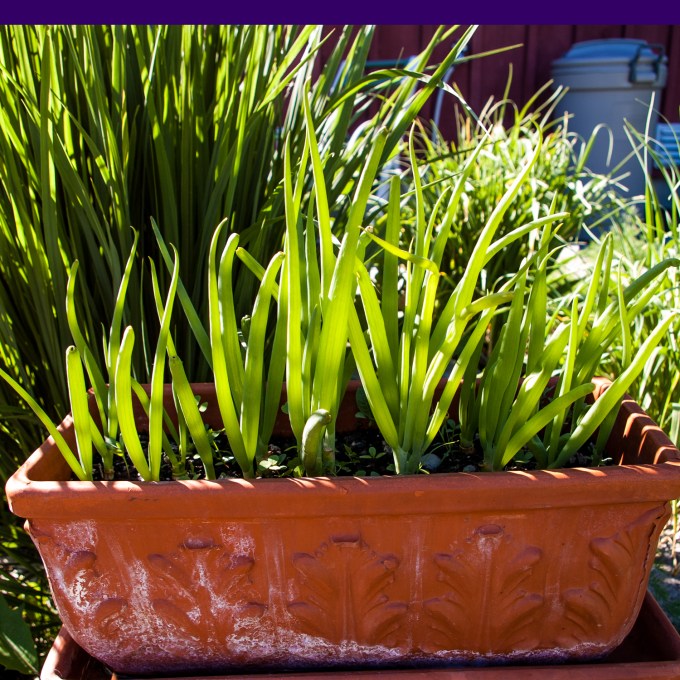
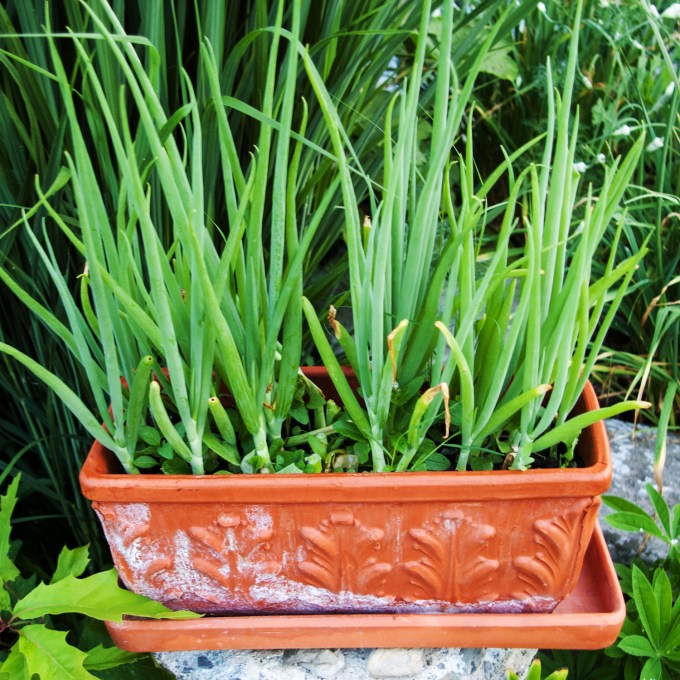
When I harvested the first two onions I didn’t pull them out of the pot, like you might normally if planted in a garden row. I just cut off the tops, leaving a half inch or so in the soil, so that they can continue to grow leaves throughout the summer and fall.
Benefits of this project: I’m saving a small bit of cash by not buying them at the grocery store; by being in a raised container they’re easier to harvest than if they were planted n the ground; I can bring the whole thing indoors to a sunny window and have fresh, free onions all winter; it’s a fun project for kids (of all ages!). It’s like having re-usable salad greens and perfect for small gardens, patios or balconies.
Drawbacks: Some people, I’m told, really like the more intense flavour that the whites of green onions have – the closer to the root nub the better. For this project, I find it’s better to leave some of that white part attached to the root nub. The biggest drawback, for me, is that the leaves of these regenerated green onions don’t seem to be as tender as those grown from seed or purchased fresh in the store. So to use in a salad they need to be chopped more finely. They’re perfect for soups or stews though.
 County Gardening
Great idea. I usually get rid of the root ends, never thought of replanting them.
LikeLiked by 1 person
I used to as well — I’m going to bring in one of these pots this winter to see how long they’ll last…
LikeLiked by 1 person
That is impressive grown for a planter box. I would not have grown them in confinement because I would not have wanted to water them so regularly.
LikeLike
I lined the clay with plastic in an attempt to slow down the natural evaporation/wicking. Seems to work…
LikeLiked by 1 person