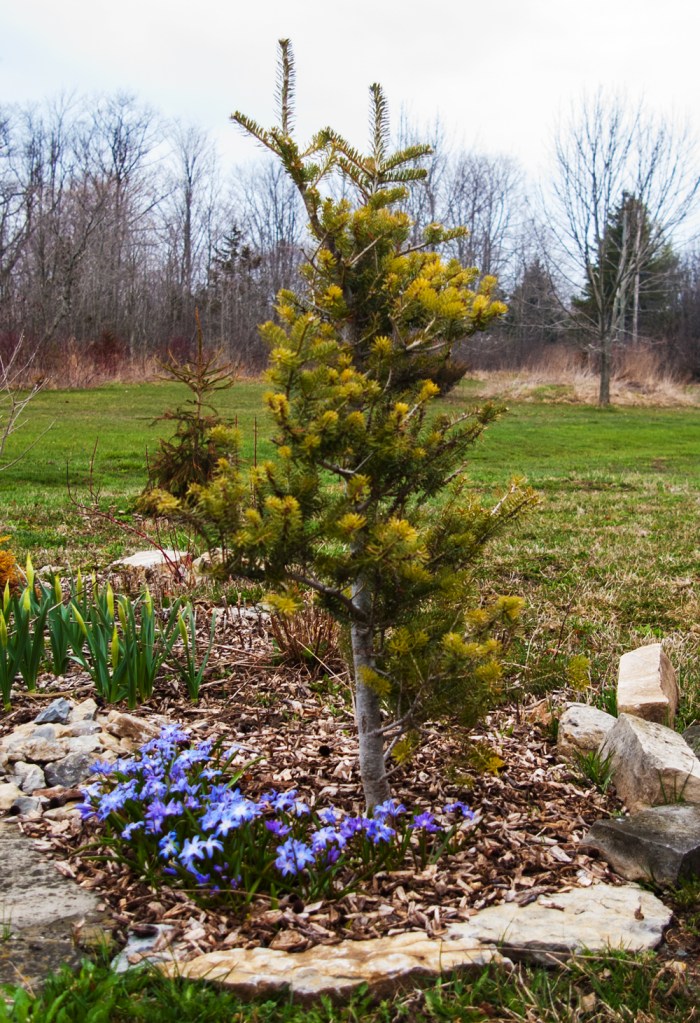
In the fall of 2017 I purchased a three gallon potted Korean Fir – Abies Koreana ‘Glauca.’ At the time, I didn’t know this variety was a compact version of the mighty fir tree; I was expecting it to slowly grow into a lovely tall conifer we could admire from a distance. When I realized it would forever stay quite small, I decided to plant it near the house. I also didn’t know it would be so root-bound I had to, after washing off all the growing medium, untangle and cut away more than half the root mass. It survived its first winter, and, the following spring, looked like this:
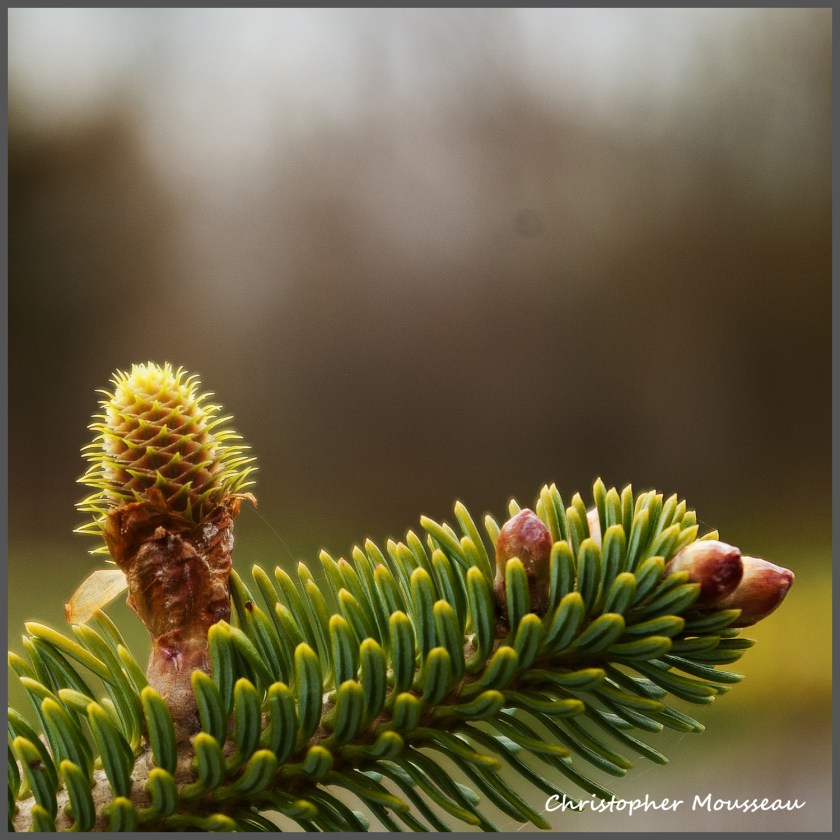
The Canadian Wildlife Federation describes the fir cone like this: “On Fir trees, both male pollen cones and female seed cones are on the same tree near the top, with mature cones standing upright on the branch. When the seeds and scales have fallen away, usually in the year that they ripen, their axe (the stem-like part they were attached to) remains — fir trees are the only evergreens in which this happens.”
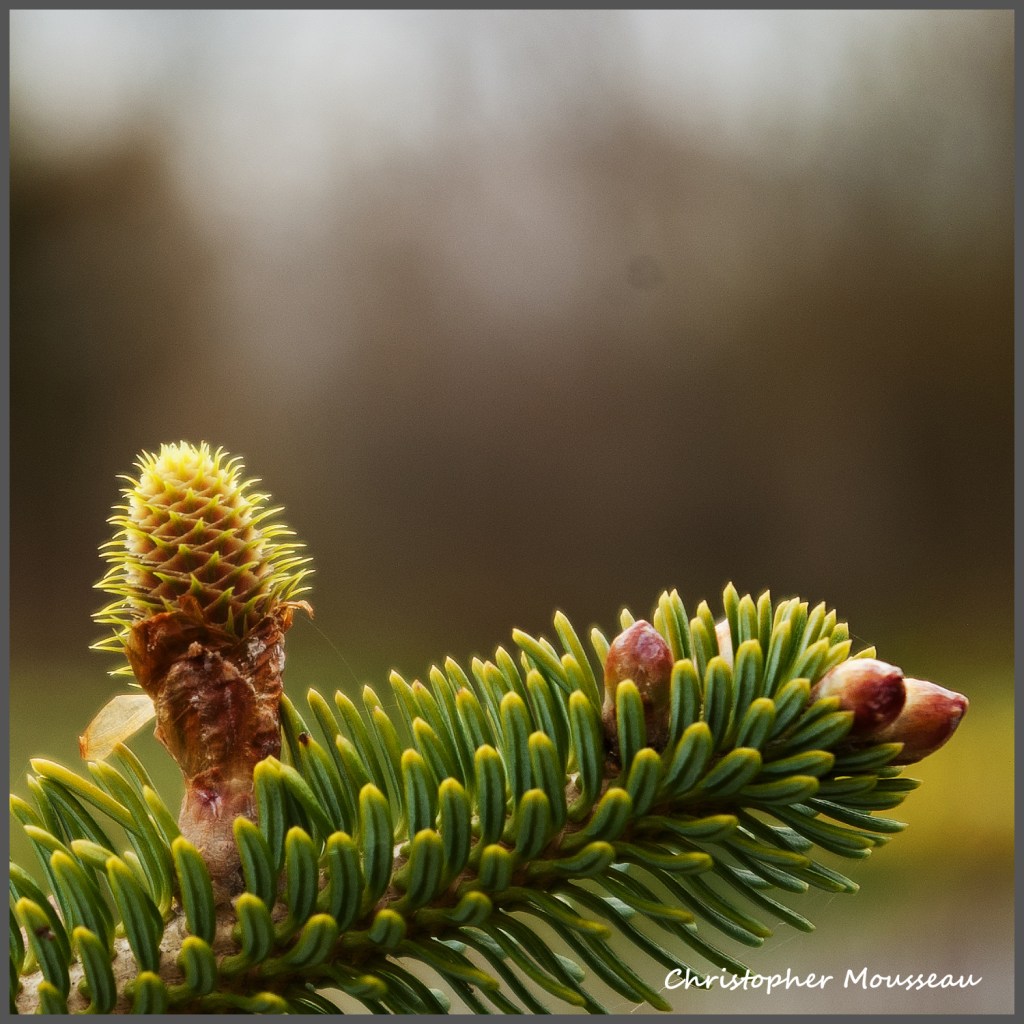
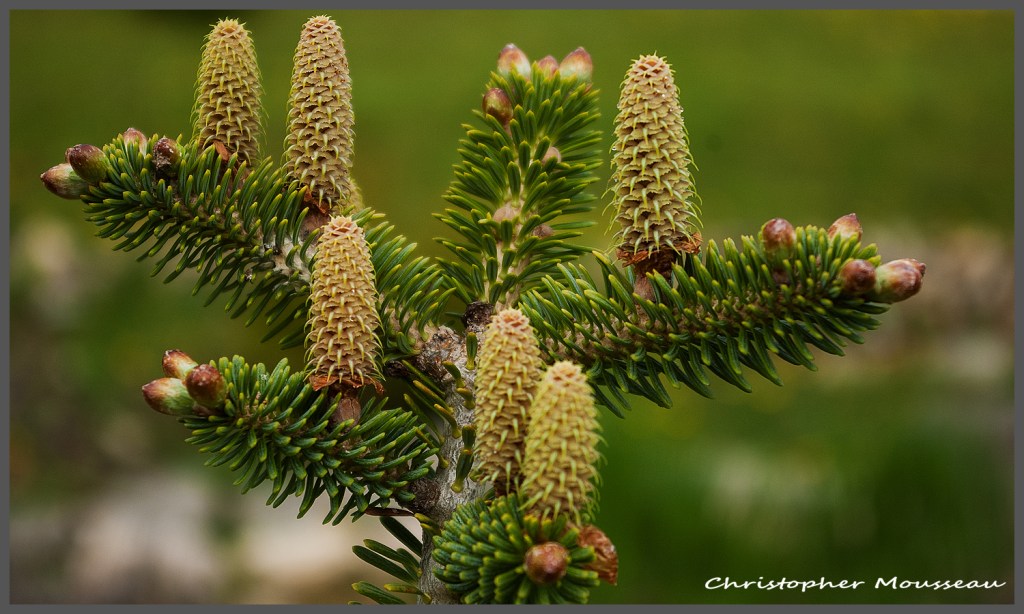
Even though my little fir doesn’t look that great – a bit chlorotic, dying needles, weird branching structure, it sent up a dozen or so cones last year. I think the cones are really attractive – the purple and bright green so different from pine or spruce cones. And they start out so delicate looking, very soft to the touch.
Here is their life journey, in pictures.
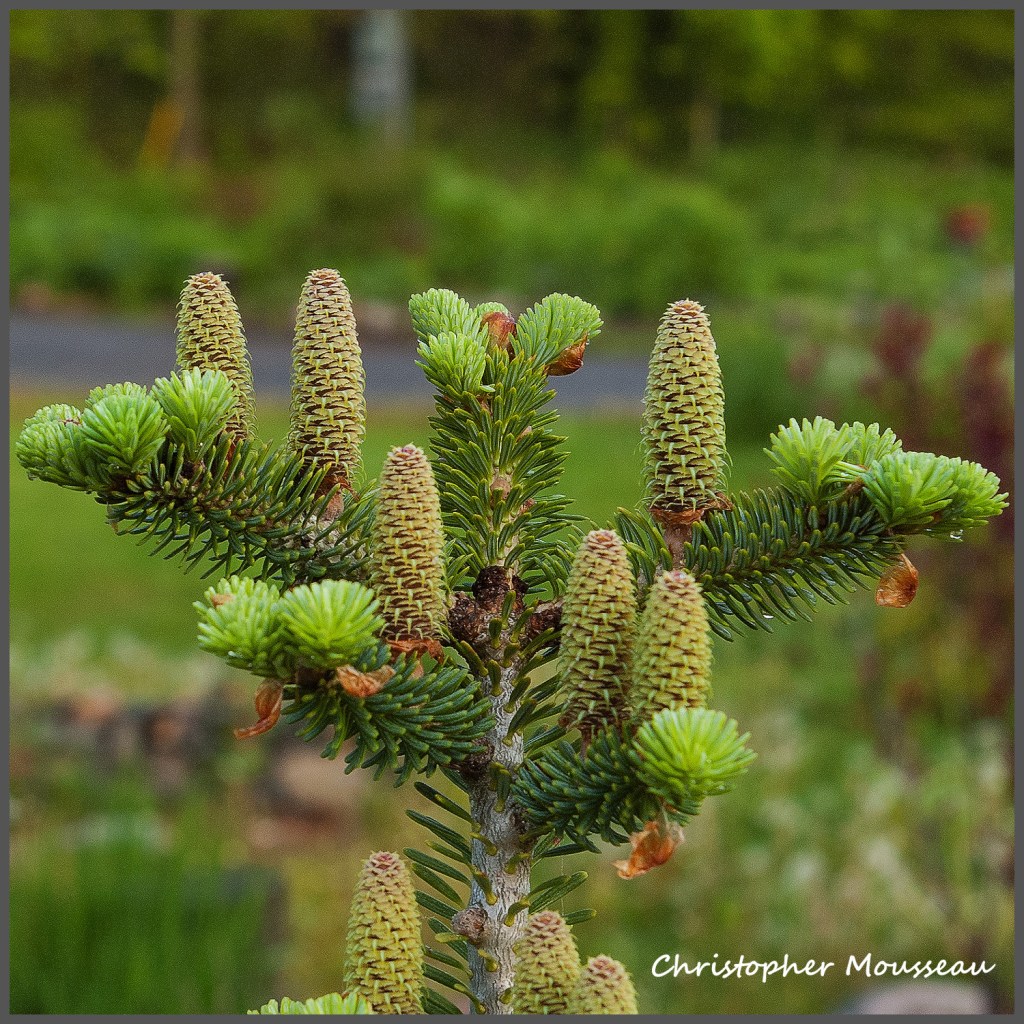
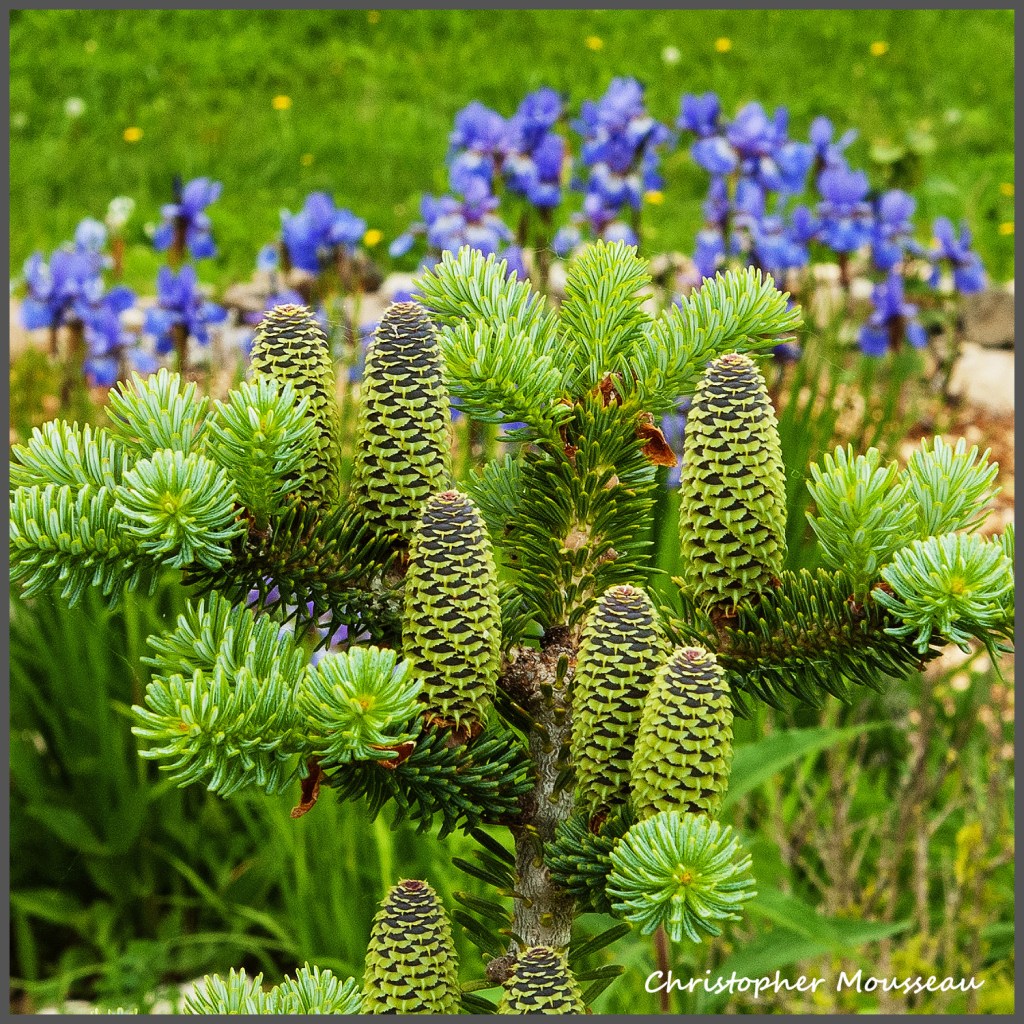
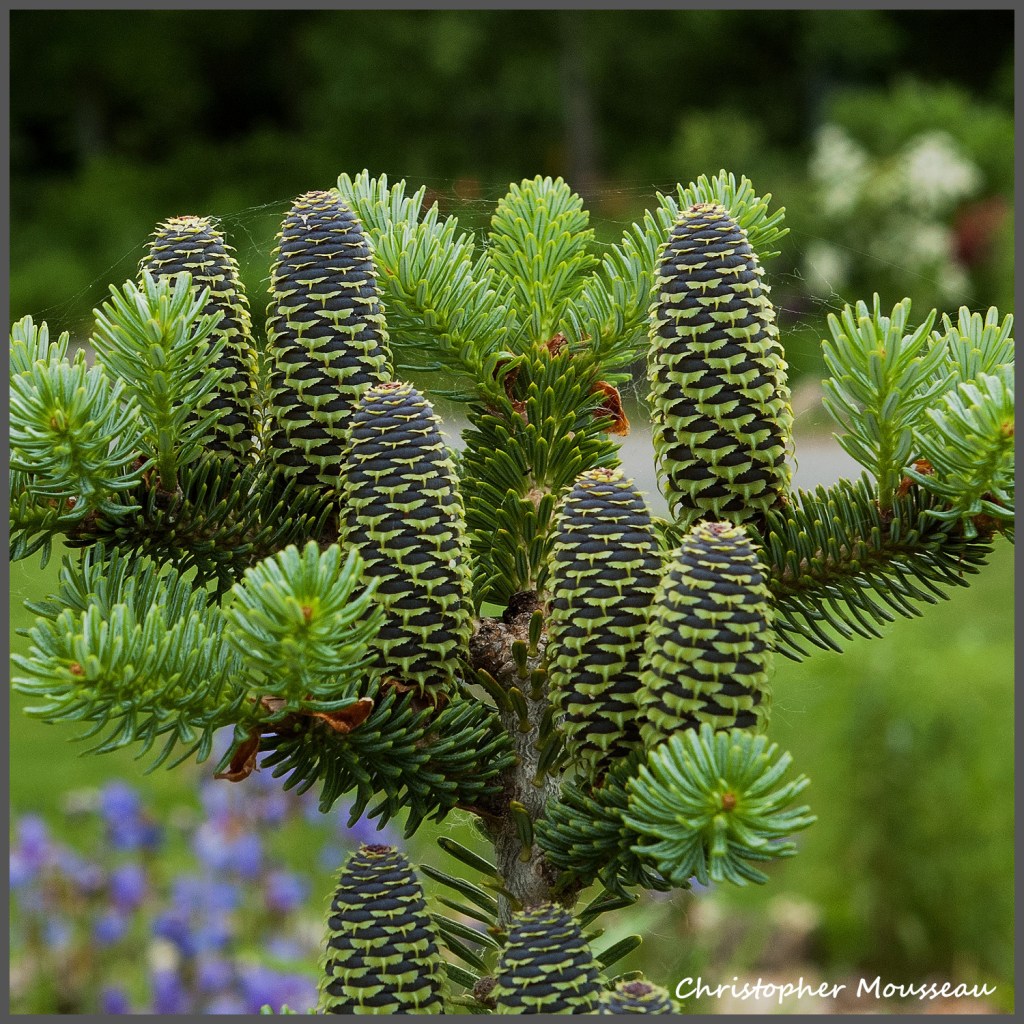
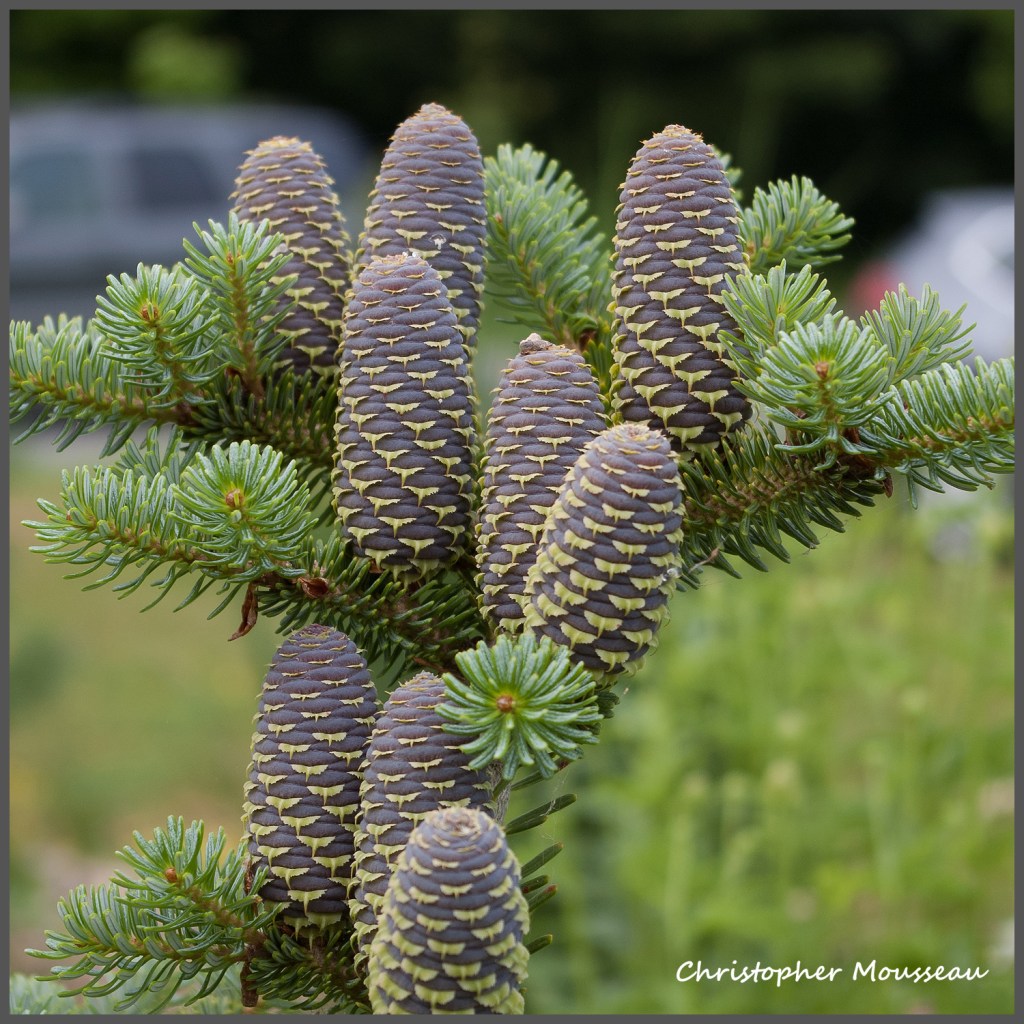
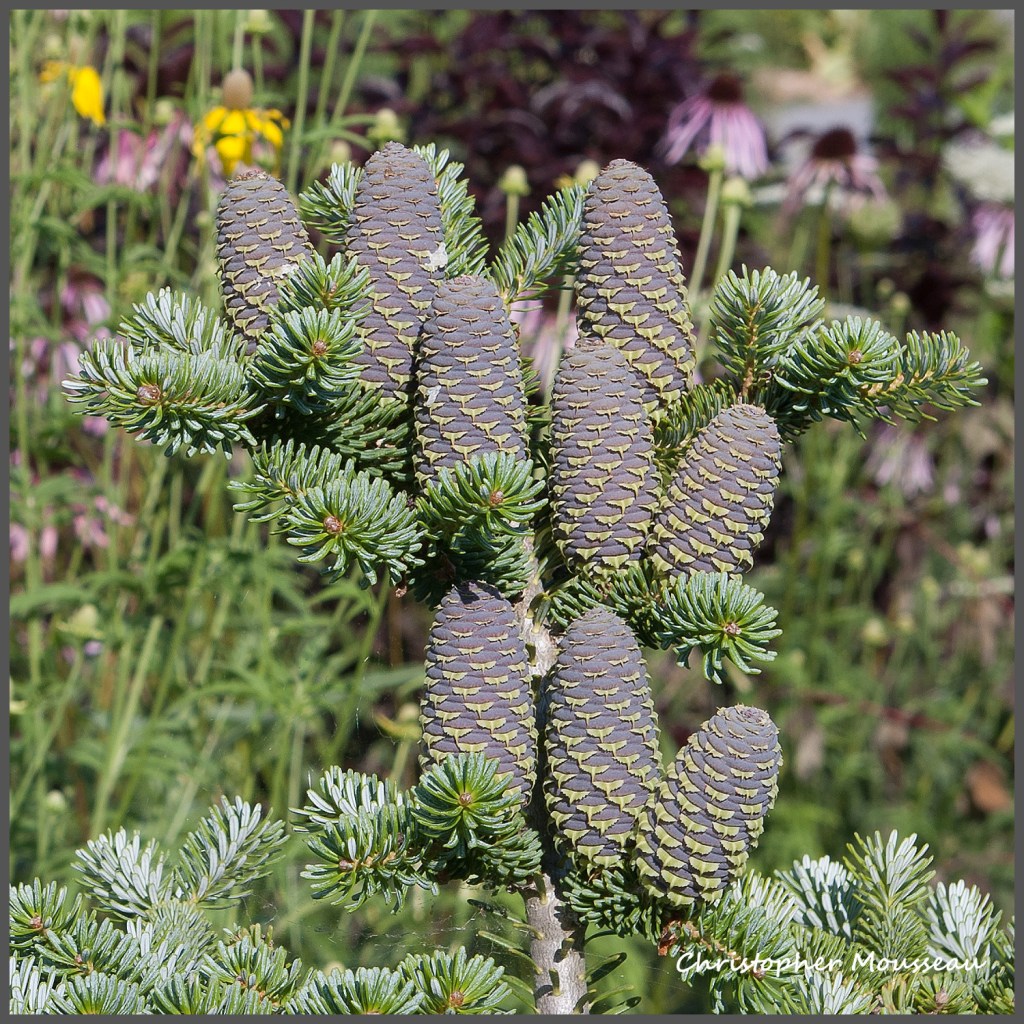
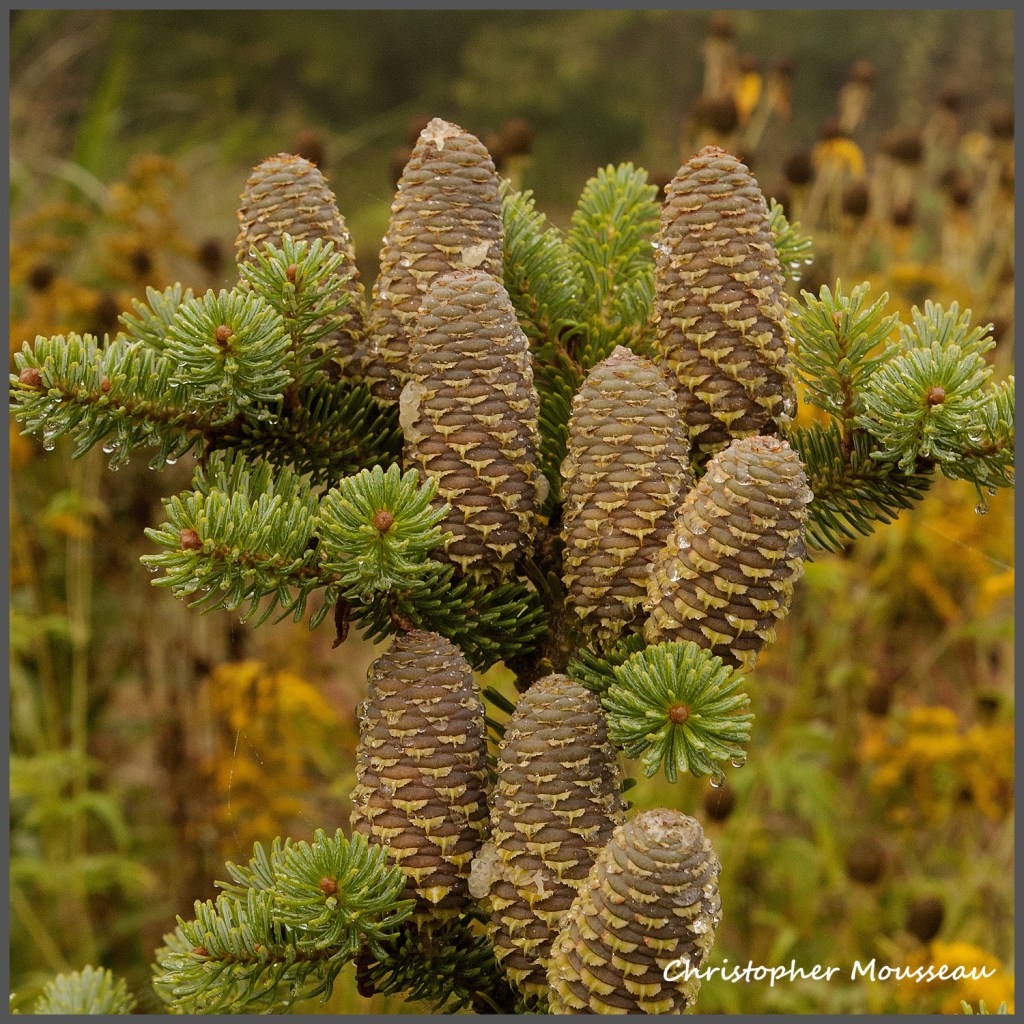
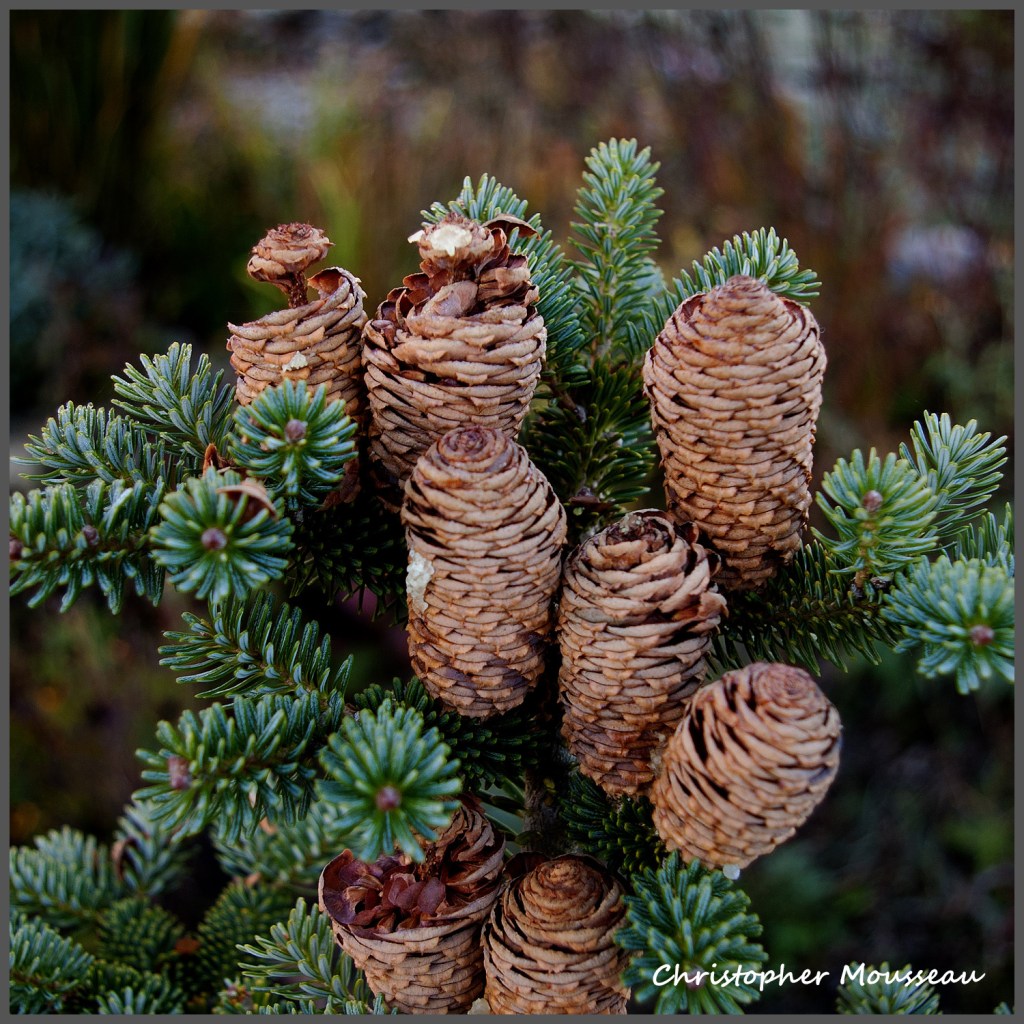
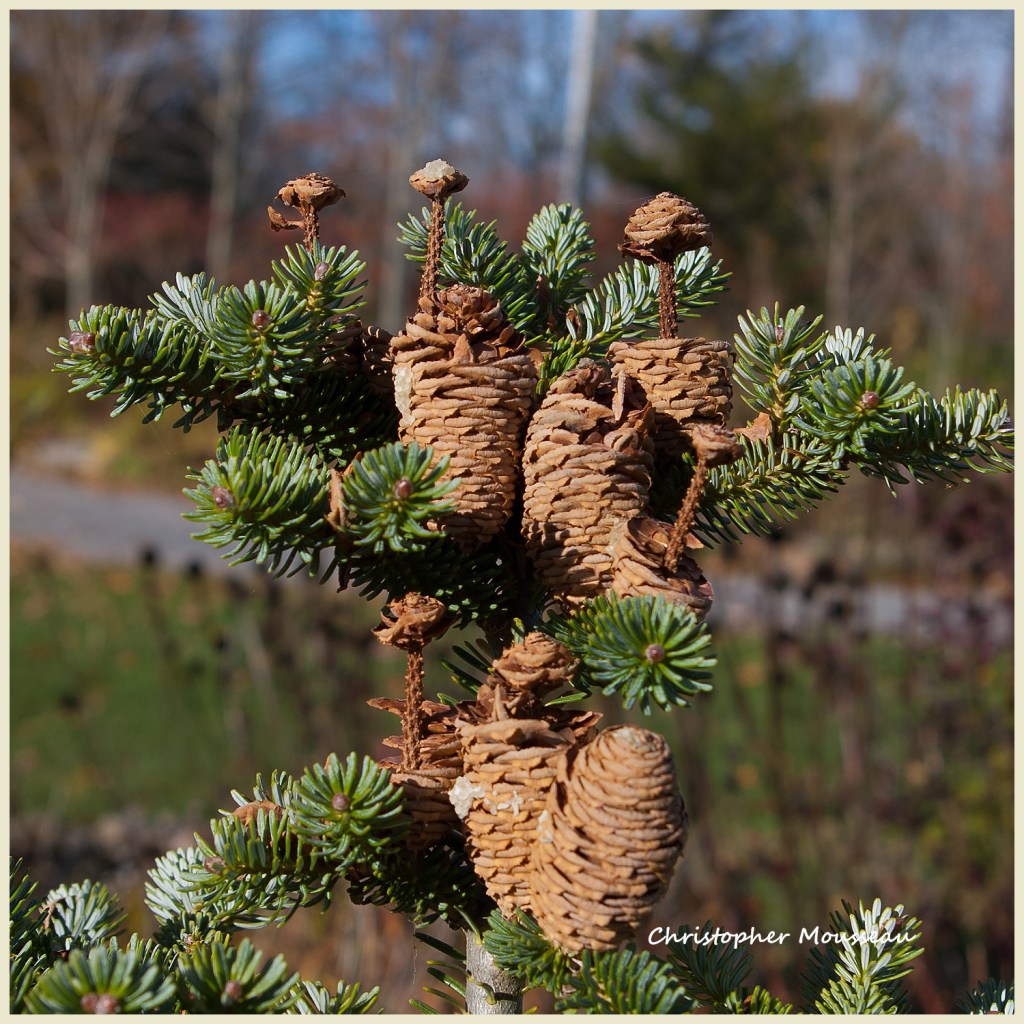
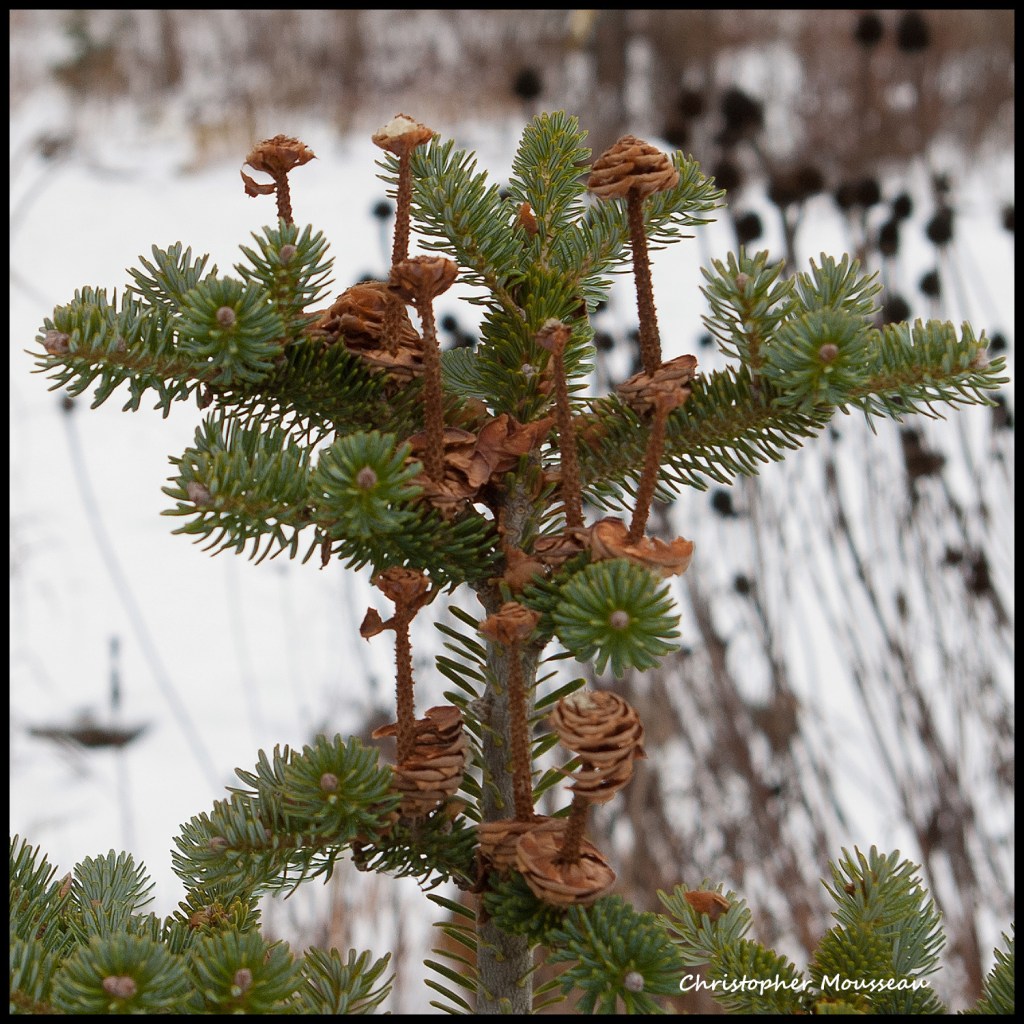
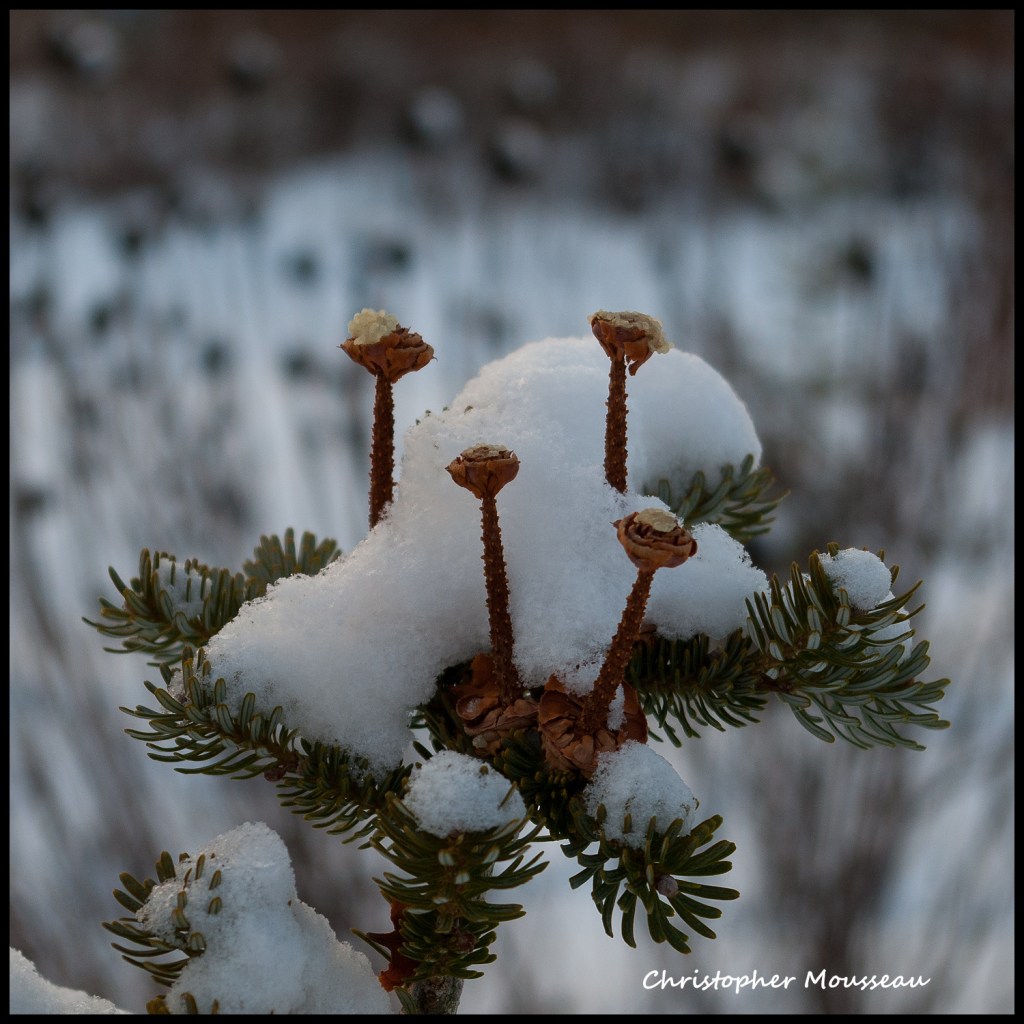
When I was researching the Korean Fir tree, I came across this scientific article. It describes experiments a group of scientists conducted in 2017 to determine if heat stress due to climate change may be responsible for a recent fir tree die back in the mountainous regions of South Korea, where they are native. The article’s synpsis says, in part, “Many studies suggested that forest decline phenomenon seems to be strongly associated to air pollution and global warming.”
Although global warming is undoubtedly affecting, well, the globe, I hope my little tree is able to grow strong roots and establish itself here in Prince Edward County. I’m looking forward to seeing how it survives this winter, and if any new cones will emerge.
 County Gardening
That is an impressive collection of pictures to show the process. I would not have had the patience to follow it through.
LikeLiked by 1 person
Thanks Tony – it was fun to follow the cones’ development.
LikeLiked by 1 person
Nice study, Chris. It is a handsome little tree… may it live long and prosper!
LikeLiked by 1 person
😄😄🌲
LikeLiked by 1 person
Beautiful.
LikeLiked by 1 person
Thank you!
LikeLike
Your creativity, foresight, passion and knowledge shines through every photo
LikeLiked by 1 person
Outstanding series of Abies koreana photos, thank you.
LikeLiked by 1 person
Thank you!
LikeLike
I planted my Korean Fir about 7 years ago. Last year it produced 4 cones. This year it has at least a hundred. I’m really pleased. The thing is they are bright red.. You’re photos are really good and clearly show the changing colour cycle of the cones. I love that you’ve left the core of the cones on the branches for winter interest. Some advise removing spent cones but I want to keep them. Thanks.
LikeLiked by 2 people
Thanks so much Annette, and it sounds like your tree is doing well!!
LikeLike
Excellent snapshot report on the expansion of the cones! congrats
LikeLiked by 1 person
Thank you!
LikeLike
I have three Cohen’s last year but I’ve had none in 2022-23 fall winter and spring. How often will these trees produce cones?
LikeLike
Generally every two years. It may have little buds this year that will develop onto cones next year.
LikeLike