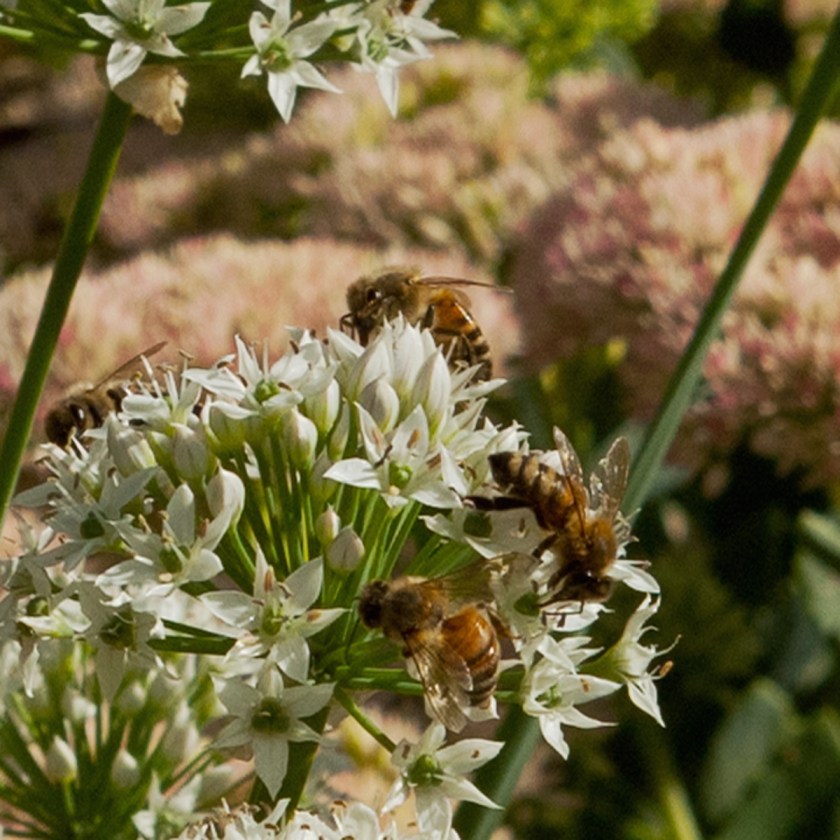
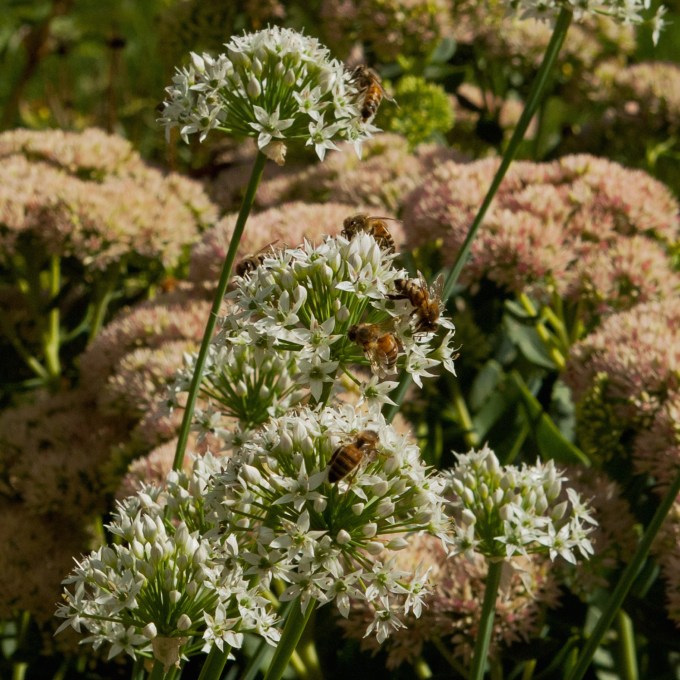
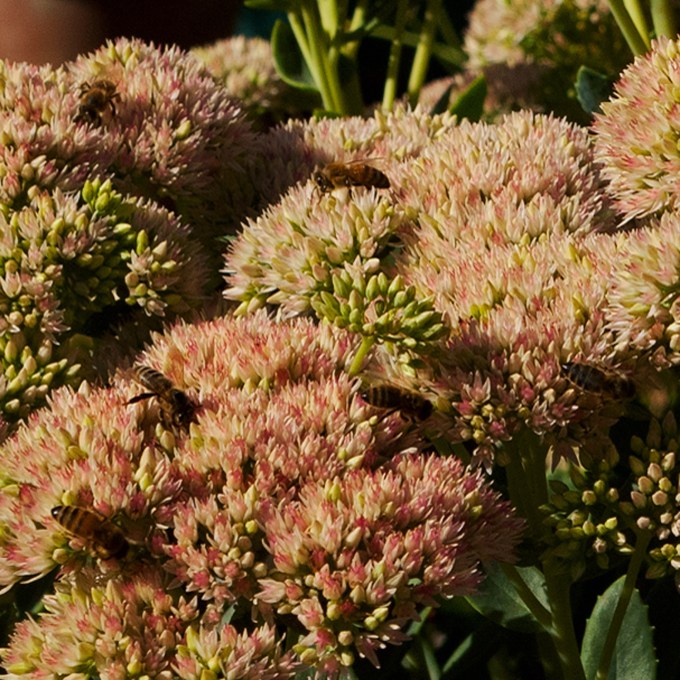
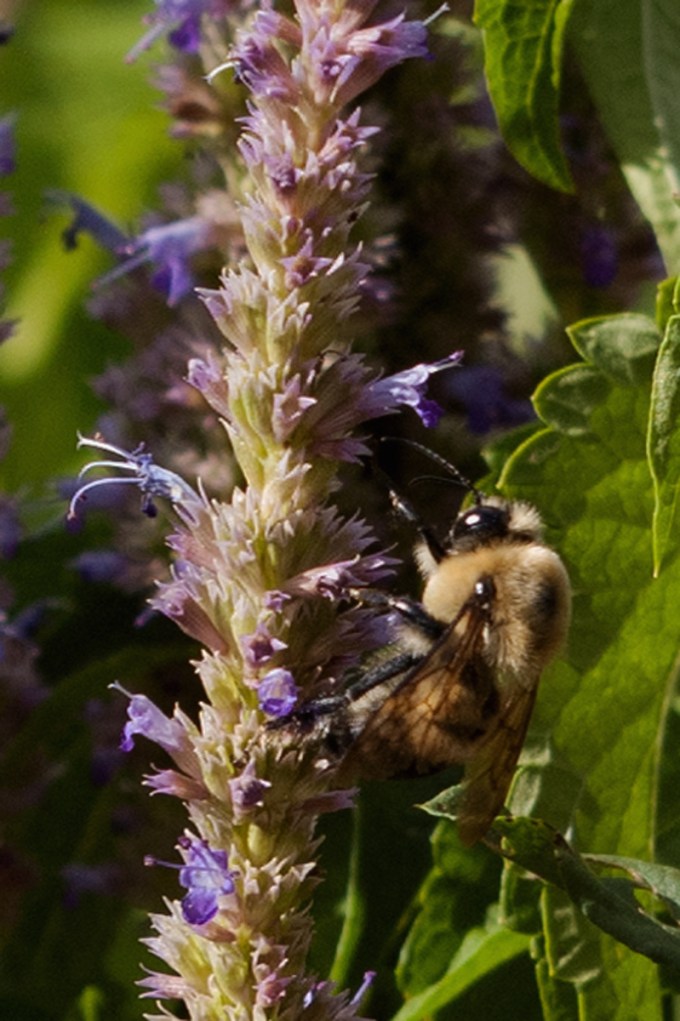
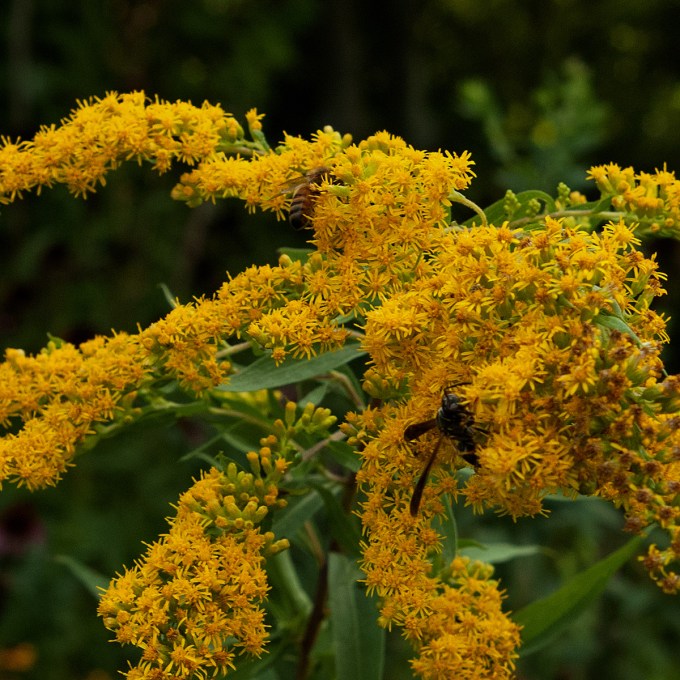
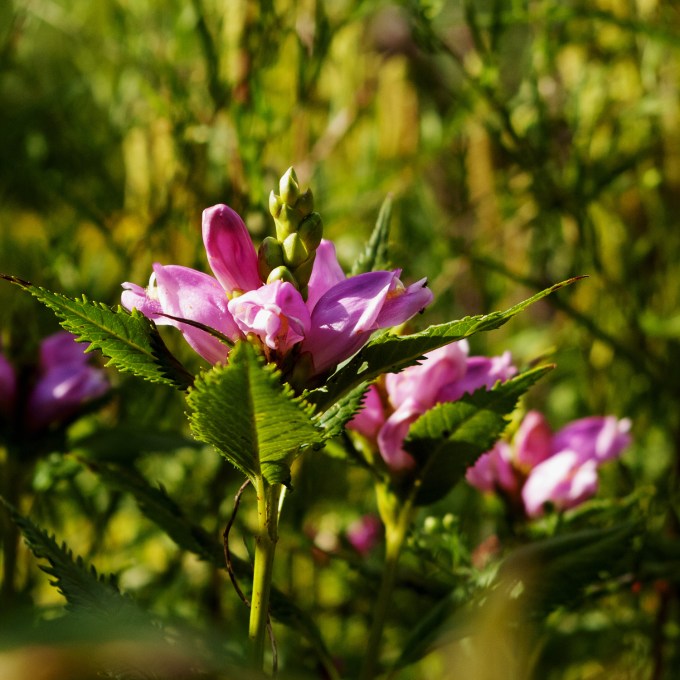
When choosing perennials and annuals for my garden, I always try to select species that will help feed bees and other pollinators by providing easily accessible pollen or nectar. I don’t bother with the real fancy zinnias, for example, with their multi petaled flower heads that make it difficult for bees and butterflies to penetrate. Nor with pollenless sunflowers – even though they produce a far more desirable cutting flower. Late summer is the height of pollinator season – bumble bees, honey bees, butterflies and moths – all are exceedingly busy, usually during warm afternoons, trying to tease all the pollen they can possibly find on these blooms. Here are six of my top pollinator plants this year.
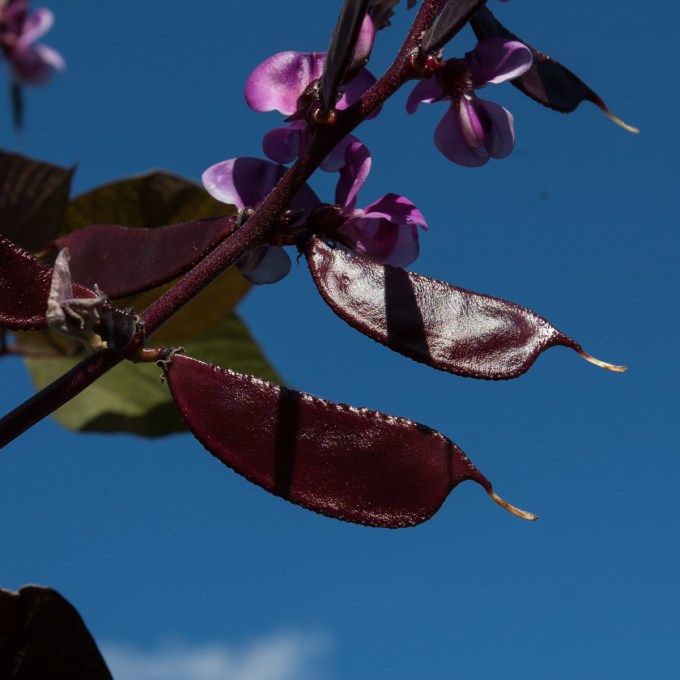
Finally, and once again, Lablab purpureas – Hyacinth Bean Vine. I’m loving this vine so much, and want to share two more characteristics. First, it’s devastatingly deep purple seed pod, whch quickly develops even before the flower has disappeared. Second, how strong the vine it – it pulled down part of the tutoir is was growing on. If you grow this annual vine, make sure the trellis is strong and tall! Oh, and not only does it attract bees, I spotted hummingbirds buzzing all over them yesterday evening. Must be a lot of nectar in the flowers!
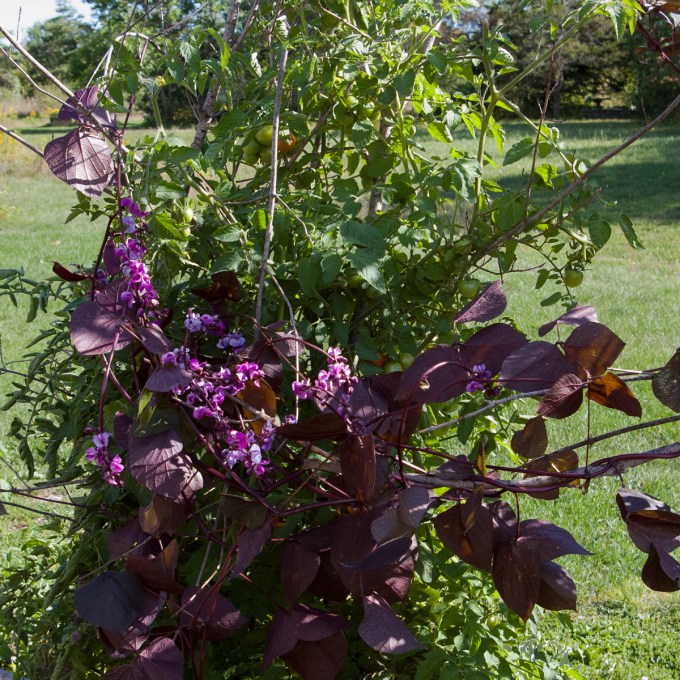
I hope everyone gets to enjoy what’s going to be here a gorgeous late summer weekend. Stay safe, and, if it’s perhaps a bit rainy and you’d like to stay indoors, gawking over Six things in gardens all over the world, click on this link to The Propagator’s site.
 County Gardening
You surely do have some busy bees — and beautiful goldenrod. I’m going to make myself get out and about this weekend, despite the heat. It’s been so oppressive, but it seems it may stay below the century mark today and tomorrow, so it’s time to check on our goldenrod.
LikeLiked by 1 person
The summer heat and humidity seems to have gone for the year up here. Famous last words, though..Great sleeping temps!
LikeLike
Sunny day here too! Maybe some re-potting to do this afternoon. Your Hyacinth Bean Vine is such a sumptuous colour!
LikeLiked by 1 person
It’s amazing….I have a friend who makes clothes, dying her own material…I wonder if the bean’s colour can be extracted…
LikeLike
Could be fun to try!
LikeLiked by 1 person
I am glad to see so many honeybees. They are a rarity here, although I have a lot of bumblers amd solitary bees.
LikeLiked by 1 person
It helps that there are hives kept at the back of my property AND on the neighbour’s property as well!
LikeLiked by 1 person
Aha! I doubt that any of my neighbours would be up for bee keeping!
LikeLiked by 1 person
😆🐝
LikeLiked by 1 person
Have you tried eating purple beans? I had last year. But you have to choose young pods otherwise you will have strings … Beautiful photos, and I didn’t know the Chelone
LikeLiked by 1 person
Thanks Fred – this warning set me off trying to eat them: “The fruit and beans are edible if boiled well with several changes of the water.[17] Otherwise, they are toxic due to the presence of cyanogenic glycosides, glycosides that are converted to hydrogen cyanide when consume”
LikeLiked by 1 person
Good to know. I cooked them in the pressure cooker and yes the residual water was purple.
LikeLiked by 1 person
tee hee
LABLAB
Since you mentioned it, that is a silly name.
LikeLiked by 1 person
😆
LikeLiked by 1 person
Love seeing all these happy bees, Chris. You’ve created an oasis for them. Also, your goldenrod is in full bloom while I await mine…
LikeLiked by 1 person
Thank you! I imagine our July/August heat spurs the goldenrod along eh?
LikeLiked by 1 person
The Lablab vine is really beautiful. I have not heard or seen it before so I am glad you featured it. Interesting to read the comments about eating/not eating the pods! I’m pleased to hear the Golden Rod attracts pollinators, as it is one of the plants on my ‘must have’ list! We successfully created our garden to attract pollinators and native birds, and seem to have succeeded judging from the variety of birds and insects that we have now.
LikeLiked by 1 person
Every year, as my garden grows and changes, I’m thrilled to see more and new wildlife. This year toads, frogs and a salamander showed up, and right now there seems to be a small flock of gorgeous (and noisy) blue-jays in residence in the woods surrounding us. Fearless, they are!
LikeLiked by 1 person
Sedum is spectacular at this time, Chris. I had it many years ago. Perhaps its time to get it back again.
LikeLiked by 1 person
I needed to transplant one that I’ve had in a pot all summer, into the garden. That meant getting outside this morning while it was still cold – ie before the bees ventured out. I now think I may have too many….
LikeLike