Why is it that when you’re on holiday, no matter how much you relax, or how much you cram into each day, come Friday it’s still hard to believe the whole week has gone by. It’s been like that for me this past week, but at least I was able to experience a few fabulous things: having lunch with friends on the patio of a restaurant in a neighbouring town; swimming in Lake Ontario for the first time in several years; lifting a pint with (different) friends on a (different) patio in a (different) neighbouring town; watching flowers bloom on plants grown from seed for the first time (Calendula and straw flowers); savouring a delicious home cooked gourmet meal. It’s so wonderful to be able to spend time with friends, sharing good food, again. It’s something I’m sure a lot of us will never take for granted anymore.
The garden’s abloom of course, and it’s time for Six on Saturday – when The Propagator encourages gardeners around the world to share six things that are happening in their garden. Here’s mine.
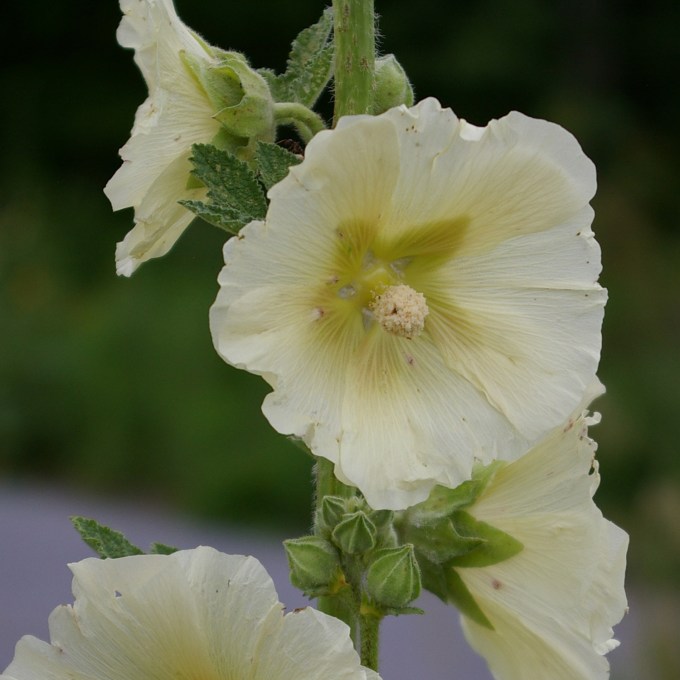
Hollyhocks are in full bloom; I’m happy to report that this year I’ve seen very little rust on the leaves. Here is the main colour palette in my yard:




I know that was six, but I have a bonus shot this week. We’ve had visitors this year whom we haven’t seen in many years. They’re shy, and don’t like dogs of course so that’s likely why they haven’t been near. I believe they’re the reason my King Tut ornamental grass was unceremoniously beheaded (every single stalk!) a month or so ago, and why, before that, the tips of my Fothergilla were all nipped off, leaving nothing to bloom this past spring. I know they can be quite destructive in many areas, and I’m possibly inviting disaster by just ooohing and aaahing, but I don’t mind, really, as long as they stay away from the artichokes! I spotted this one Thursday morning, she seemed to be nibbling on some dogwood leaves, and I took the shot through the window, Have a great week everyone!

 County Gardening
Beautiful post Chris! ~especially love the various hollyhocks and the Allium sphaerocephalon 🙂
LikeLiked by 1 person
Thank you! I’m so happy about the hollyhocks this year, last year I had to rip out so many.
LikeLiked by 1 person
I like the look of Allium cernuum. Has the look of Nectaroscordum siculum sold as Sicilian honey garlic but appears to have nice colours.
LikeLiked by 1 person
I just looked that one up and the form is very similar!
LikeLike
Very nice color palette of hollyhocks. I also liked this week in your six the drumstick allium. Mine are not yet flowered and you see….. you’ve caught up with me again!
LikeLiked by 1 person
Ha! I’m hoping to collect seeds and start more purposefully planting them to cover spots where daffodil leaves are now dying back.
LikeLiked by 1 person
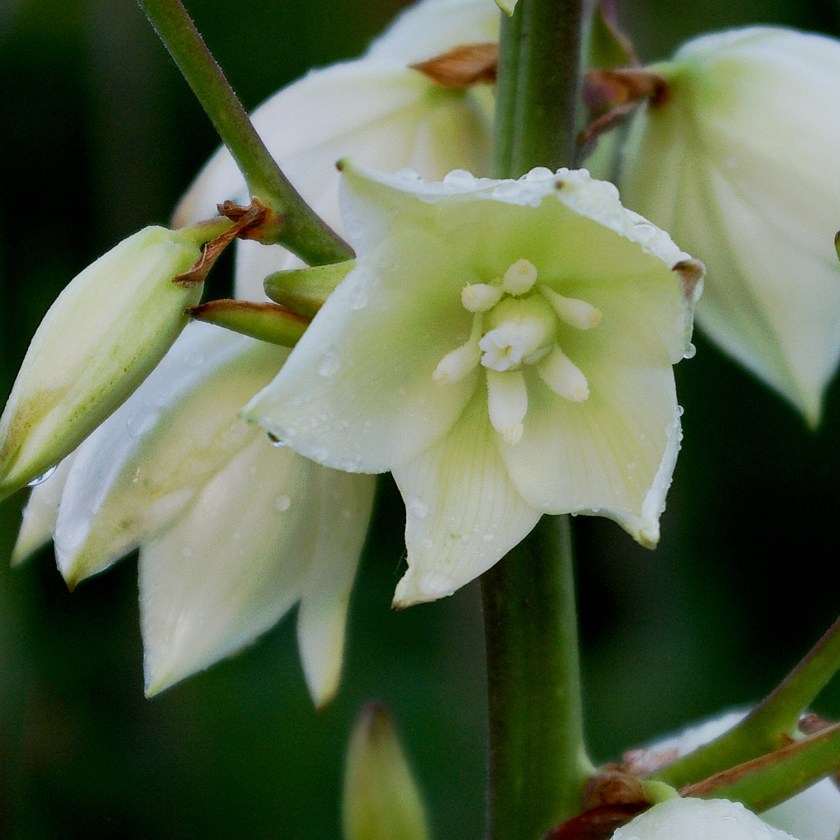
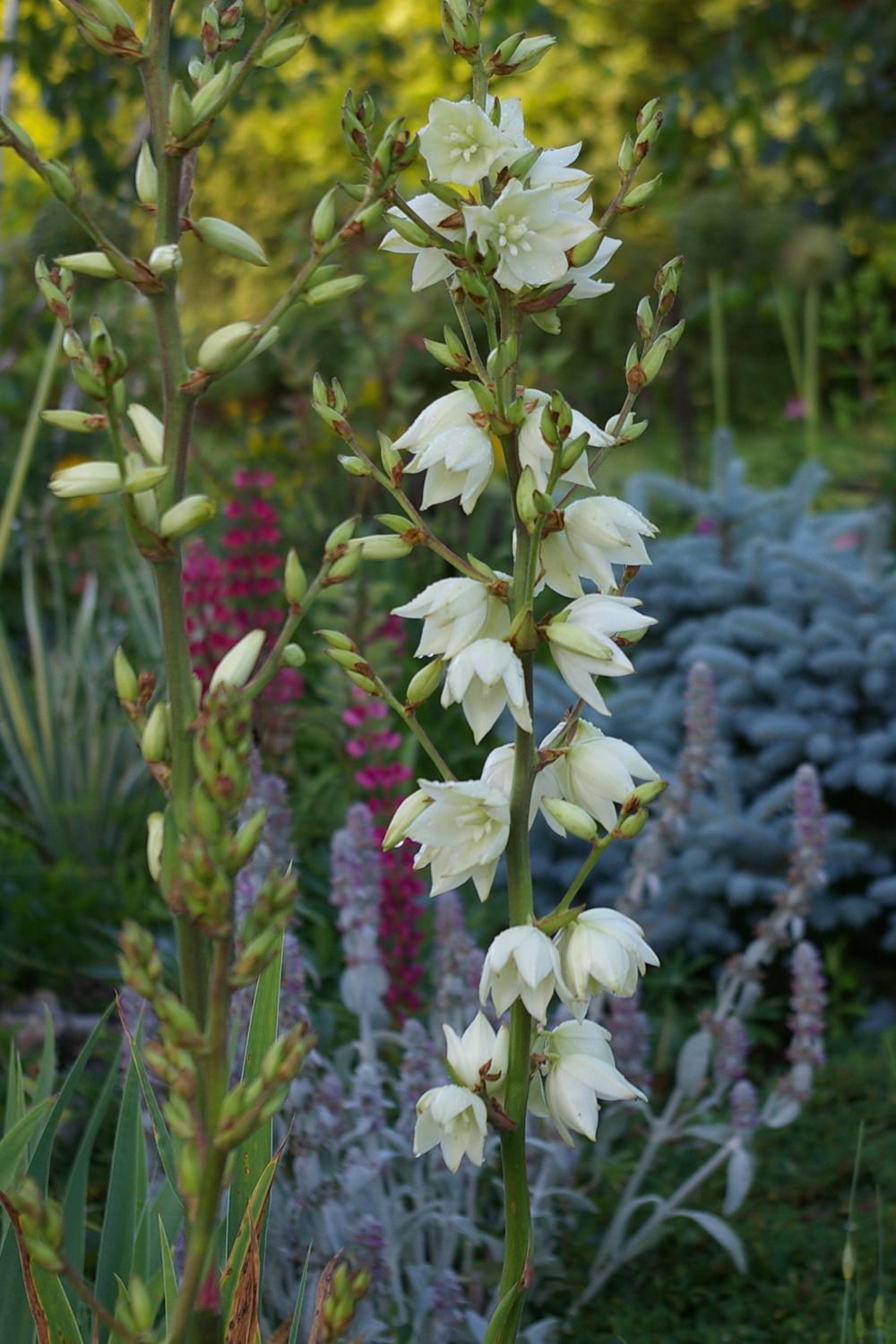
No way! I know that Yucca filamentosa lives in some unexpected places, but I would not expect to see it there. For a while, I grew all but one of the 49 species of Yucca. I do miss them.
LikeLiked by 1 person
49 Species! I had no idea…we generally see the same four here, large, small (like mine), and with a white or yellow variegated leaf. Do the other species look different? I imagine many would be less hard than Y. filamentosa…
LikeLiked by 1 person
The popular cultivars that are variegated with white or yellow are likely Yucca filamentosa, although I do not remember the names of the cultivars. Nor do I know what the small species is there. However, if your small yucca is the same size and form as the variegated cultivars, than it would likely be Yucca filamentosa also. It could have always been greed (non-variegated) or reverted from a variegated cultivar. Anyway, the larger species would likely be Yucca recurvifolia, which might actually be a naturally occurring hybrid of two other species. Anyway, Yucca is a weird genus, since there are no two species that will not hybridize if they get the chance, as if all 49 species are actually the same species! The primary reason that they do not hybridize is that they are each pollinated by a specific species of yucca moth, who only pollinates their yucca of choice. Some yuccas are from tropical jungles of Central America. Others live in the Mojave Desert and other deserts. Yucca elephantipes is the common sort here that gives the genus a bad reputation. It gets so big! Joshua tree can get about as bit, but instead of being from jungles, it is from deserts. It does not do well in home gardens, where it gets water through summer.
LikeLiked by 2 people
Oh it’s the the deer gorgeous! How lucky you are! The hollyhocks are a lovely mix of colour too, and I like the weeping allium.
LikeLiked by 1 person
I like the idea of having deer wander about, more than the actual fact of having deer wander about…:)
LikeLiked by 2 people
The hollyhocks are amazing. I hope the deer don’t like them!
LikeLiked by 1 person
So far, not!
LikeLiked by 1 person
The Yucca had me stumped! Beautiful flowers and images today. Hopefully the deer eats out elsewhere.
LikeLiked by 1 person
I’m hoping that too!
LikeLiked by 1 person
Such a pristine yucca! Love the alliums, too.
Oh, deer! Not a welcome animal in my yard, but this year it is the rabbits and slugs that are eating everything in sight. Oh, yeah, and a yearling black bear just approached me while I was out in the garden. Maybe I ought to turn it all into a zoo, instead of a garden!
LikeLiked by 1 person
A bear!!!!! You certainly win the wildlife prize!!! Although, at least the bear won’t be eating (most of) your garden, right ?? 🙂
LikeLike
Yeah, we’ve been lucky being able to keep the feeders up, to feed the nesting birds this year up until a few days ago, now he’ll remember this yard forever… they have long memories when it comes to food. Hopefully, he’ll also remember our barking dog, who alerted my spouse, who came out yelling as I was innocently unaware of how close he had come to me – glad he ran!
LikeLiked by 1 person
All I can say is OMG!!
LikeLike
😀 Black bears, particularly first yearlings, don’t worry me at all, they are actually quite timid. Now a mama with cubs is a different story, I’m a bit more circumspect. 😉
LikeLiked by 1 person
🙂
LikeLike
As Chris has already remarked. OMG!
LikeLiked by 2 people
I’d bet a dollar that your Verbena is V. rigida. It’s introduced here, but it’s everywhere along the roads. See? One of the articles I read said that it’s quite common in the nursery trade, so…
Your yucca is native here, and quite common. I’m not sure how many yucca species we have, but there are several. I should post some photos of their buds and flowers — they’re glorious!
LikeLiked by 1 person
The photo looks almost identical! But the descriptions I read describe V. rigida as relatively short – maybe a foot or a bit taller? Mine are about three feet tall…
LikeLiked by 1 person
Two of my favorite books on Texas wildflowers say 2′-3′ tall. They’re usually shorter when I find them, but alongside the roads, that’s no doubt because of mowing. They have a long bloom period, so they’ll come back after the mowers have done their thing, and probably are shorter because of it. It’s interesting that British sites tend to describe them as only 1′ tall. Maybe environmental conditions make the difference.
LikeLiked by 1 person
Could be – I’ll do more research into the differences and report back!~
LikeLiked by 1 person
Your garden is brimming with beauty. I admire those hollyhocks. Great photo of the deer. We finally had to fence in our back yard years ago to discourage them. Rabbits are becoming a big nuisance here. Have a good weekend.
LikeLiked by 1 person
Rabbits and chipmunks, aphids and earwigs…that’s my mantra this year!! 😆😆😆
LikeLiked by 1 person
Your alliums are lovely, my drummers are not that advanced and I do seem to have a lot more much smaller ones this year! I found that my verbena bonariensis attracted bees more than butterflies and then during the winter when it was full of seeds the Goldfinches came in to eat all the seed – so I haven’t got any this year except for one little seedling that ended up in a container!
LikeLiked by 2 people
Ugh! Well, I guess the birds were hungry…
LikeLiked by 2 people