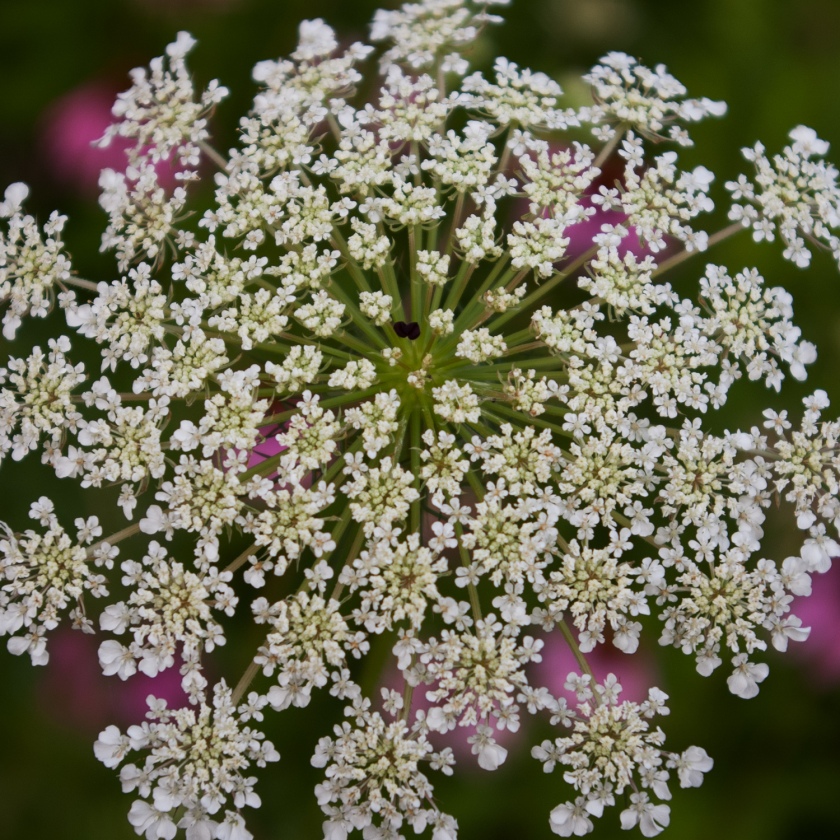
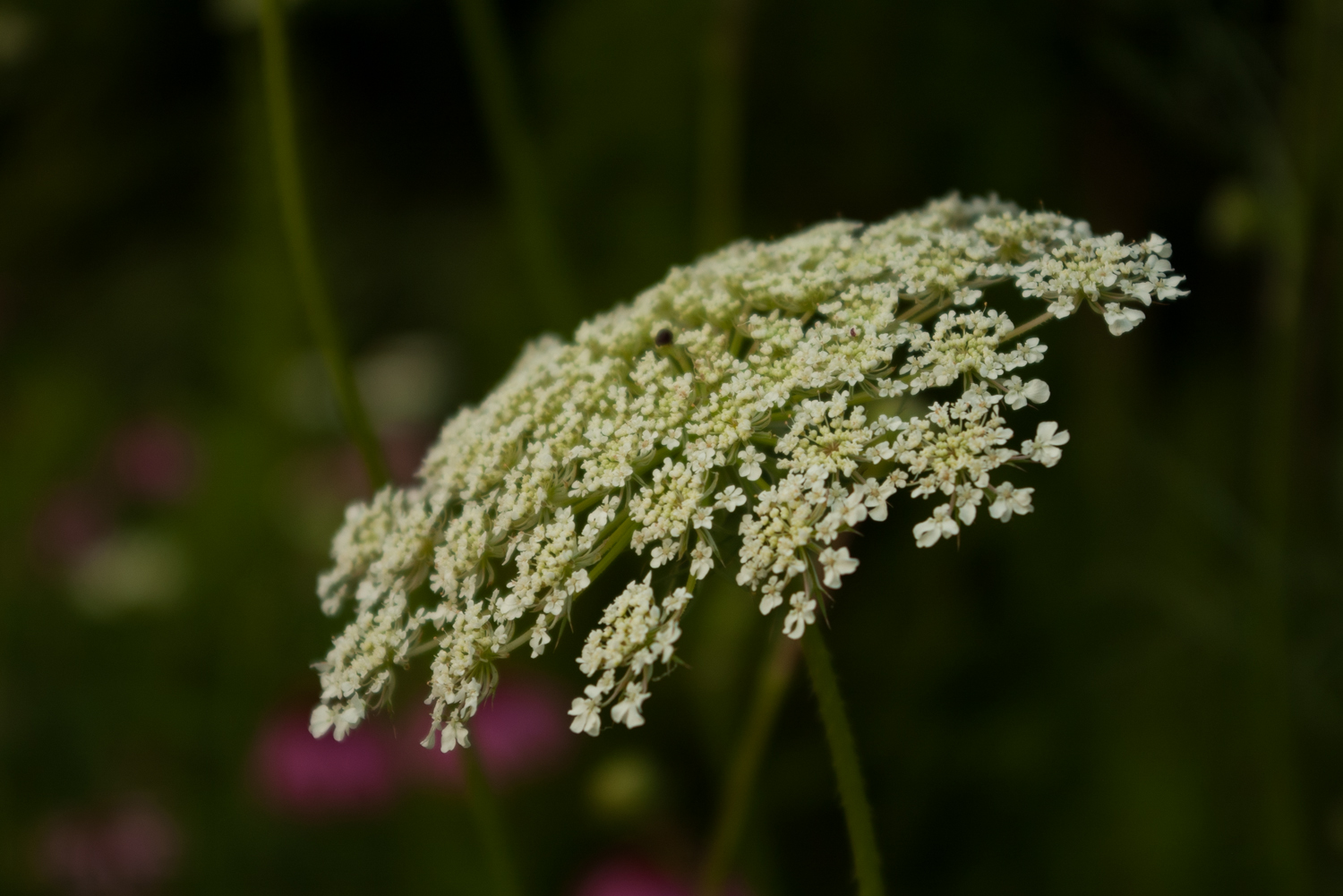
One of the tallest flowers blooming in my garden this week wasn’t planted by me (or anyone…); seeds just blew in with the wind (or were dropped by birds or small rodents perhaps), as native (or non native) wild flowers do. It’s Daucus carota, known over here as Queen Anne’s Lace. Like so many plants that have naturalized in North America over the centuries, this was brought here by European settlers. It’s considered a noxious weed in some areas because it can reproduce like crazy, but in the home garden it’s quite easy to pull, despite its long, carrot like, taproot. Its stately form, along with lacy foliage and white umbels (that’s what this type of collection of small flowers is called) seem to have a calming effect in my garden, which is now mainly purple and yellow, thanks to a coneflower and daylily explosion.
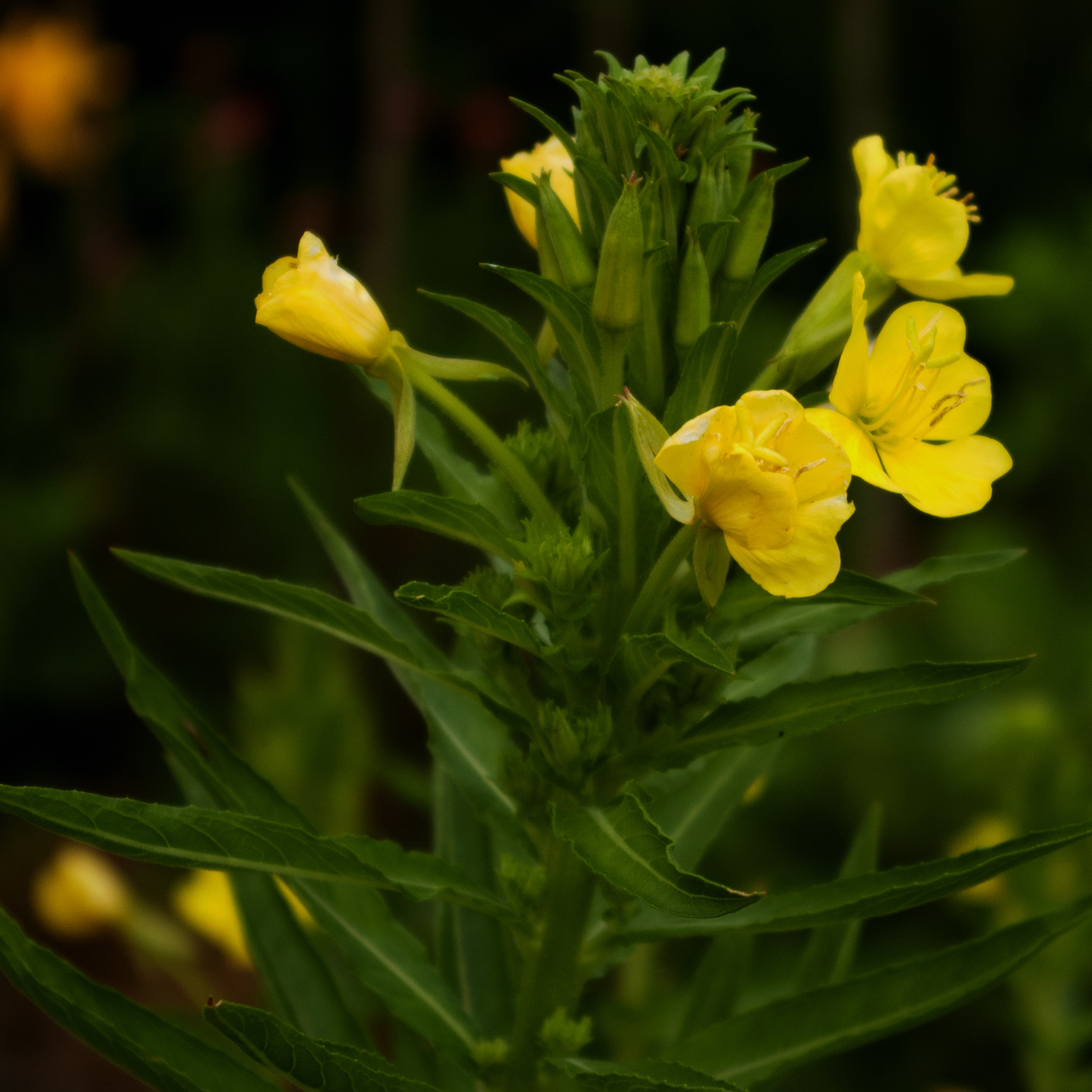
Another wildflower, this one native to my part of North America, is the common Evening Primrose – Oenothera biennis. It also sets a lot of seed, and the plants are also easy to pull. This one is a biennial, with a rosette of leaves showing up the first year, then one or multiple flower stalks showing up the second.

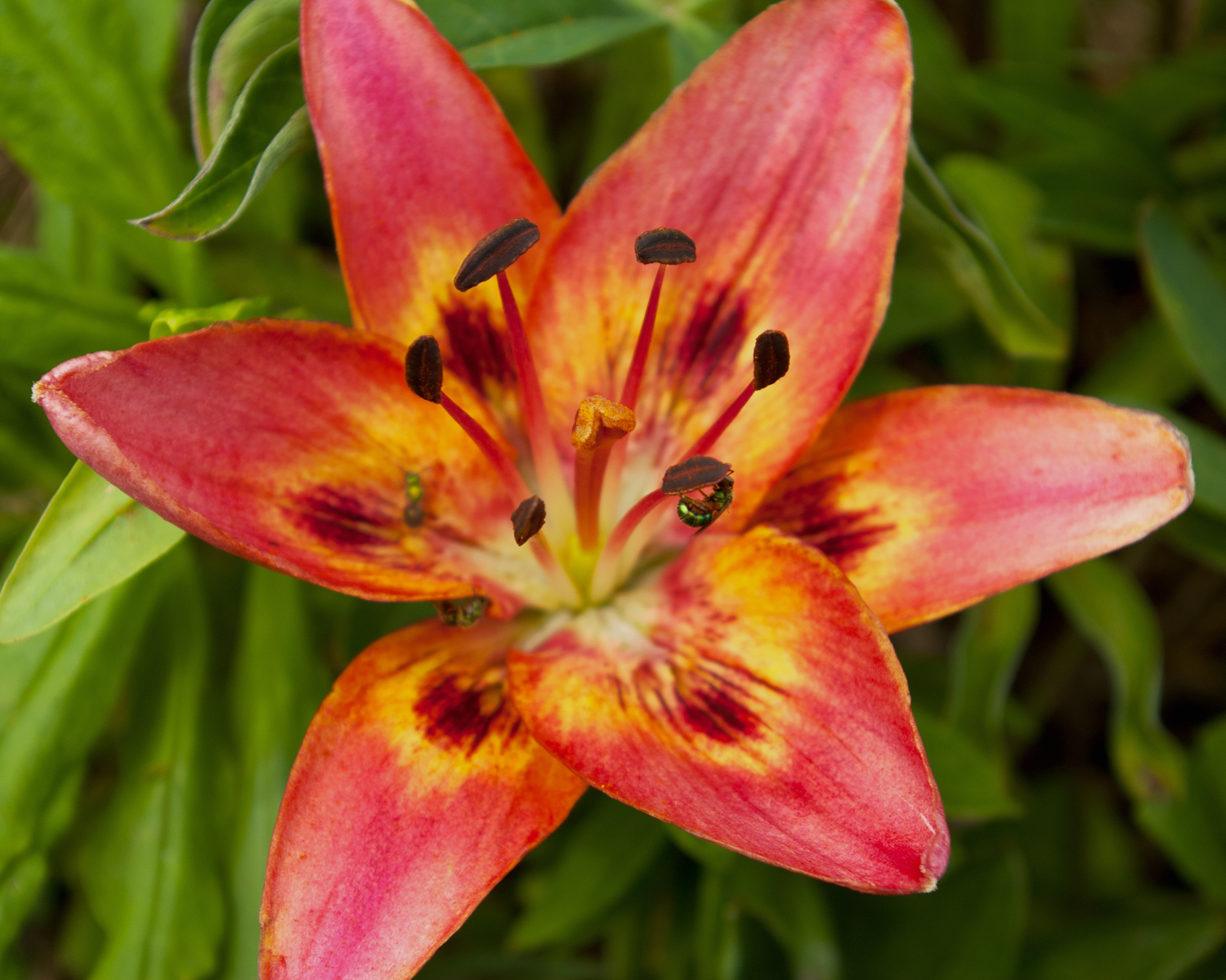
Speaking of lilies, I have two types currently in bloom, a tall white Oriental (name unknown, but it looks pretty common…), and a short red Asiatic (‘Sorocaba’). I purchased five Sorocaba bulbs late this spring and planted them on June 19 – they’re less than a foot tall yet here they are, flowering! I’m not sure if the tiny, shiny green flies are the cause of it lying on the ground a few hours after this photo was taken…

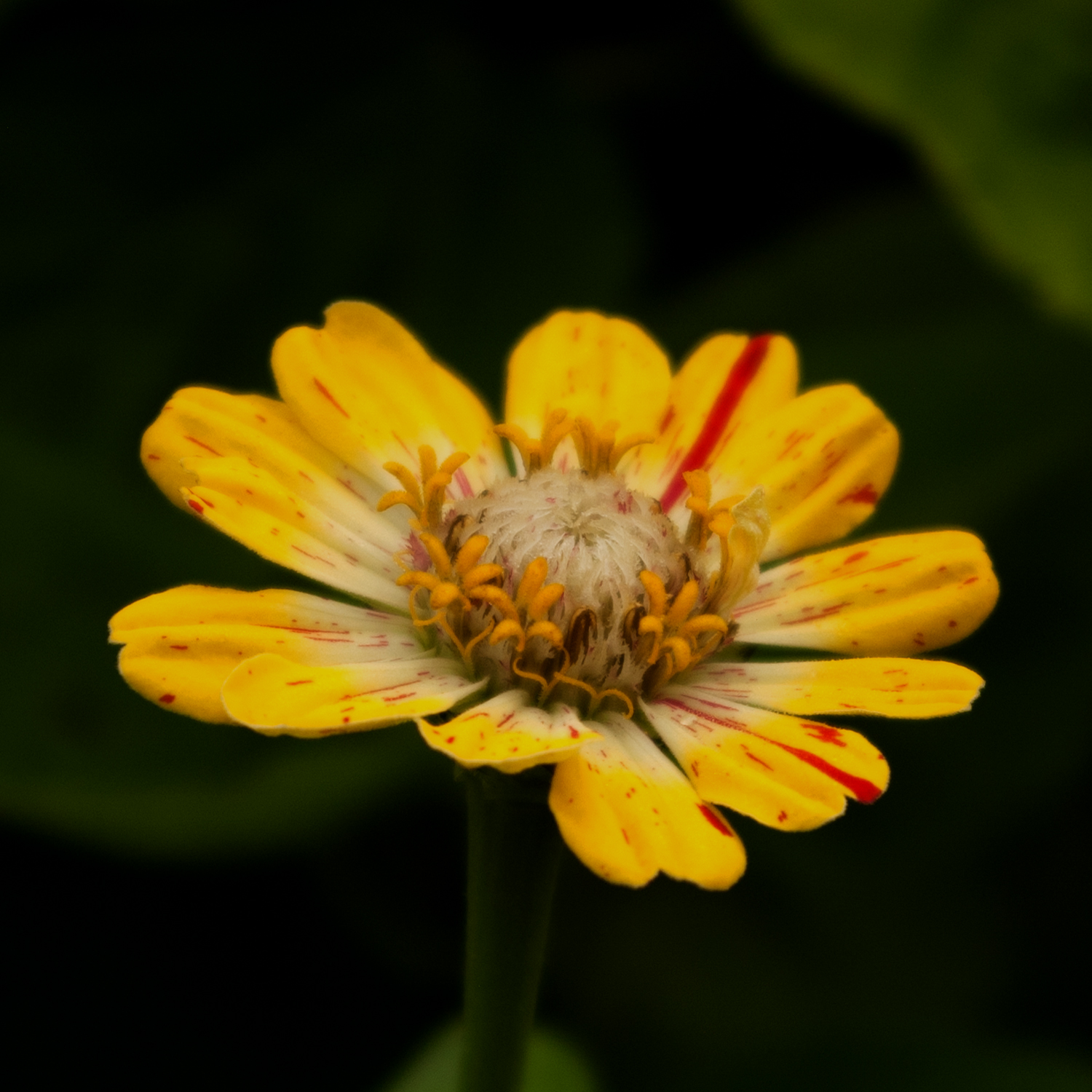
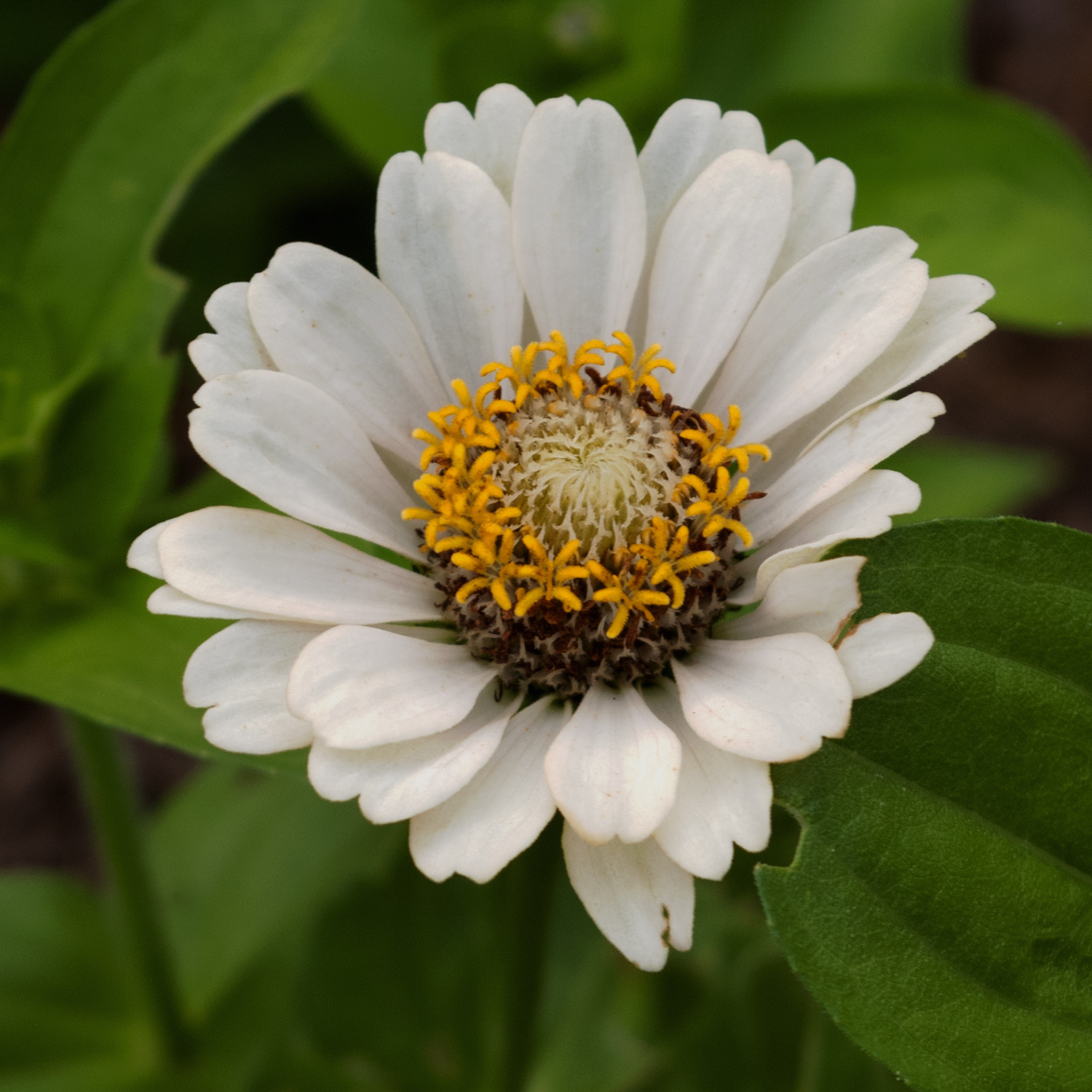
Zinnias! Now in full force from the seeds I planted, in the ground, on May 22. Earwigs did a real number on the young leaves but the flowers seem all right…


We’ve been eating our own veg for a few weeks now. No tomatoes yet, but bush beans, zucchini, lettuce, spinach and chard, and these sweet Shishito peppers:

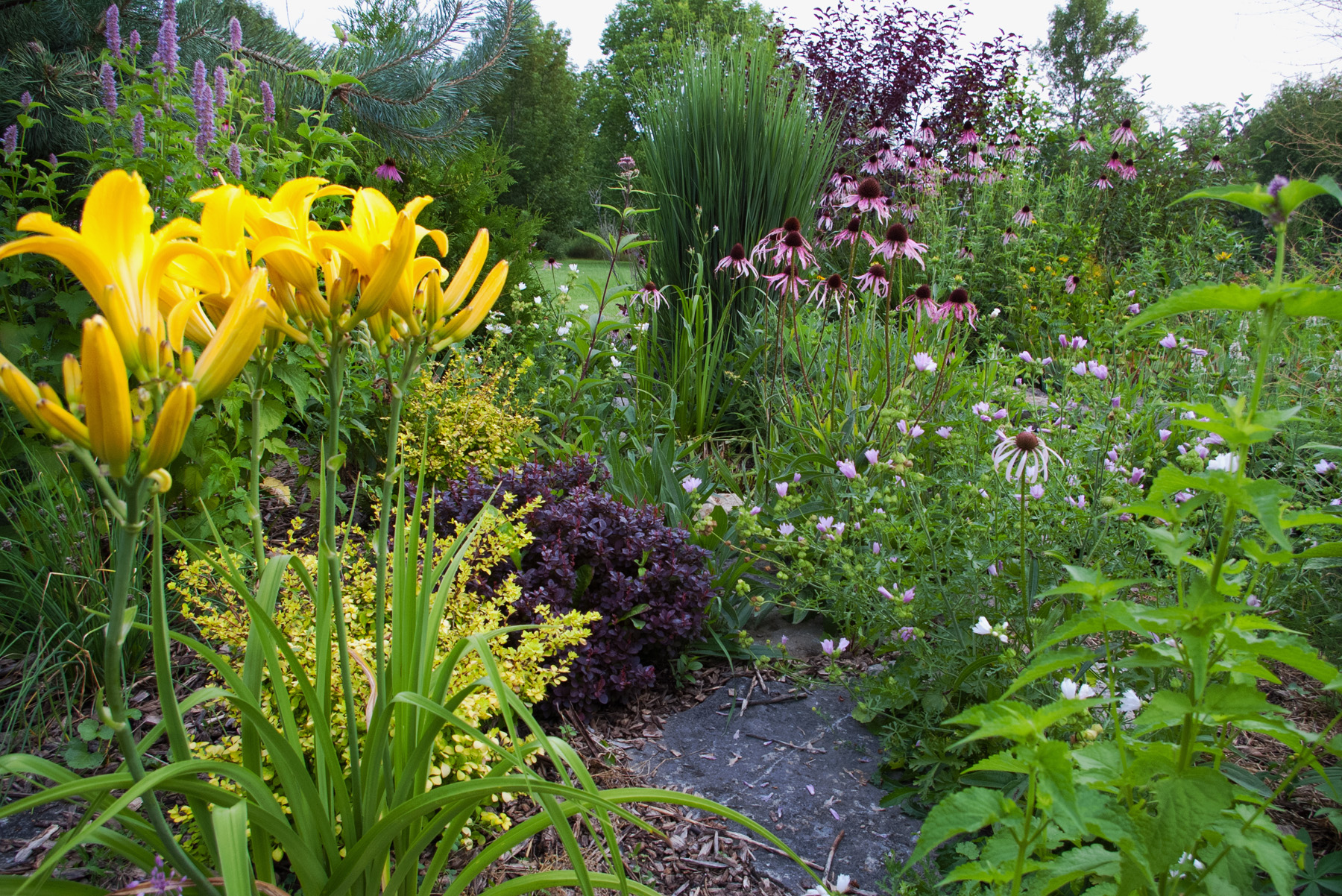
When I look at the Sixes from other gardeners around the world (which, by the way, you can access via the comments section on The Propagator‘s post today), I’m always amazed and a titch envious of the lovely, tidy gardens often shown, with well defined path edges and neatly pruned shrubs. My pathways, this time of year, are a hot mess of overgrown, self seeded perennials, more than a few weeds, and things spilling over from the garden beds, making the path itself a bit of an obstacle course. Most days I like it! For my final shot today, here’s one of those pathways, a very short one that for some reason now dead-ends into a patch of musk mallow and pale purple coneflower. I might have to do something about that. In the fall. Have a great weekend everyone!
 County Gardening
My dad loved zinnias – lovely to see them in your post.
LikeLiked by 1 person
They’ve enjoyed a huge resurgence in popularity I think. Deservedly!
LikeLike
I think your less tidy garden paths are a delight. They certainly please my eye, but the closer to box hedges and statuary someone comes with their garden design, the less it appeals to me.
Your mention of musk mallow reminded me that I grew up eating ‘musk melon,’ which was our common name for cantaloupe. I’d not thought of that in years, but it’s never too late to learn something new, and I just learned that all cantaloupes are muskmelons, but not all muskmelons are cantaloupes. Muskmelon is simply an overarching term used to describe melons sweet in flavor and fragrance. These include honeydew and cantaloupe. Apparently the only true cantaloupe is a European native. Who knew? As for musk mallow, now I know it’s related to hollyhocks: another childhood favorite.
LikeLiked by 1 person
I also called cantaloupe ‘musk melon’! And I’ve recently discovered that musk mallow is considered invasive in parts of Canada, having ‘escaped’ from cultivated gardens! That’s interesting because my first mallows appeared as if by magic on an out of the way spot, and I collected seeds and planted them in one area closer to the house. Those sed seed snd spread, and now they are indeed in several spots, and I get to decide if they stay or go. I guess that’s how non native plants escape….
LikeLike
Interesting to see Queen Anne’s Lace – a native from Europe – naturalising in your garden, followed by Evening Primrose – a native from the States – which has naturalised over here. A role reversal of sorts. Both looking lovely by the way!
Tidy gardens are over-rated (although I do like to see a neat edge on a lawn from time to time)!
LikeLiked by 1 person
I also like neat edges…I see them, briefly, in late April and again in October! 😆😆
LikeLiked by 1 person
Your garden looks great. I had this grand idea of having a stepping stone path through a border to the patio. The reality is that you have to battle with scabious, verbena and a big lavender to get there. Lovely Zinnias.
LikeLiked by 1 person
I always bring secateurs when doing battle along my pathways, along with a jar of water to imprison the blooms cut away to allow passage…
LikeLiked by 1 person
Come summer my garden resembles an overgrown jungle, but I love the randomness of it all. At least you can still see your path! Queen Anne lace is one of my favourites, and you are right. The flowers tend to add a softness to the garden. The lilies are really lovely too.
LikeLiked by 1 person
‘Jungle’ is a very good word to describe it!! 😆
LikeLiked by 1 person
Very nice last picture !
I also grow Oenothera and I’m amazed at the yellow color of yours. Mine are yellow for a very short time and quickly turn pink: what about yours?
LikeLiked by 1 person
No, I’ve never seen pink ones and mine definitely do not turn pink!
LikeLiked by 1 person
Love the last shot..I let the Gallardia seed in my pathways. Also love Queen Annes Lace and my zinnias never look as good as yours. Have had a difficult time deciding when to sow them.
LikeLiked by 1 person
Hmmm…would they be susceptible to mildew in the humidity? I planted my seeds outside at the same time I planted bush beans. I’ve been eating beans for about a week now, if that helps 😁
LikeLike
I don’t know! maybe beans are the key..right now seedlings fry..end of the month is time to plant tomatoes. Florida is strange.
LikeLiked by 1 person
Oenothera biennis somehow naturalized here. It took me a while to figure out why it was so different from the few native species. I had guessed that it was some sort of native that I was not acquainted with, since there are other species here already. Fortunately, it does not seem to be aggressive, invasive or too detrimental to the native ecosystem.
LikeLiked by 1 person
That’s good to hear; they can set and spread seed quite easily but they’re easy to spot and pull if necessary.
LikeLiked by 1 person
Unlike the native species, they are not chaparral species. They dislike the long and arid summers. They can live on the outskirts of irrigated landscapes, but to not migrate far from irrigation. I suspect that they could migrate within riparian situations, but do not seem to do so, perhaps because of the shade.
LikeLiked by 1 person
I love the wildness and I also love Queen Anne’s Lace. I want to grow it in mine this coming season.
LikeLiked by 1 person
It’s quite gorgeous and a pollinator magnet. Sets s gazillion seeds but the plants are easy enough to pull.
LikeLike
Nice six, Chris. I’m a ‘messy’ gardener, too. I kind of like that wild look. 😉
LikeLiked by 2 people
Makes life a bit less stressful eh?
LikeLiked by 1 person
Indeed!
LikeLiked by 1 person
Queen Anne’s Lace and Evening Primrose are flowering here too. Love your wild pathway!😃
LikeLiked by 2 people
😁😁😁🌞🌱🌼
LikeLiked by 2 people