Garden surprises can be really, really bad (creeping bellflower – from now on to be referred to as simply C.B. – showing up, out of the blue – no pun intended – amidst the lilies) or really, really delightful, like these small green apples I spotted yesterday on the wild apple tree growing in my back meadow:

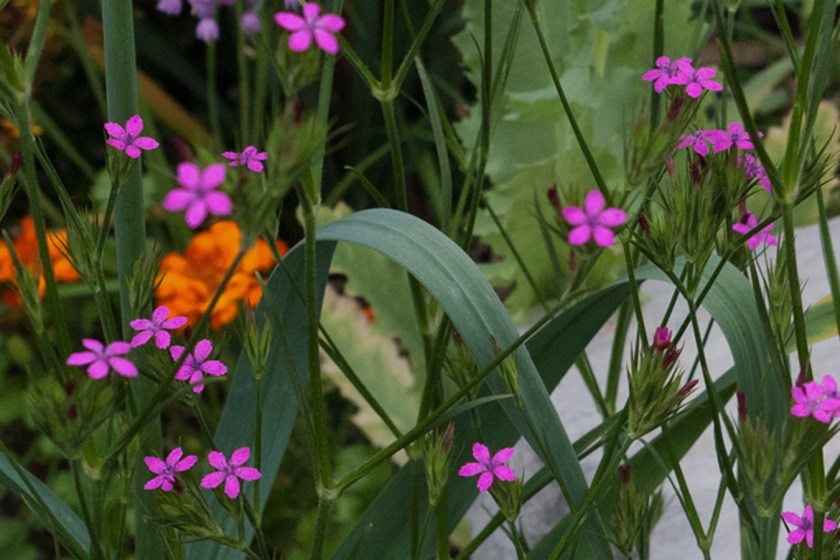
Another pleasant surprise are the tiny magenta flowers on this unknown plant growing amongst my raised kitchen garden beds. At first I thought I must have scattered seeds of some sort, and the tall stems and flower buds looked similar to Dianthus. But then I noted the same plants growing wild, here and there, mostly and again in the meadow. It would be lovely if someone identifies it, but equally lovely, in my mind, if it remains a mysterious guest in the garden. Unless, of course, it turns into something like the dreaded C.B. Then all bets are off.
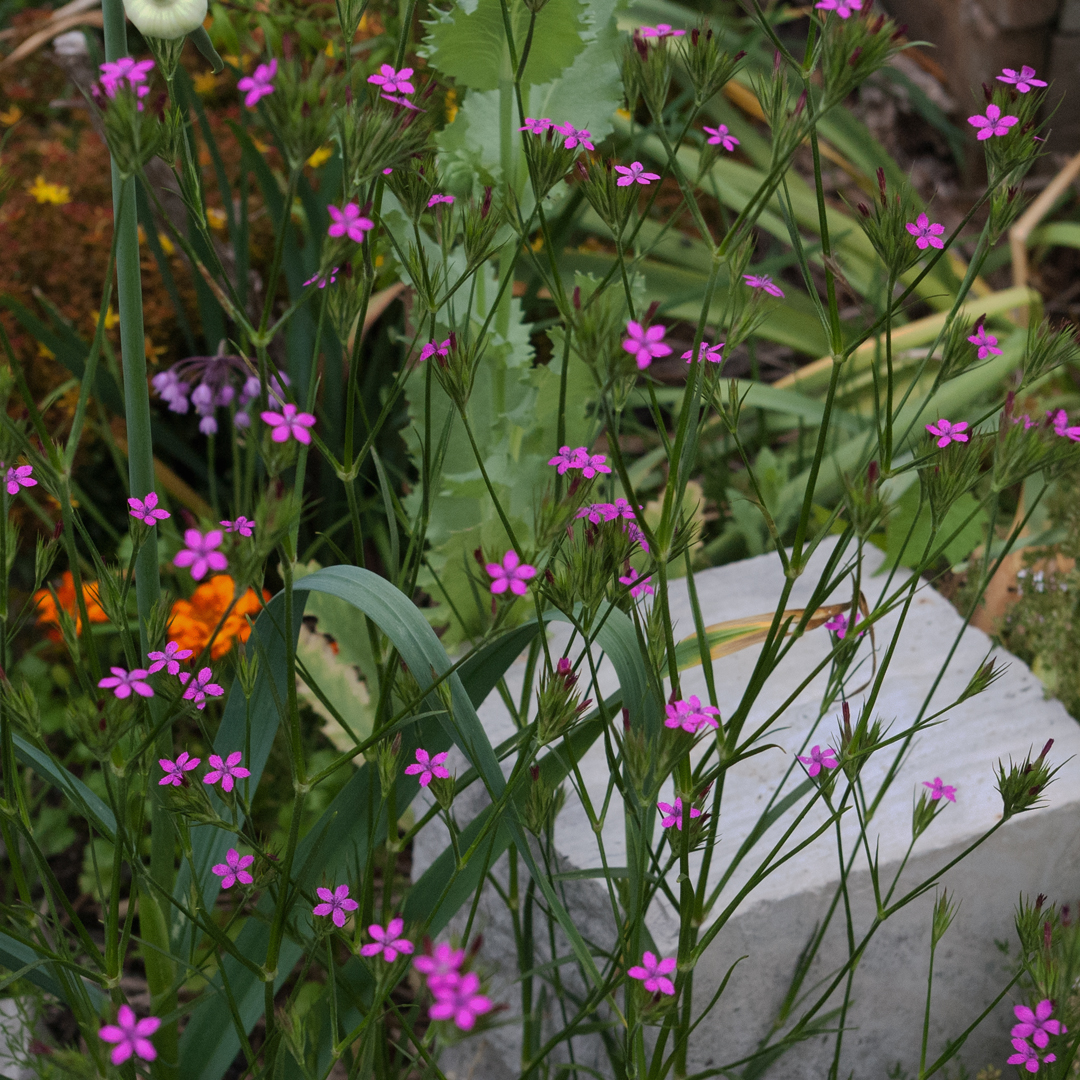
No more surprises today, just four more things growing in my garden to make this week’s Six. To see more from around the world be sure to visit Jim’s page, Garden Ruminations. Still in the kitchen garden, we’ve been munching on snap peas this week. Not sure what varieties these are – I picked up a packet of Mixed Peas at Seedy Saturday in March. Doesn’t matter though, does it, since they’re all quite tasty!

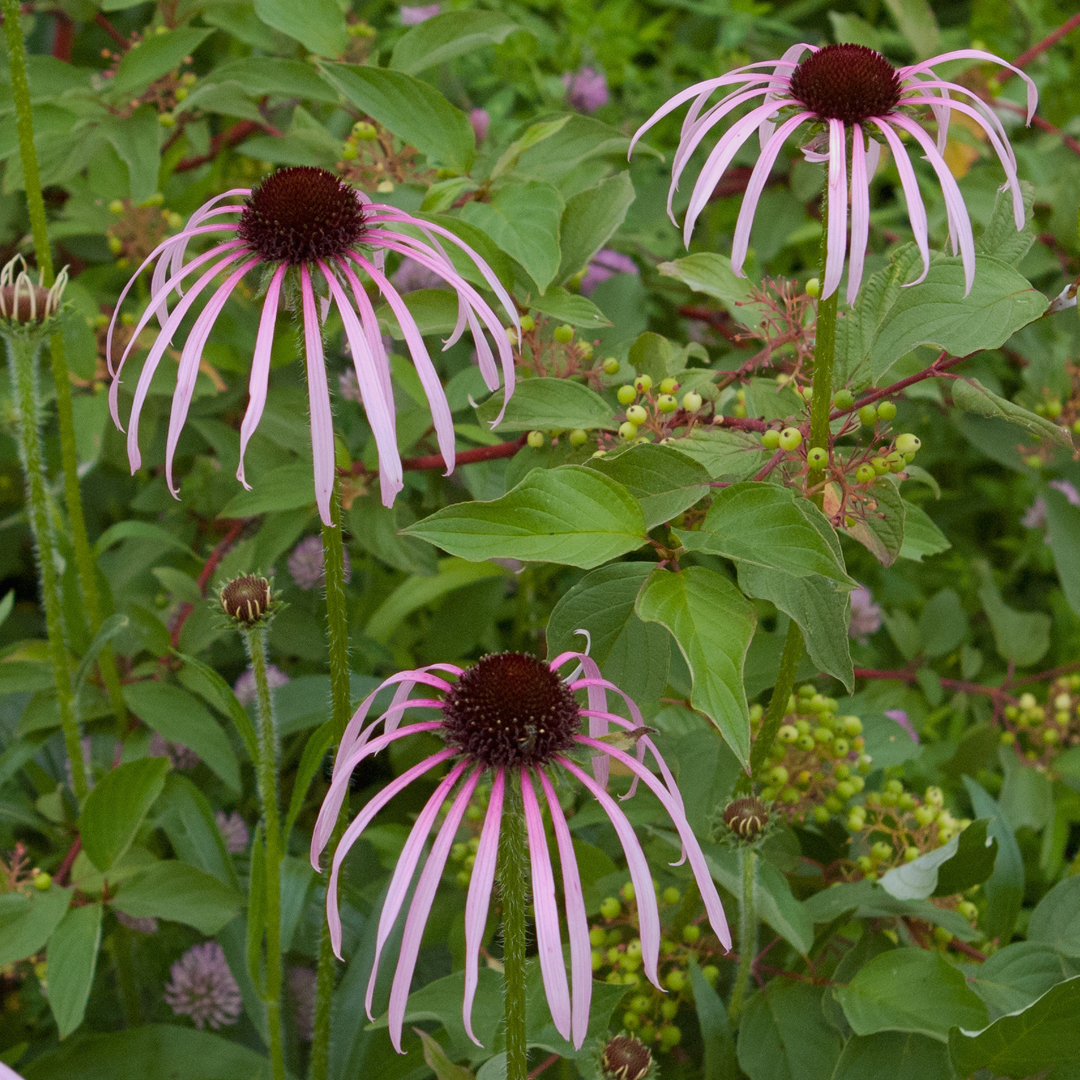
Echinacea has started to bloom here. It loves my heavy, rocky clay soil, and doesn’t mind a bit of drought either. In a few weeks the large Island garden will look more like a purple pond, it’s self seeded to such an extent. This week, here are two of my favourite species – not E. purpurea, but rather E. pallida (Pale Purple Coneflower) and Echinacea x paradoxa x tennesseensis (a cross between the yellow – or Bush’s – coneflower and the delightfully named Tennessee coneflower).

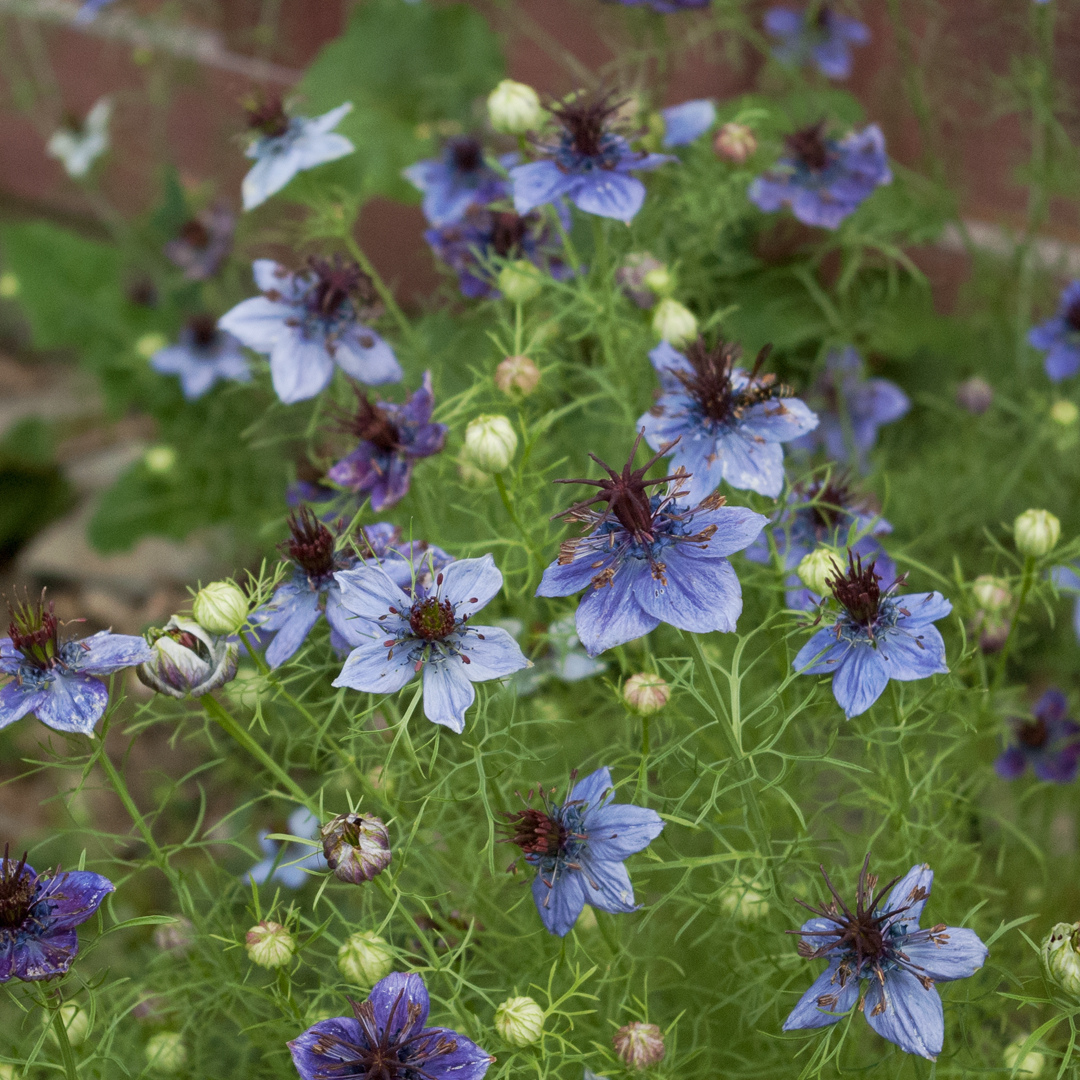
This is the fourth year for my Nigella ‘Midnight’ patch. They’re so good at self seeding, so wonderful in a dry, sunny location, and produce not only lovely flowers but also weird and wonderful seedheads.
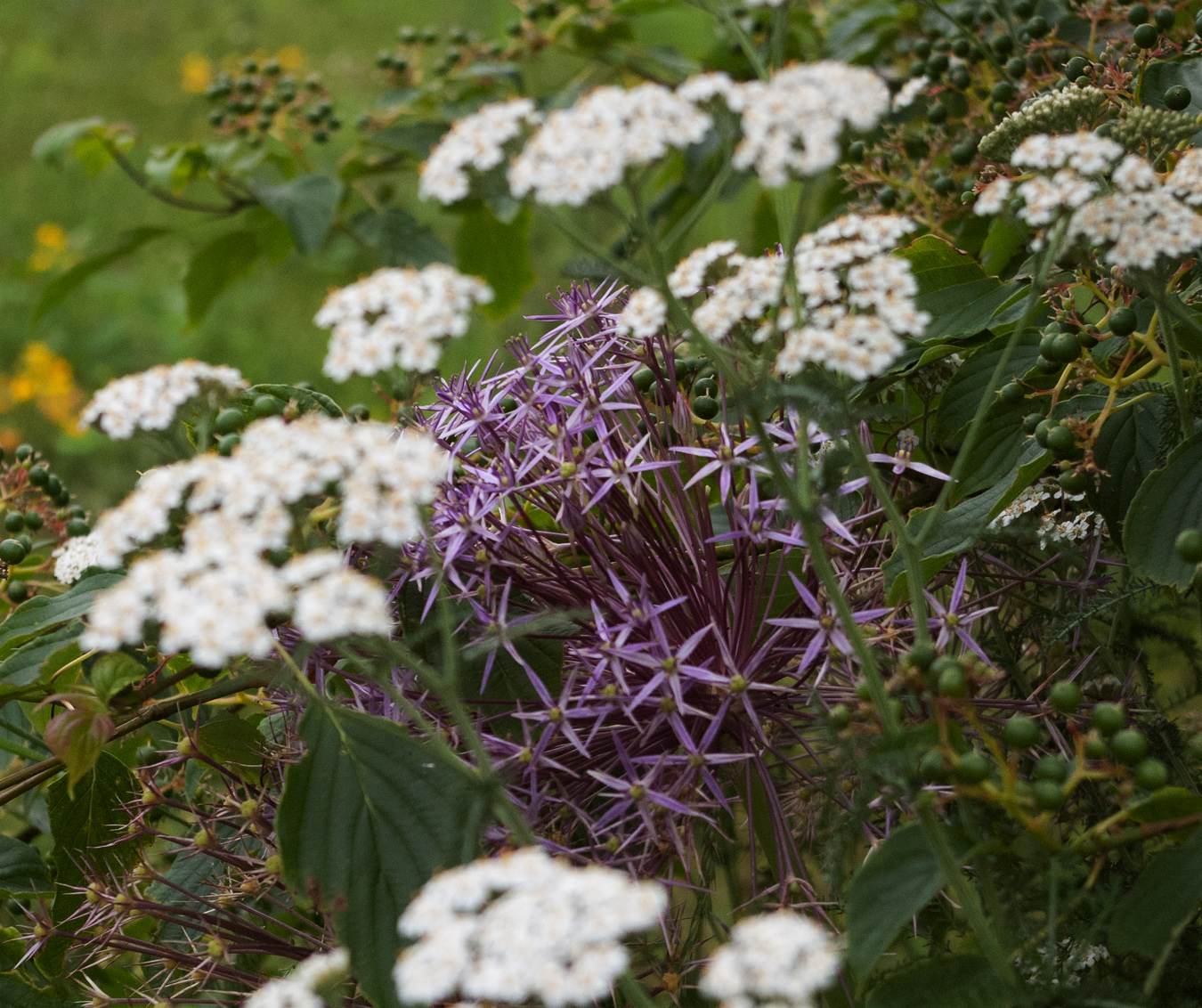
And finally, just a lovely combo. In a spot that gets only a few hours of direct sun these humongous Allium Cristophii are crowded by both the lowest berry laden branches of a Pagoda Dogwood tree and common white yarrow – one of those wildflowers that just appears and stays, it’s so beautiful. This is the last of the big Alliums for the year – still loads of the smaller ones blooming or starting to bloom. But that’s another post! Have a great weekend everyone!
 County Gardening
I like that Nigella is a good self-seeder, I don’t have one on my garden, so shall add it to my wish list.
LikeLiked by 1 person
Many additions to wish lists this week I think!! 🙂
LikeLike
Take a look at Deptford Pink, Dianthus armeria, as a possible ID for your pretty pink flower. It’s introduced, but pretty common according to the maps. I love the pale purple coneflower, too. It’s native in east Texas, although I can’t remember seeing it in my area outside of gardens.
LikeLiked by 1 person
Yes, D. armeria seems to take the prize…so tickled that I was able to identify it as some sort of Dianthus! It’s pretty, but a short lived perennial it seems, of no interest to pollinators – self pollinating. Interesting, eh?
LikeLiked by 1 person
Whatever that little pink flower might be, it is very pretty. I wonder what the wild apples will taste like, you might have got yourself a winner there!
LikeLiked by 1 person
I’m looking forward to it!!!
LikeLike
Ahh, nigella! At my first community garden, I had a curved path through the middle of my garden, dividing the plot in half. Nigella filled it in, and it was like a river of green, followed by a river of blue. I did not have it at my second plot and for unknown reasons, have not put any in – I suppose I have been preoccupied with the natives, but I do need nigella in my life. I also covet the e. pallida. I would love to have an area planted with that, native monarda, and Ratibida pinnata, with asters for later.
LikeLiked by 1 person
A river of Nigella, changing colour as the months go by…what a wonderful image!
LikeLike
**oops, naturalized range I meant**
LikeLiked by 1 person
LOL!
LikeLike
I’m glad someone was able to identify the mystery plant. It’s very pretty indeed.
LikeLiked by 1 person
Yup – a keeper 😁
LikeLiked by 1 person
Oh ! Ces petits pois ! … miam. Maintenant, les pois et les fèves sont ici et il est presque temps pour les haricots et les courgettes/courgettes. Je mange des tomates et des concombres depuis un certain temps maintenant. Profitez de vos petits pois !
Love the echinacea too, especially because of the thin petals
LikeLiked by 1 person
Tu déjà mange des tomates et concombres??? Wow!
LikeLiked by 1 person
Yep! 😃
LikeLiked by 1 person
Oh ! Those peas! … Yum. Now the peas and broad beans are over here and it’s almost time for the beans and zucchini/courgettes. I’ve been eating tomatoes and cucumbers for a while now. Enjoy your peas!
Love the echinacea too, especially because of the thin petals
( sorry if you received another reply , mixed french/english)
LikeLiked by 1 person
I also love the thin petals on this Echinacea..
LikeLiked by 1 person
Could the mystery flower be Dianthus armeria? You’re definitely within it’s native range and it makes sense if you’re noticing it’s similar to other Dianthus…
LikeLiked by 1 person
Yes that seems to be it Angela, thank you! Not native in North America, apparently, but introduced and widely spread. I really like it!
LikeLike
A lovely six, Chris. I love that Nigella self-sows, such a bonus. Beware of the Dianthus… they self-sow and can spread like mad… mine showed up uninvited two years ago and I thought them pretty. Now I’m considering ripping every single one I find out. Too prolific!
LikeLiked by 1 person
Well now. That was what I was afraid of. Deadheading will be necessary, throwing the seedheads into the firepit I guess. Thanks for the warning!!
LikeLiked by 1 person
Some lovely pictures, but you saved the best till last, that’s a beautiful combo.
LikeLiked by 1 person
Thanks so much Helen!
LikeLike
Peas sound great! Nigella is just not the same in Florida, looks wonderful and the little pink mystery is a great find.
LikeLiked by 1 person
The peas are definitely great! 😆😆
LikeLike
It is all looking so lovely Chris. 😃 We have a similar Dianthus growing wild here, which I think is called D. deltoides.
LikeLiked by 1 person
Thanks Cathy!
LikeLiked by 1 person
Allium christophii was one of my two first Allium, with Allium schubertii, from Tangly Cottage Gardening. I had been postponed trying any of the genus for several years by that time, so was very pleased to get them, even unexpectedly and without a plan. Now that they have performed well, I may try other species and cultivars.
LikeLiked by 1 person
You really should. A suggestion – Allium sphaerocephalon, Drumstick Allium, are just starting to bloom now; en masse they make a very pretty sight.
LikeLiked by 1 person
That was one of the first of the few Allium that I remember seeing in catalogues years ago, so was originally one that I considered trying. Also, I am told that it is one that is more likely than some of the others to be reliably perennial. However, ‘Mount Everest’ might be my next acquisition. I like the white bloom. I have not decided yet, and if I happen to get some this autumn, I may actually get Allium sphaerocephalon because it is one of the few that happens to be available in nurseries here. I think that ‘Globemaster’ looks so weird that I really want to try it, but would not do so at work.
LikeLiked by 1 person
I have Mt Everest – it’s not as stunning as I had anticipated, with the actual flowers not lasting that long and the flower ball not that large. Still, it’s a nice contract to Globemaster, which it’s planted next to in some spots.
LikeLiked by 1 person
Do you find that it is not bright white, but is really just a pale white? I do not mind that it is small.
LikeLiked by 1 person
Yes, that’s a good way to describe it.
LikeLiked by 1 person
Coincidentally, the same Dianthus turned up in my garden this year. I’d never seen it before and came to the same conclusion as others, that it was D. armeria.
LikeLiked by 1 person
That IS a coincidence!
LikeLike
Those little pink flowers are called ‘Silene’ aka ‘Catchfly’…they are pretty…seeds get spread easily, but are easy to control. Showed up out of nowhere in pots on my deck last year or the year before.
LikeLiked by 1 person
Funny how they suddenly show up for so many of us!
LikeLike