
I’m never one to forecast an early end to summer, and when folks start whining that summer is over at the end of August (or on Labour Day, here in Canada and the U.S.) I say Hold Your Horses, We Have Three Weeks To Go! Yet here we are, the last Saturday of August, and in my garden six perennials (at least) that typically bloom at the end of summer are making a statement. Heavy sigh. I’m going to scurry over (figuratively) to Jim’s site after posting this, to see if gardeners in other parts of the northern hemisphere are experiencing the same thing.
First off is this pink Japanese anemone. A friend gave it to me several years ago; it’s well established now and starting to spread and this year has sent up sky high flower stalks.

Individual New England Aster flowers have opened here and there throughout the garden, like this one. It should be a week or two before we see masses in bloom though.

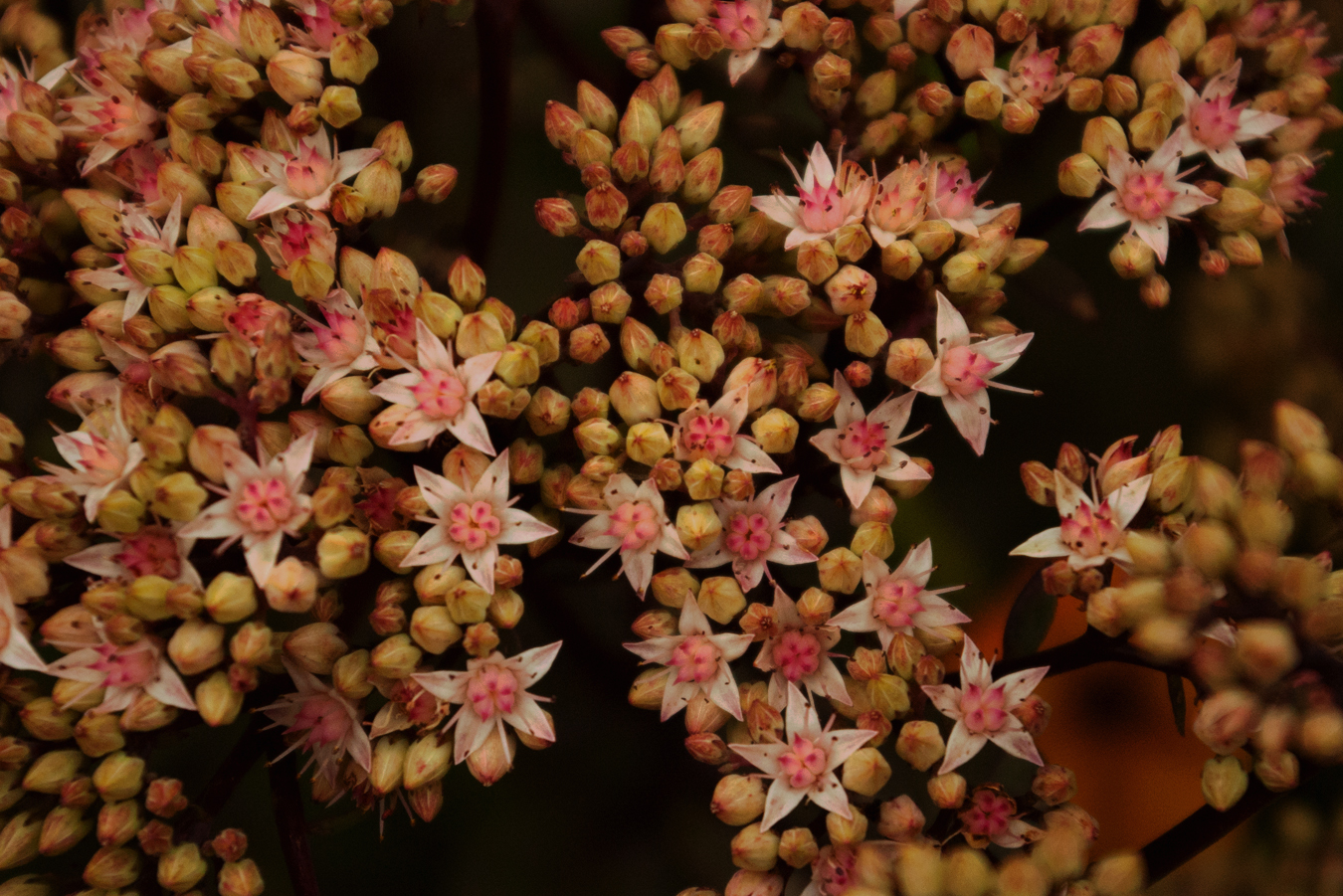
I took these photos on Thursday when it was dull and overcast; my giant Sedum Spectabile (now called Hylotelephium spectabile of course) had just started to open and the bees hadn’t yet discovered them. Yesterday afternoon, in the sun, they were being swarmed!
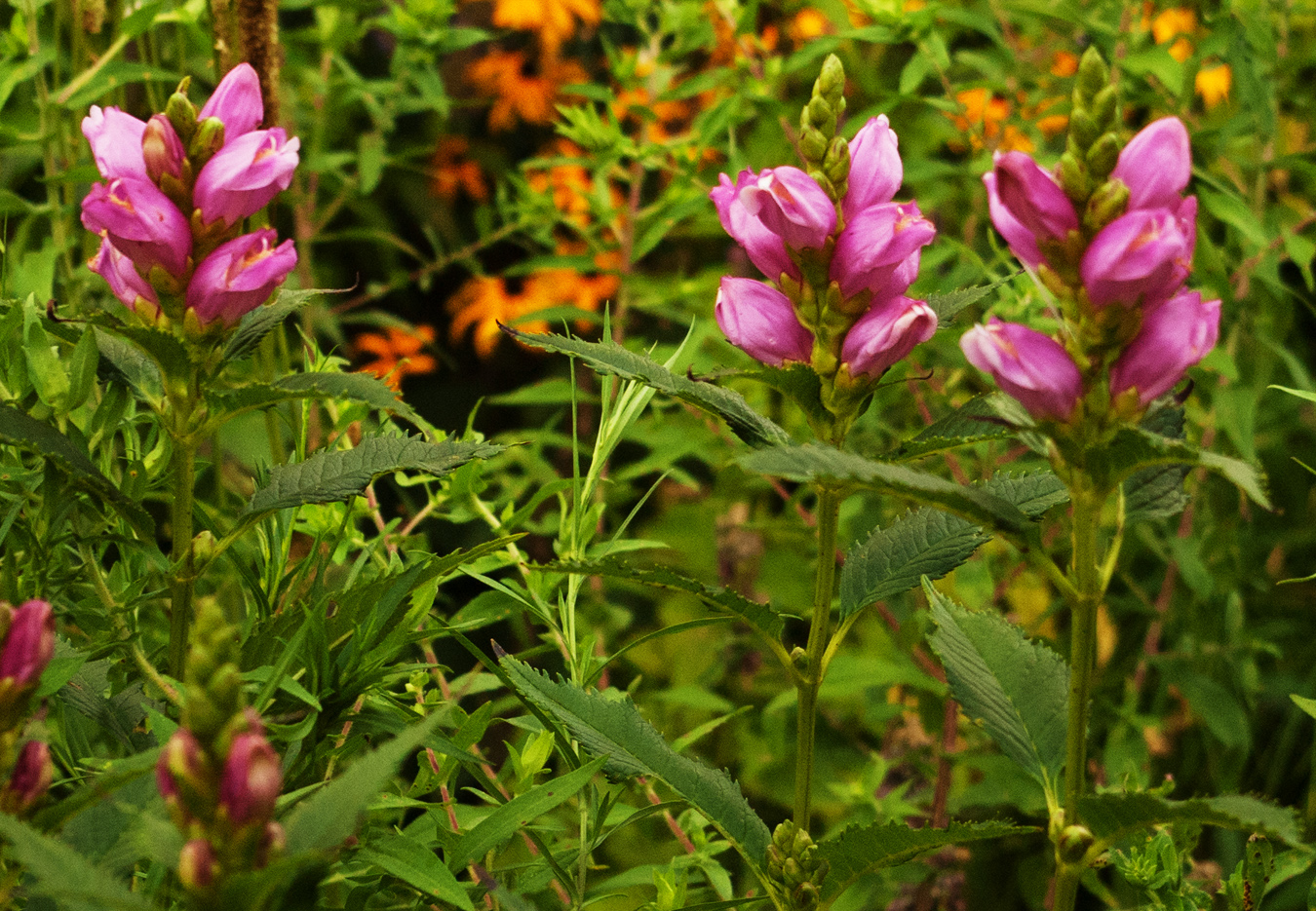
Pink Turtlehead (Chelone obliqua) was also suddenly open on Thursday, looking very photogenic and just waiting for bumble bees to force their way into their innards.
I’m not troubled too much by slugs or snails – the silver lining to having really dry summers, normally, I imagine – and hostas look great all year. This variety sends up tall, lovely spikes of slightly fragrant flowers at the end of summer, long after other hostas have bloomed. I was very happy to get the call from neighbours, a few years ago, who were removing them from their back yard to create a fenced-in space for two Akitas they were adopting.

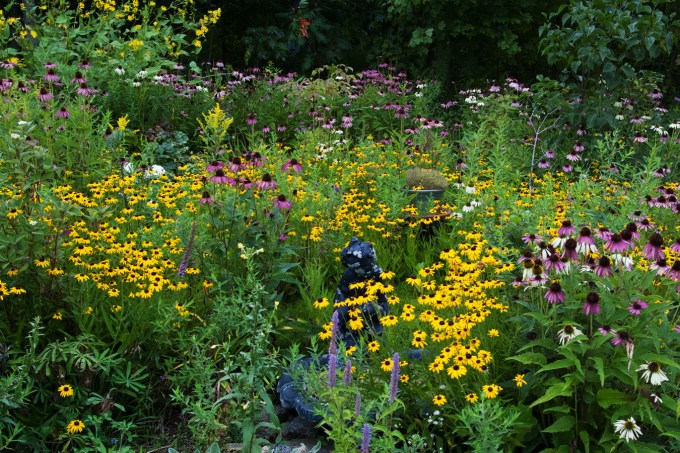
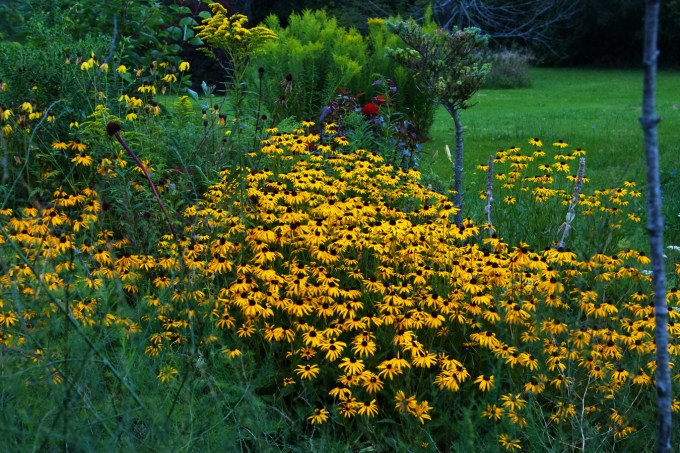
I’ll end with a pair of wider shots to better display the masses of Black Eyed Susan – Rudbeckia fulgida I think – that are now in full bloom. These do well in full sun or semi-shade and spread easily and quickly via seed or rhizome and, in my garden at least, need to be edited lest they overwhelm everything else. Their downside is they’re not very drought tolerant; many years they look quite crispy in mid summer and wind up editing themselves! Have a great weekend everyone!
 County Gardening
In the next-to-last photo showing the wider view, is that a frog in the middle of the flowers? I enjoyed seeing your New England aster, too. I’m sure you know that another name for it is Michaelmas daisy, because of its tendency to bloom around the feast of Michaelmas — September 29.
LikeLiked by 1 person
There’s a black-painted garden statue thingy there, but I didn’t see a frog, although tree frogs in particular are here in abundance!
LikeLike
That’s it — the black-painted garden thingy !
LikeLiked by 1 person
LOL !!!
LikeLiked by 1 person
Lovely close-up of a Hosta flower! Anemone is gorgeous! Asters and Sedums are great plants for pollinators….nice carpet of Coneflowers & ‘Susans.’ Have you gotten any photos of a Bee in the Chelone? I had fun this morning, taking photos of a Bumble, going Morning Glory flower to flower collecting so much sticky pollen…even on it’s antennae. Amazing, to me, how much pollen is in those flowers.
LikeLiked by 1 person
Thanks Alice! I have photos from previous years but not this year – yet!
LikeLike
Amazing bed of rudbeckia ! Very nice set of flowers with these evening (?) colors
LikeLiked by 1 person
Thanks Fred – they are indeed late flowering flowers by nature, and signal the end of the season here. Ils fleurissent à la fin de l’été.
LikeLiked by 1 person
Gorgeous masses of flowers! I am afraid that things are winding down here, but I hope the cooler temps offer a window for the scarlet runner beans to become fruitful. It was blooming like mad when we got 95F weather and that likely means the poor plants will have to make more flowers. I have harvested exactly one serving of beans this year!
LikeLiked by 1 person
Ugh – that’s disappointing eh? Very similar to my peas – although I recall having three servings 😁
LikeLike
Wow to the Rudbeckia. What a sight, and that Japanese anemone is very pretty – the petals seem to have a pale margin to them. My Sedums seem way behind this year – I’m sure they’ve usually turned pink by now.
LikeLiked by 1 person
Are the sedum flowers open? Mine are also very pale but I seem to think they’ll darken in the coming days…
LikeLiked by 1 person
I went and peered at them through the window earlier – I think one or two are just opening with a hint of pink. I’ll have to take a look at past SoSs and see when I featured them last year.
LikeLiked by 1 person
Great six! Love that wider shot with the Rudbeckias! 🌼
LikeLiked by 1 person
Thanks Sarah!
LikeLike
If your summer is nearly at an end that stand of Rudbeckia and Echinacea is a great finale.
LikeLiked by 1 person
Just wait for autumn, and asters… 😁
LikeLike
Hosta and R. fulgida are two things I can no longer safely grow due to deer. With your Echinacea, they are a beautiful sight!
LikeLiked by 1 person
We have deer, but not near,
they prefer to steer
away from my neighbour’s barking
alpaca guard dogs
Which they fear.
LikeLiked by 1 person
I’m not sure which is worse… nibbling deer or barking dogs! 🤣
LikeLiked by 1 person
Yay for Black Eyed Susans!
LikeLiked by 1 person
😁😁😁
LikeLike
Gorgeous!
LikeLiked by 1 person
😊
LikeLike
Oh, goodness, it will be autumn in less than a month. I forget how soon the seasons change. Summer seems to last longer here anyway, since it can be quite warm and dry though October.
LikeLiked by 1 person
We’re in for a warm, dry spell also…September is nice.
LikeLiked by 1 person