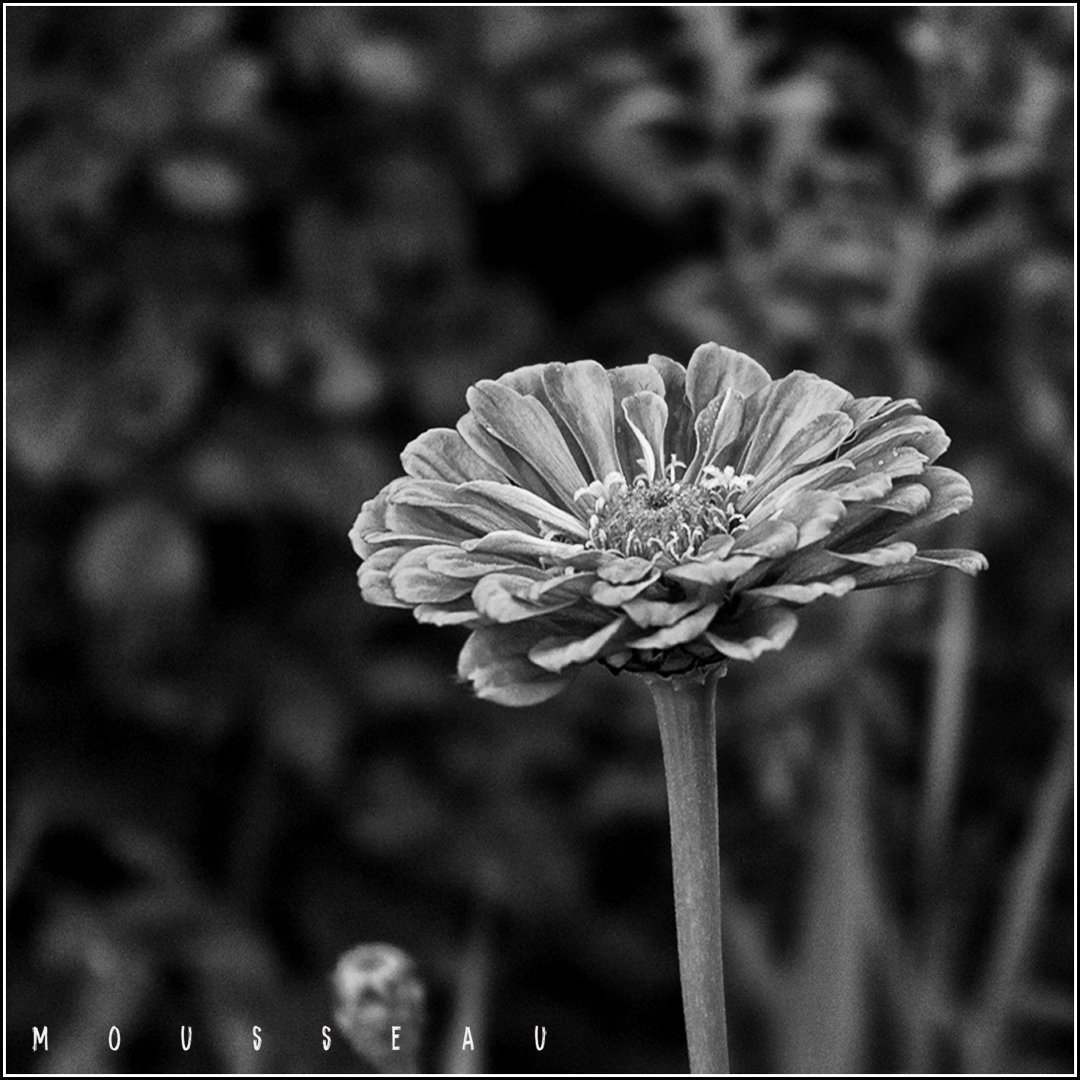
Anne Sandler, who writes Slow Shutter Speed, is hosting the Lens-Artist Photo Challenge this week and she’s asking for black and white or monochrome images. It may be coincidence, or perhaps synchronicity, but I had posted a black and white photo of my Annabelle Hydrangea last month, thinking that with white flower balls, it was an obvious choice to process the image in grey scale. Anne’s challenge; however, made me consider other flowers in the garden, not just the white ones. What would they look like in black and white? Would they be just as dramatic or interesting as the Hydrangea? Would a viewer innately know what the ‘real’ colour is?
Colour photos in newspapers didn’t appear before the 1970’s, after all – not that long ago. Magazines starting printing in colour in the 1930’s so before that, and obviously before the internet and social media encouraged gazillions of people to snap and post gazillions of pretty flower photos, most images we saw, including flower photos, were in black and white.
Another bit of synchronicity – I watched a webinar last week about how best to create black and white images. I don’t have the software the presenter was using so much of it was lost on me, but two things did stick out: the necessity to process your image in colour the best you can first, before clicking any buttons to convert to black and white, and how you might use control points to enhance lighter or darker areas/objects, to help create mood and even tell a story.
All of these photos were taken before the sun rose above the eastern tree line; the indirect light makes it my favourite time of day to take pictures. Unfortunately, butterflies and bees aren’t usually up that early!
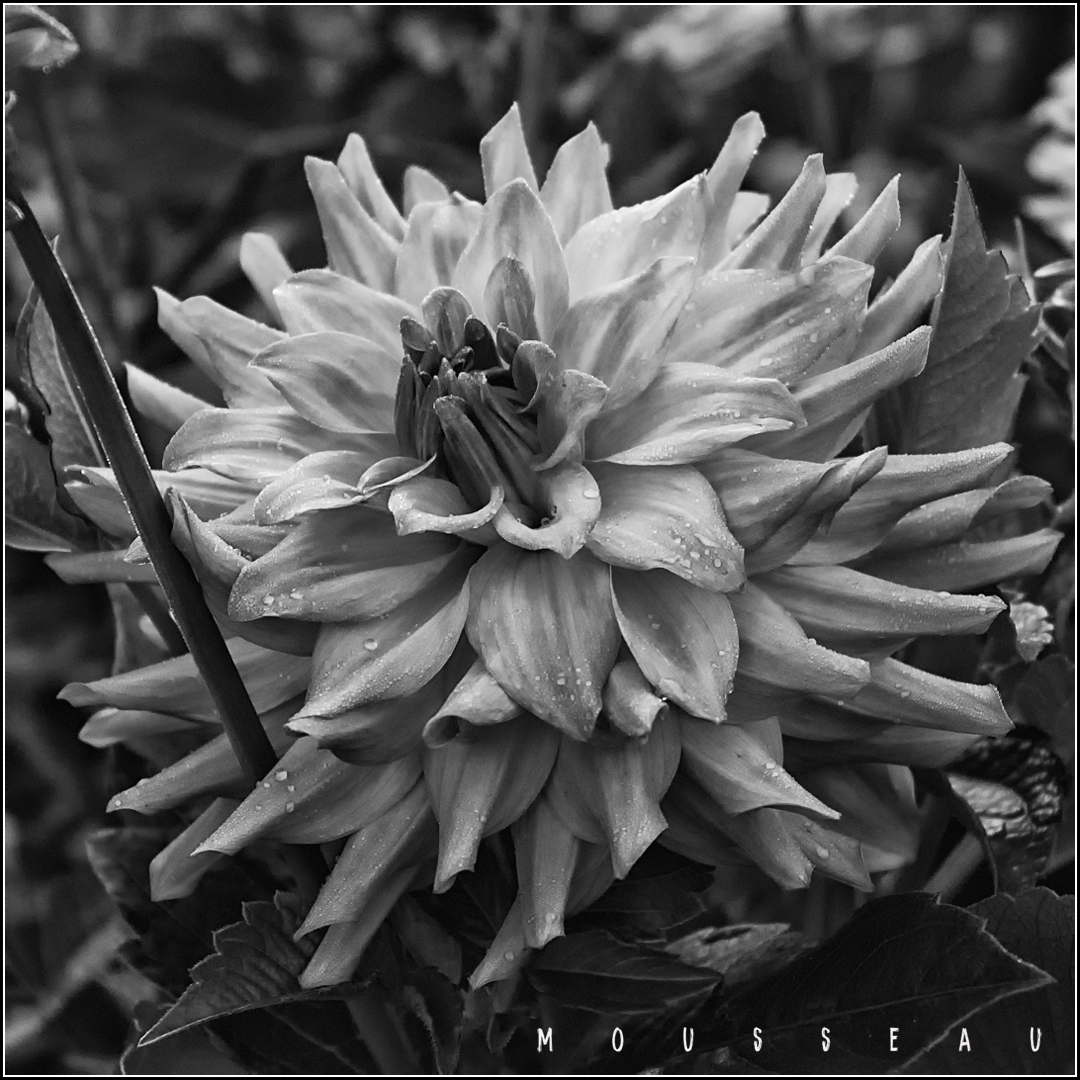
If you look up Dahlia ‘Just Peachy’ you’ll see how beautiful it is, with petals in various shades of pink, orange, fuchsia and, of course, peach. I was pleasantly surprised to discover how well that translates when converted to B&W:
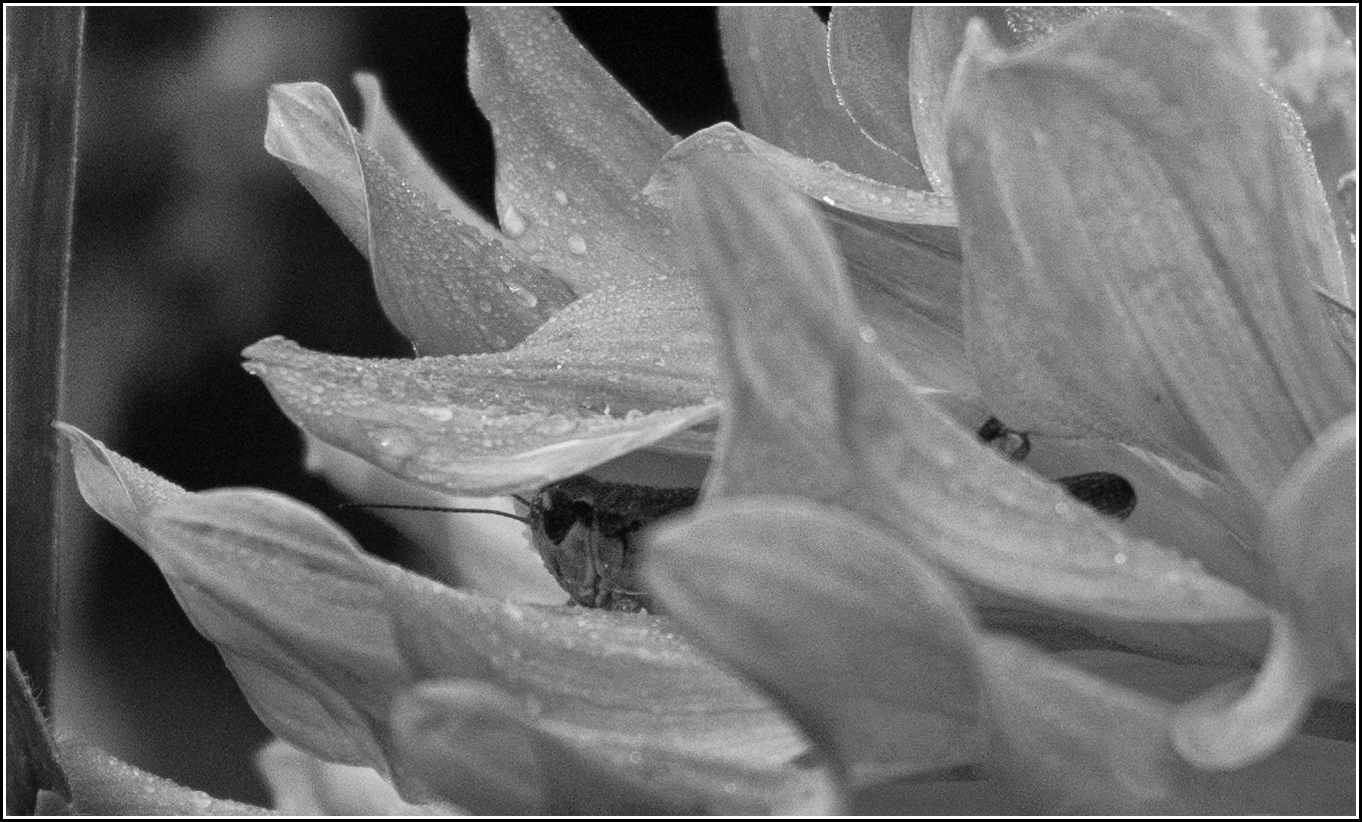
I was just as surprised to discover this visitor amongst the petals of an adjacent bloom:
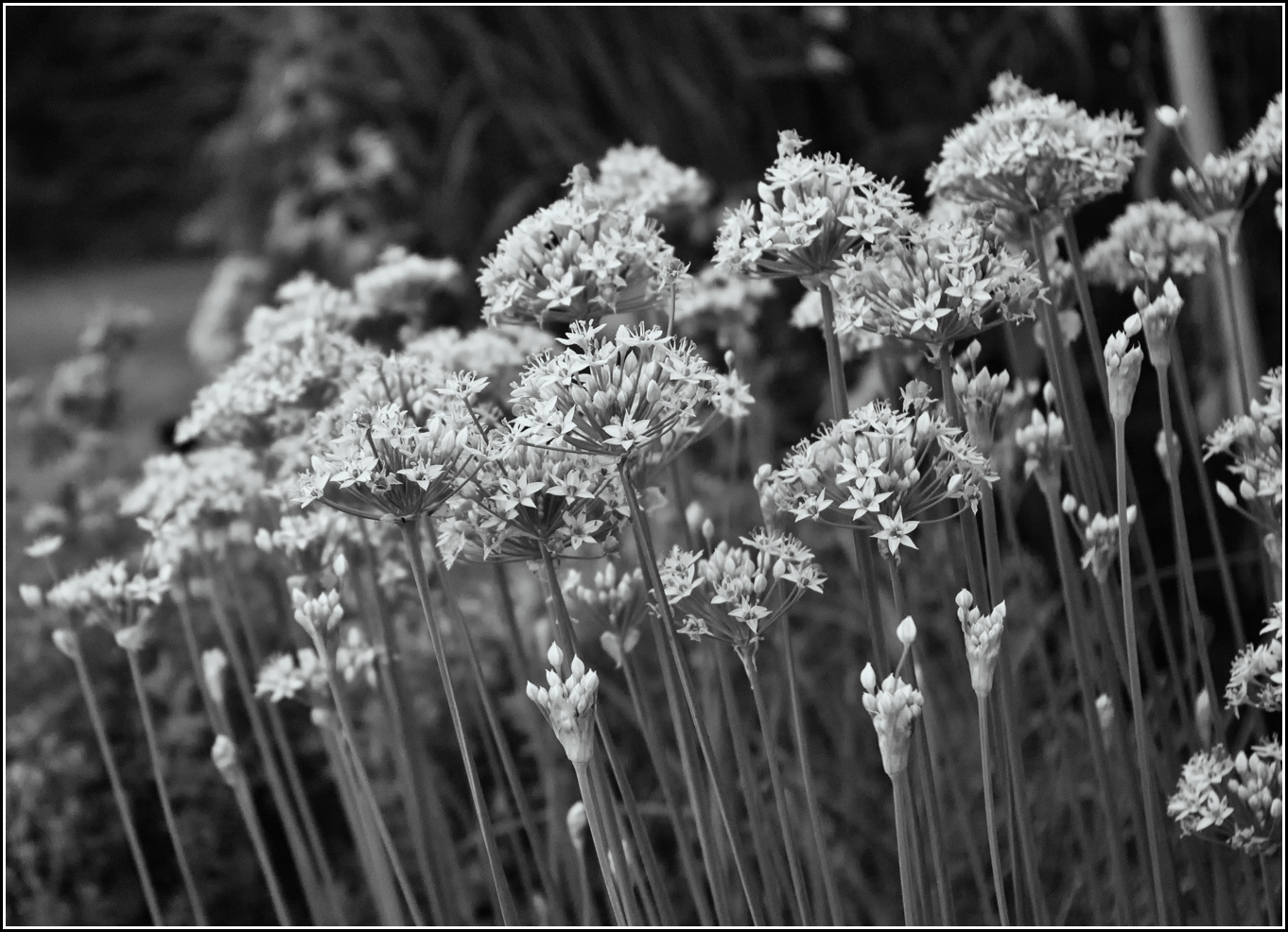
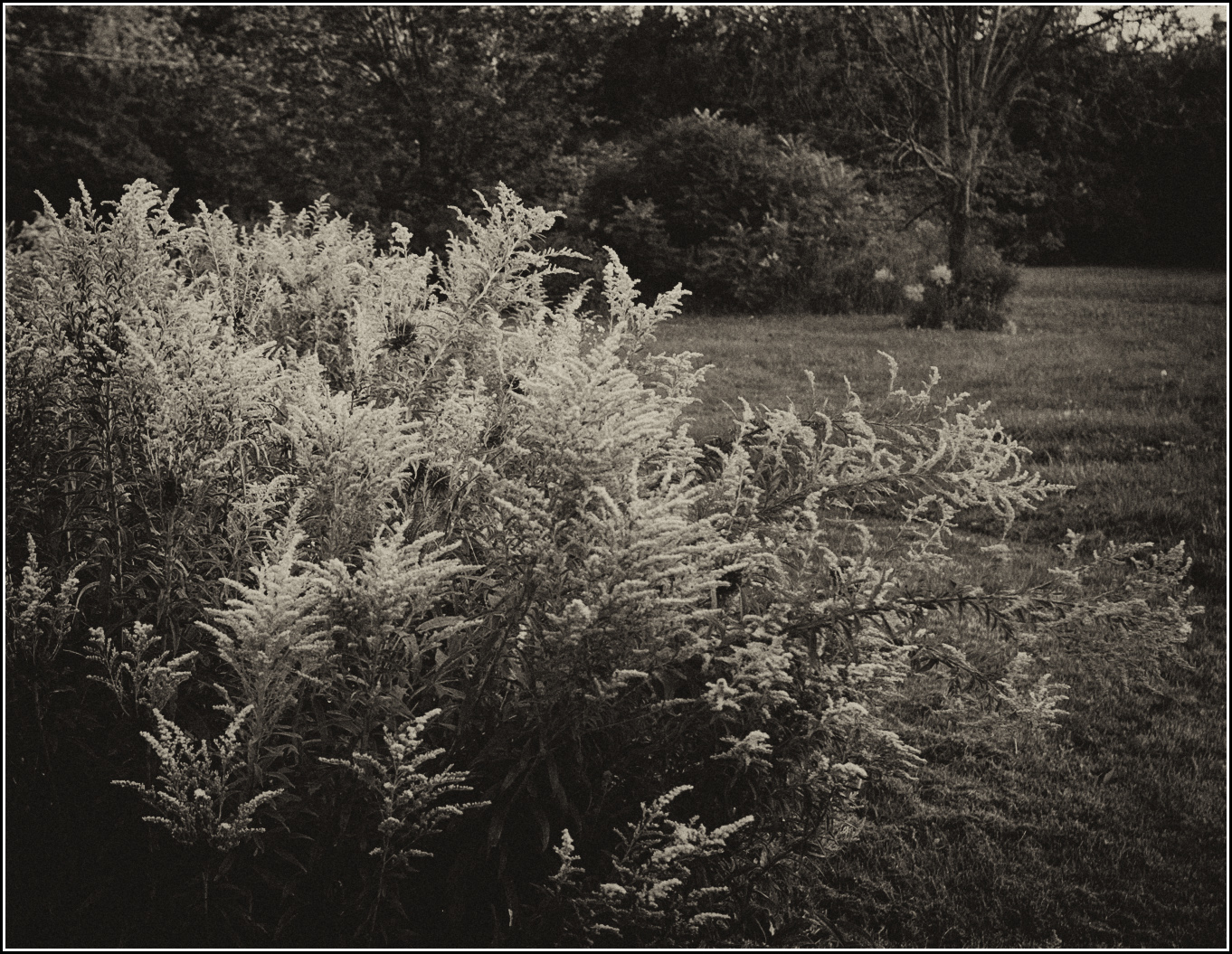
Right now my yard is ablaze with golden yellow goldenrod – Solidago. I remembered to inflict the Chelsea Chop onto many clumps at the end of June and into July, thereby prolonging its bloom period; fortuitous given our unusually warm (aka hot) late summer days. Bees and humans can all enjoy it for a few extra weeks. I was disappointed; however, with how it looks in black and white. I may try to shoot a solitary flower stalk instead of such a large bunch.
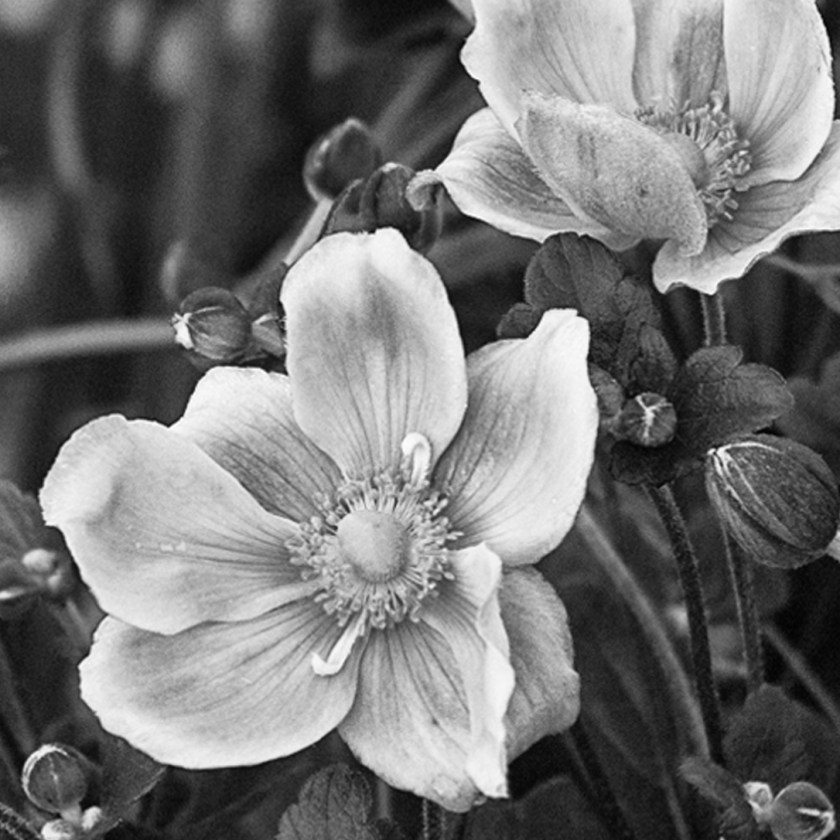
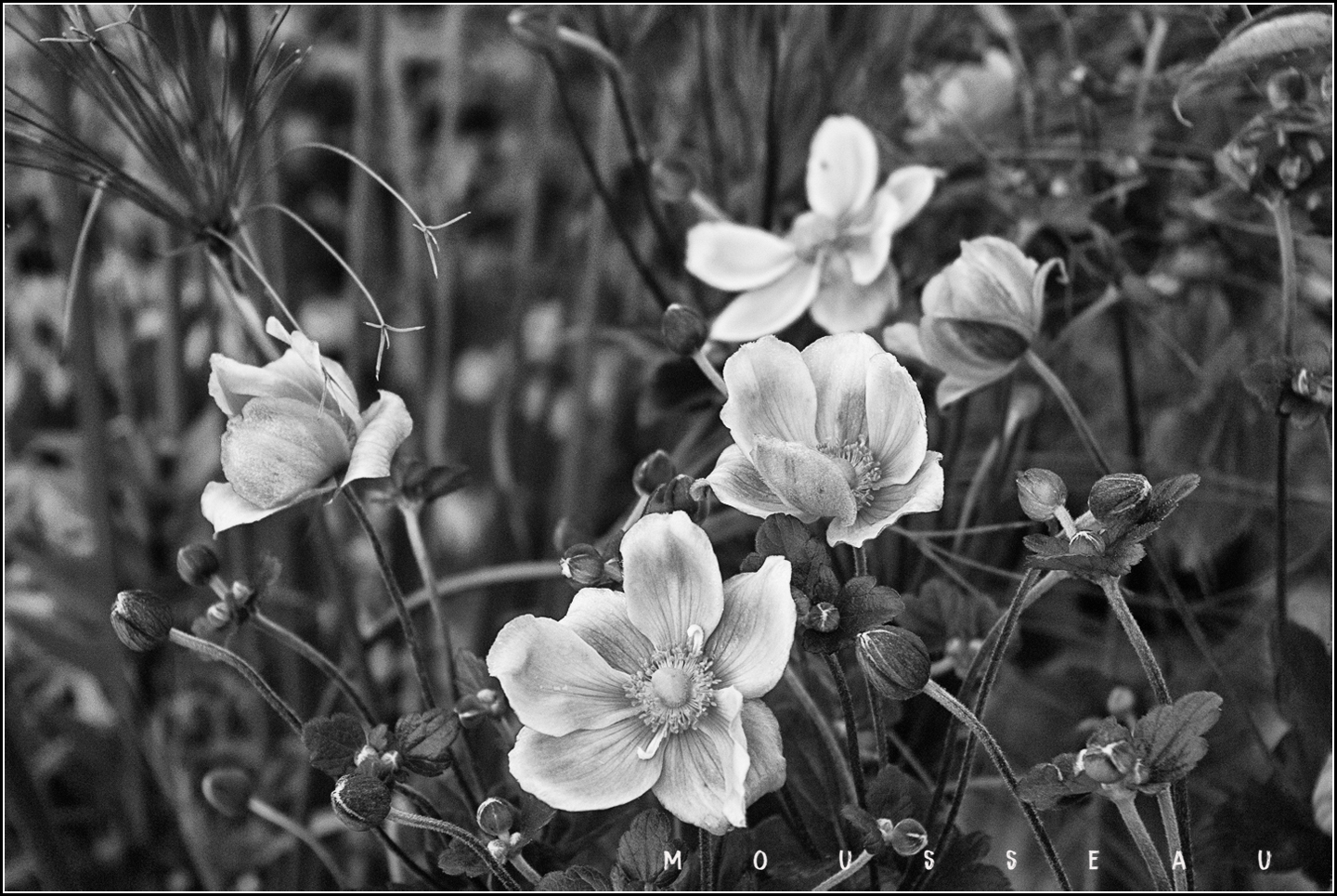
Finally, perhaps the most photogenic flower in my yard, a Japanese anemone – Eriocapitella hupehensis (and here I thought for all these years that ‘Anemone’ was part of its botanical name). I imagine peonies and Iris would also look great in black and white, as do many other flowers. Thanks again to Anne for suggesting this challenge.
 County Gardening
Beautiful B&Ws Chris. Some of the blossoms are clearly a stand out in white. I did notice the “visitor” before I read your text. I have a tendency to look at the photos before I read the post. Well done!
LikeLiked by 1 person
Thank you so much!
LikeLiked by 1 person
I really like the goldenrod. For grins, I would try softening the background and keeping the goldenrod sharp. I’ll be it would look great — like the Tithonia, which is my favorite.
LikeLiked by 1 person
That I shall try!
LikeLiked by 1 person
Your narration and photos are certainly an alternate view of your garden and very interesting. I think with Goldenrod we expect it to be cheerful yellow. Another good b&w would be Mullein, when it is just starting to grow with the rosette of leaves (I have photos of those leaves covered in waterdrops).
LikeLiked by 1 person
Thank you Alice – I also love mullein and let it grow in several spots every year (never can plan where the seeds will land eh).
LikeLike
Lovely florals, Chris– well done!
LikeLiked by 1 person
Thanks Eliza!
LikeLike
Very beautiful choices this week Chris. I’m honestly surprised that flowers which are so beautifully colorful are also lovely in B&W. Stunning work.
LikeLiked by 1 person
Thank you Tina! I was also surprised at the detail that B&W reveals.
LikeLike
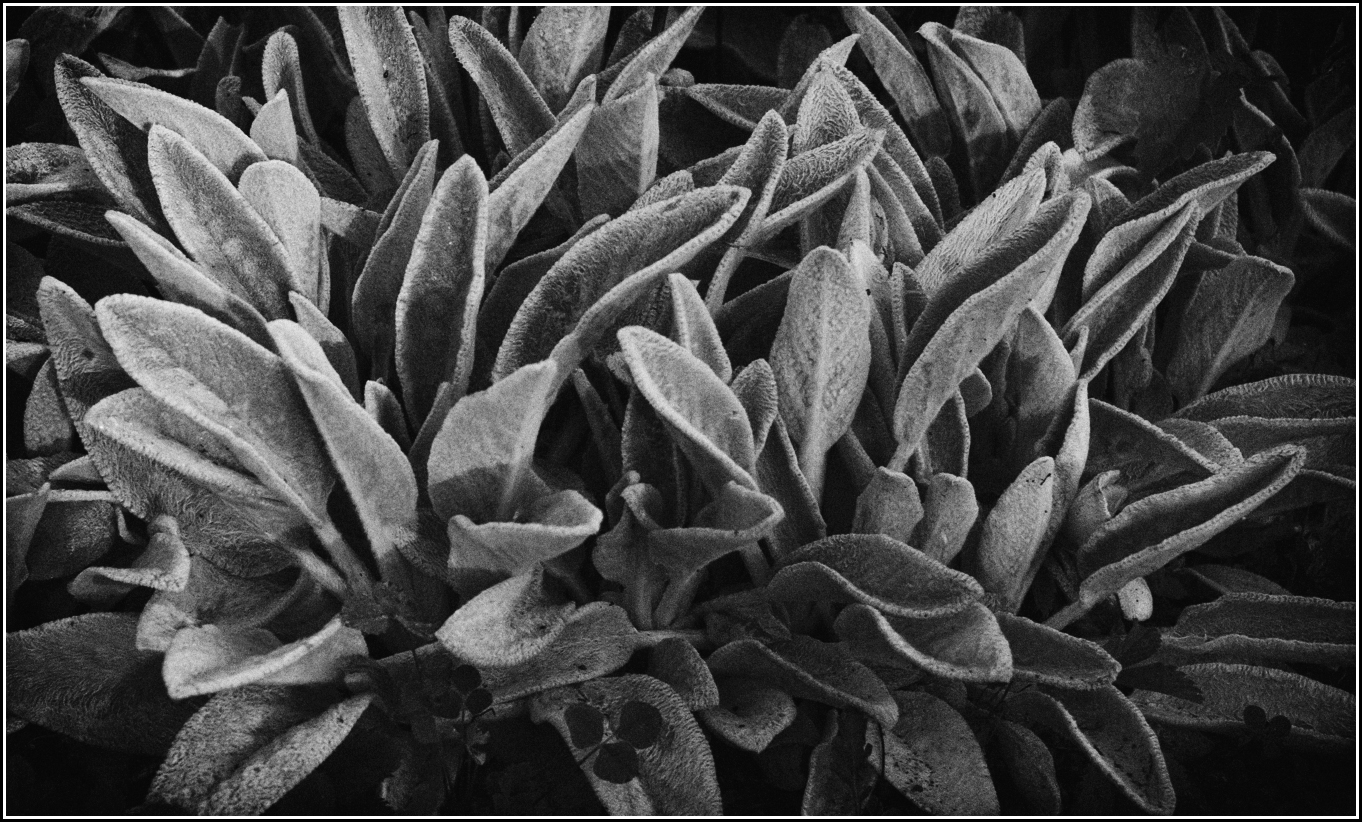
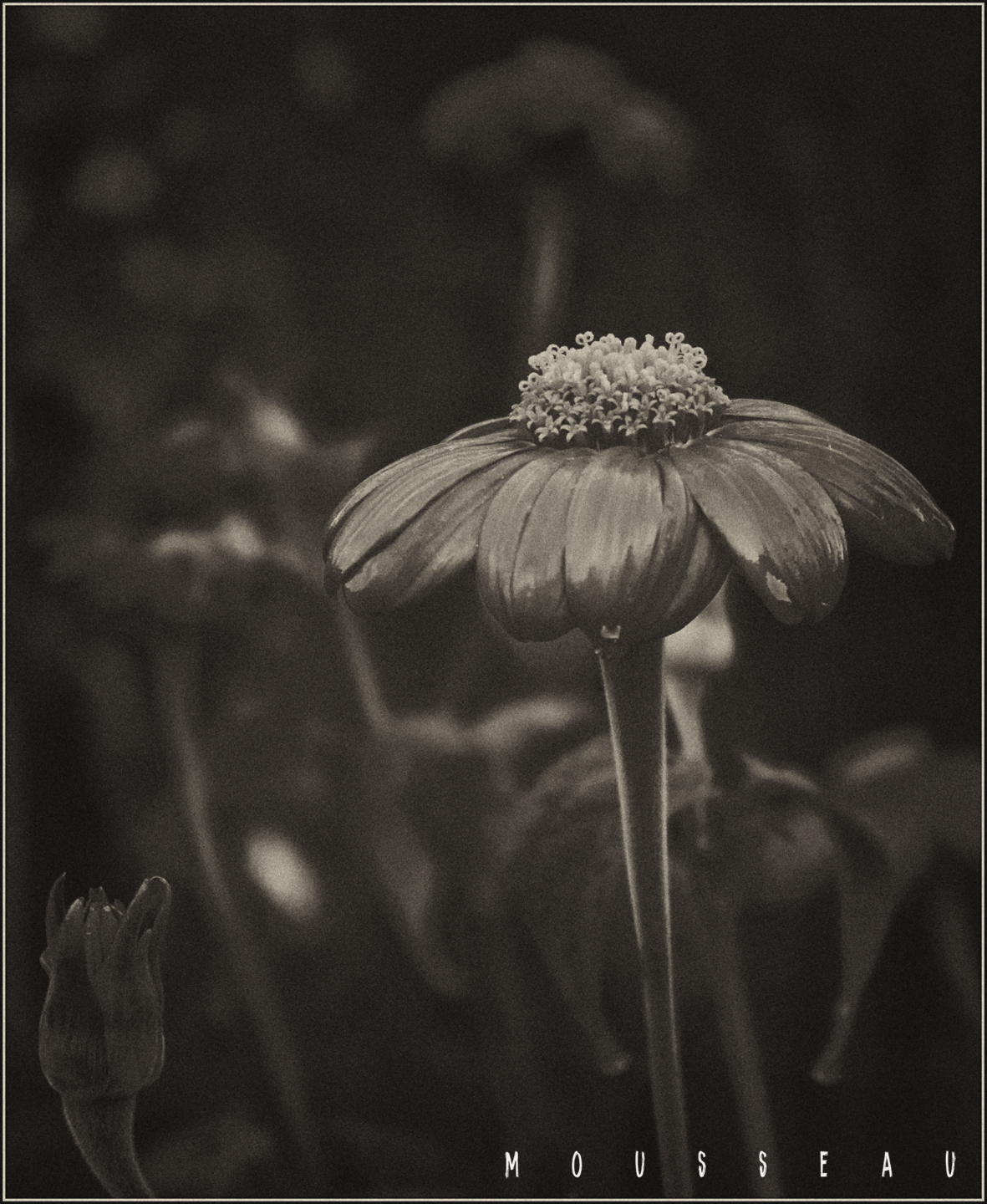
As a gardener myself, I have a hard time thinking flowers can be anything by colorful. You’re nailed it Chris. I love the soft fuzziness of the lambs ear, and the shininess of the Mexican sunflower. And my favorite this week is “Just Peachy” The detail in B & W suits it just fine. Donna
LikeLiked by 1 person
Thank you so much Donna!
LikeLiked by 1 person
Welcome!
LikeLiked by 1 person
We forget black and white with all the colour that the media throw at us these days. These are a lovely reflection and make me think of a slower pace of life.
LikeLiked by 1 person
Thanks Rosie!
LikeLike
Lovely – and who can resist raindrops on flowers…!
LikeLiked by 1 person
LOL! Not me!
LikeLike
Oh my, these are terrific photos and editing.
LikeLiked by 1 person
Thank you!
LikeLiked by 1 person
These are lovely photos Chris. Dahlias especially look so elegant in simple black and white, and it is surprisingly effective with the Tithonia too – colour distracts from the essence of the flower and you can see it in a completely new way. 😀
LikeLiked by 1 person
Thanks Cathy…b&w really does allow parts of a flower like veins, hairy bits, shadows…to be visible
LikeLiked by 1 person