
It’s the time of year when spring ephemerals, mainly woodland, mainly native, start to bloom. Although my property is usually a tad waterlogged this time of year, it’s also usually very dry July though October; as a result, most ephemerals will sulk here – not spreading or clumping up nicely like they do elsewhere. They do show up here and there though, and a few tolerate dry summers more than others. Here are today’s six things in my garden, including a few of those hardy ephemerals. Be sure to visit Jim’s page to see Sixes from around the world.
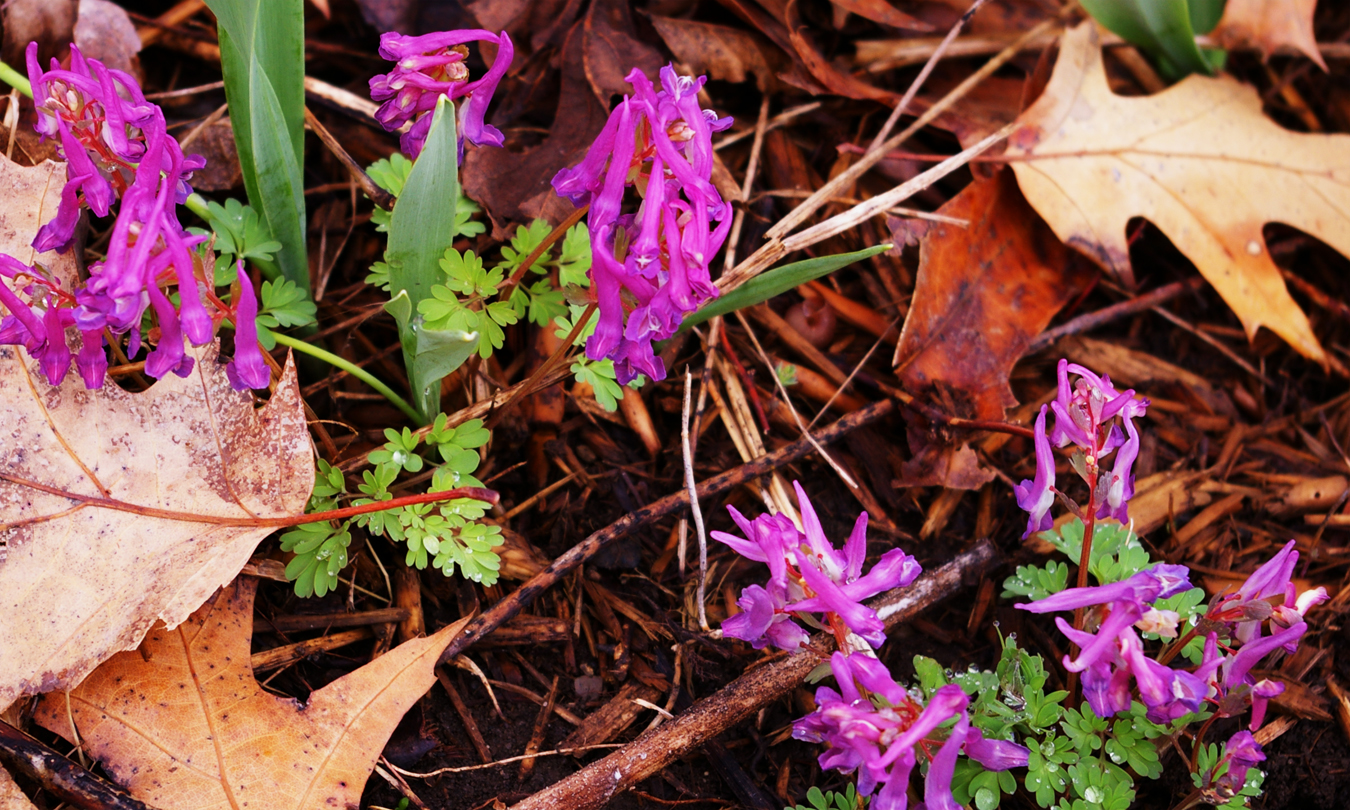
Cardamine douglassii, aka purple cress or limestone bittercress, is a native that seems to be slowly spreading thru a lightly wooded section of the yard, perhaps helped by my thinning of the high sugar maple canopy. They should stick around until mid to late May.

Another light purple ephemeral is the low growing Corydalis solida. This is native to Europe and Asia, and I actually planted the little corms for this low growing beauty. They’re not spreading very quickly, although I think there’s two or three new flower spikes this year.
This next woodland plant isn’t really an ephemeral – the foliage lasts well into summer – and it’s everywhere in my woods so it must have successfully adapted to the dry summers. It’s native though, and I love it because the deep purple stems and leaves unfurl in dramatic fashion on their way to stretching up to 100 cm (three feet). The flowers on this species of blue cohosh (Caulophyllum giganteum) are inconspicuous but not invisible since they flower before leaves enlarge. Another species of blue cohosh (Caulophyllum thalictroides) has flowers that bloom with the leaves as they grown out.

On to the kitchen garden, where asparagus has made an appearance! I’ve been slowly enlarging my asparagus bed and hope to harvest enough for several meals this year. (I know – I need to pull out all those Oenothera biennis rosettes – they have quite deep roots though!!)

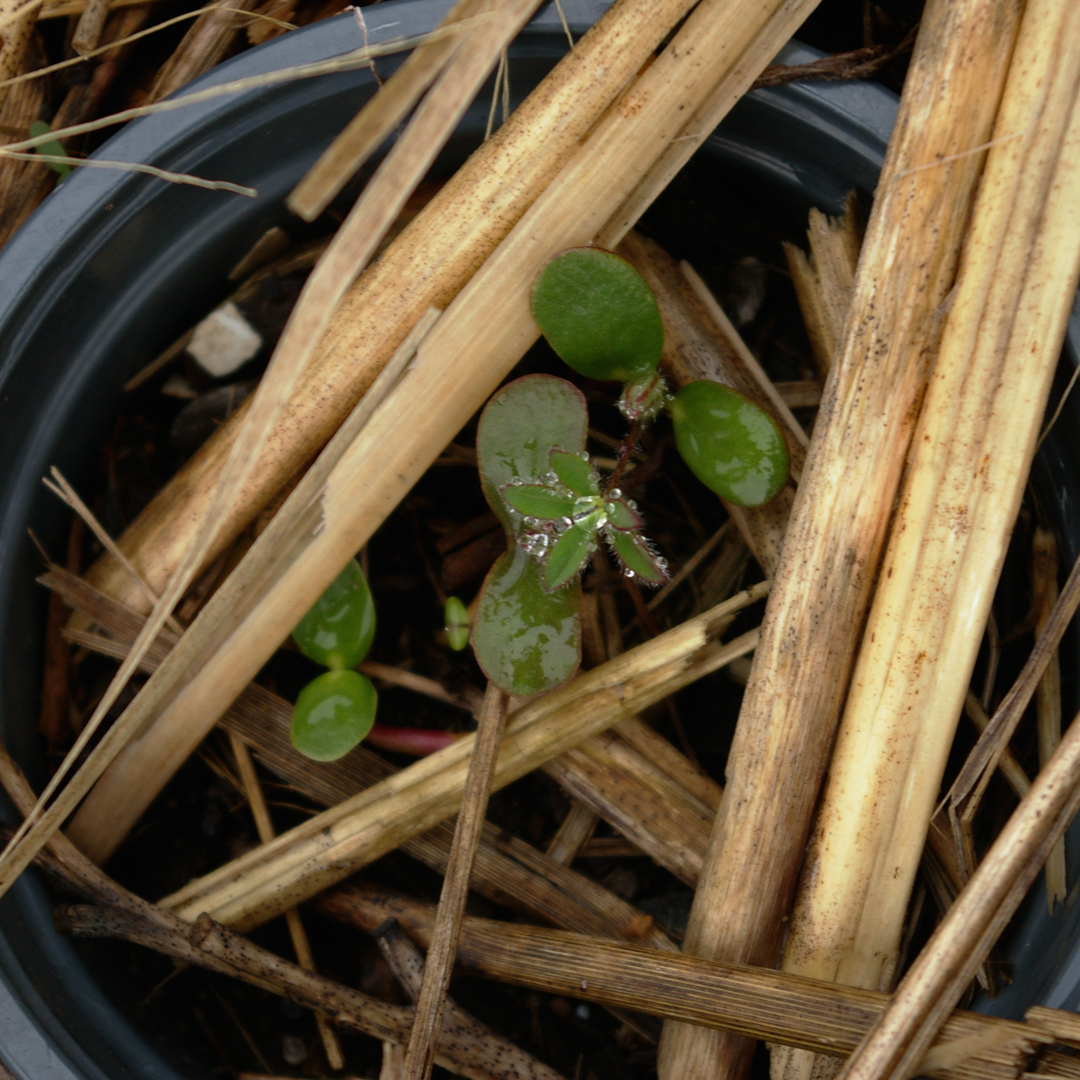
Also in the kitchen garden, currently in a raised bed but soon to be moved, making way for carrots and beets, are small pots of lupin seedlings. I sunk the pots and seeds last fall – now I just need to figure out where I’ll plant them!
Finally, I really have to get back to the daffodils. The smaller ones I showed last week are still in bloom, and joining them in my gardens are the medium and large daffs, including many hundreds of all yellow, classic trumpet daffodils, plus some featuring different shades of white, orange, yellow, with frilled trumpets or petals… it’s yellow everywhere right now, and I love it! I’m going to revisit my Hyacinth corner again, because I really, really love this yellow and orange combo on the daffs that have just opened, especially as they’re coming up amidst the Hyacinths. Have a great week everyone!!

 County Gardening
Lovely six, all looking hopeful.
LikeLiked by 1 person
Thanks Rosie – it’s turning into a lovely spring!
LikeLike
Those are beautiful flowers…great photos. Have you tried loosening the soil around the Oenothera with a sharp knife & then pulling?
LikeLiked by 1 person
That will indeed be on the list of weekend gardening tasks! Thanks for the suggestion!
LikeLike
This corydalis has a so powerful color. Enjoy the asparagus! They don’t work here, there isn’t enough sandy soil because I have clay soil… I buy mine at the supermarket… 🤷🏼♂️
LikeLiked by 1 person
My soil is clay as well… it means the asparagus doesn’t throw up as many spears as in sandy soil, but still…
LikeLiked by 1 person
I have to investigate…and why not try in a raised bed?
LikeLiked by 1 person
Yes, exactly! There are large, commercial asparagus farms not too far from me; they have found a patch of sandy soil, as you say, that everyone goes to (as well as supermarkets) – but if you can grow your own, why not?
LikeLiked by 1 person
I really enjoyed the spring ephemerals. We have Cardamine species here some of which are weedy and some of which are beautiful. The Cohosh species are delightful.
Lovely daffodils. They are almost gone here now but there are still some later appearing cultivars.
LikeLiked by 1 person
I think it’s peak weekend for daffs here, although I also several types yet to bloom – looking forward to them as well!
LikeLike
‘Cohosh’ seemed familiar, so I looked up the word and found that black cohosh is promoted by herbalists for a variety of symptoms. I probably heard my herbalist friend talking about it. I have no idea what that species looks like, but yours is very attractive.
I finally figured out what the orange and yellow daffodils remind me of: a good country egg. When I switched from grocery store eggs to local eggs from organically fed chickens, I was astonished by the difference in yolk color. No more pale yellow! The yolks were that same deep orange as your daffodils.
LikeLiked by 1 person
Yes! You’re absolutely right about the egg yolk colour!!
LikeLiked by 1 person
A beautiful spring wake-up! 🤩
LikeLiked by 1 person
😊😊
LikeLike
Now I realize, Chris, why all the hard work in the garden. I’m truly stunned by all you’ve accomplished. Beautiful. Gotta love all the new growth and colour at this time of year. Give that boy a shower of gold stars!
I’m thinking – a coffee table book of photos and copy.
Sent from my Bell Samsung device over Canada’s largest network.
LikeLiked by 1 person
LOL! Thanks Jan – it’s truly a labour if love!
LikeLike
Lovely selections! I am envious of the asparagus. I think it would take a feat of geoengineering for me to grow it here. When I lived in Minnesota, I could find it growing wild Your cohosh is gorgeous! I am only familiar with the thalictroides. Does the foliage keep that color?
LikeLiked by 1 person
The cohosh leaves become greener as the season progresses, a nice dark green. The structure of the plant is really interesting and identifiable thru the summer…makes a nice contrast to brown and grey tree trunks…
LikeLike
A great selection. The Corydalis solid is a lovely vivid colour. Asparagus too – fancy veg!
LikeLiked by 1 person
LOL – very fancy!!
LikeLiked by 1 person
Love it, the ephemerals are my favorites. I am looking forward to seeing the blue cohosh and jealous of the asparagus.
LikeLiked by 1 person
The next bunch of ephemerals…trilliums and Erythronium – are waiting in the wings…
LikeLiked by 1 person
Please share
LikeLiked by 1 person
Both species of cohosh are native to Eastern North America. I looked it up because I do not remember ever encountering it, although the name is familiar. Do they grow wild, or were they planted intentionally?
LikeLike