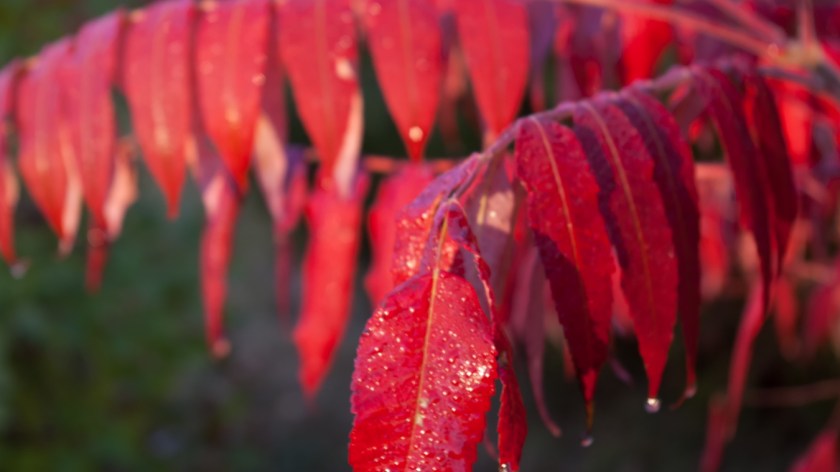
Although we’re well into autumn, a lovely south wind is bringing balmy, 20c/70f degrees and sunshine this weekend – thanks Texas and Florida! A few light overnight frosts this past week have, unfortunately, succeeded in killing off the more tropical annuals (Tithonia and Lablab purpurea are not a pretty sight…), while leaving some of the hardier flowers, even the tall dahlias, still pushing out blooms. The chilly temperatures have also coaxed some colour into many deciduous tree and shrub foliage, and that’s the focus of today’s Six. Check out Jim’s site, Garden Ruminations, to see fall colours around the world (spring colours as well, from southern hemisphere gardeners.)
Staghorn Sumac – Rhus typhina – is considered by some a weed tree since it spreads so quickly here. There’s loads of them around the edges of my yard and I love the screening they provide at the front plus the fall colours, like the featured photo, above. Birds like the berries they produce; I’ve never cooked with them or made tea, although I know it’s a bit of a trend these days.
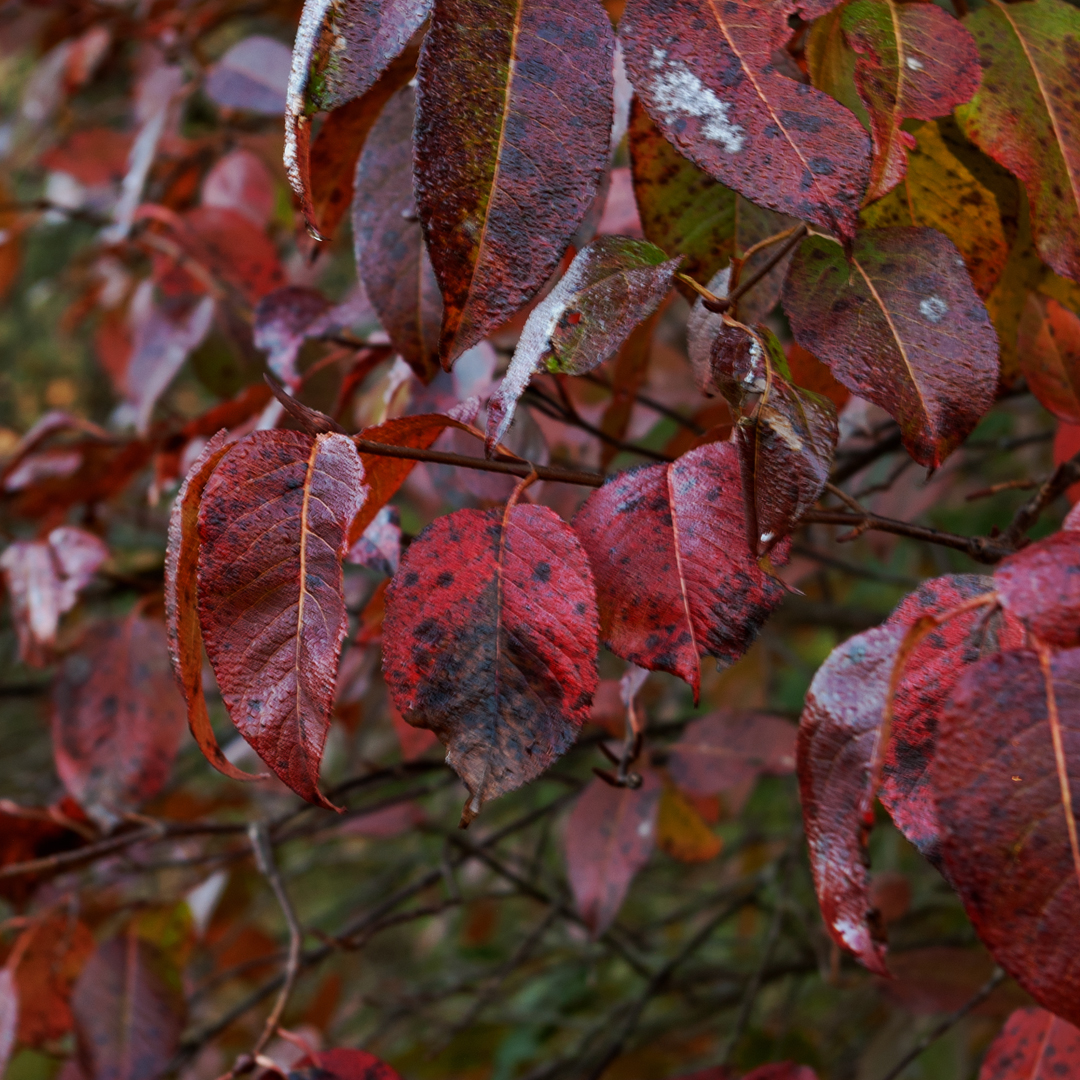
One of my favourite shrubs for both spring flowers and fall foliage are Viburnums. This native nannyberry – Viburnum lentago – is a reliable representative of the genus.
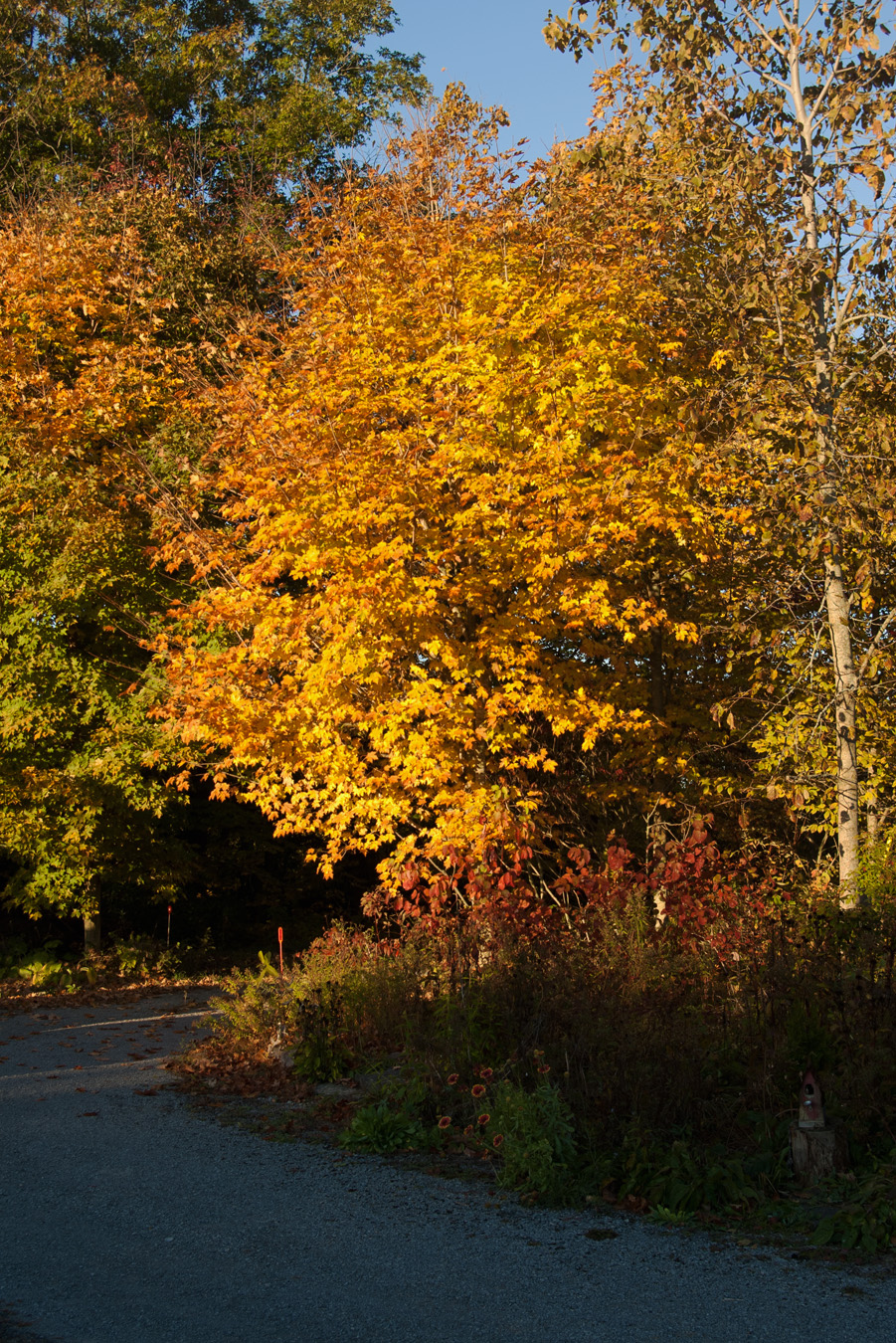
Maples are of course the main attraction for spectacular fall colours in much of Canada. Most of them on my property are sugar maples – Acer saccharum – and the leaves generally turn a nice yellow and orange, not the scarlet often seen in red maples (Acer rubrum).
Many dogwood trees and shrubs also have fabulous fall foliage, including this native red twig Cornus sericea.
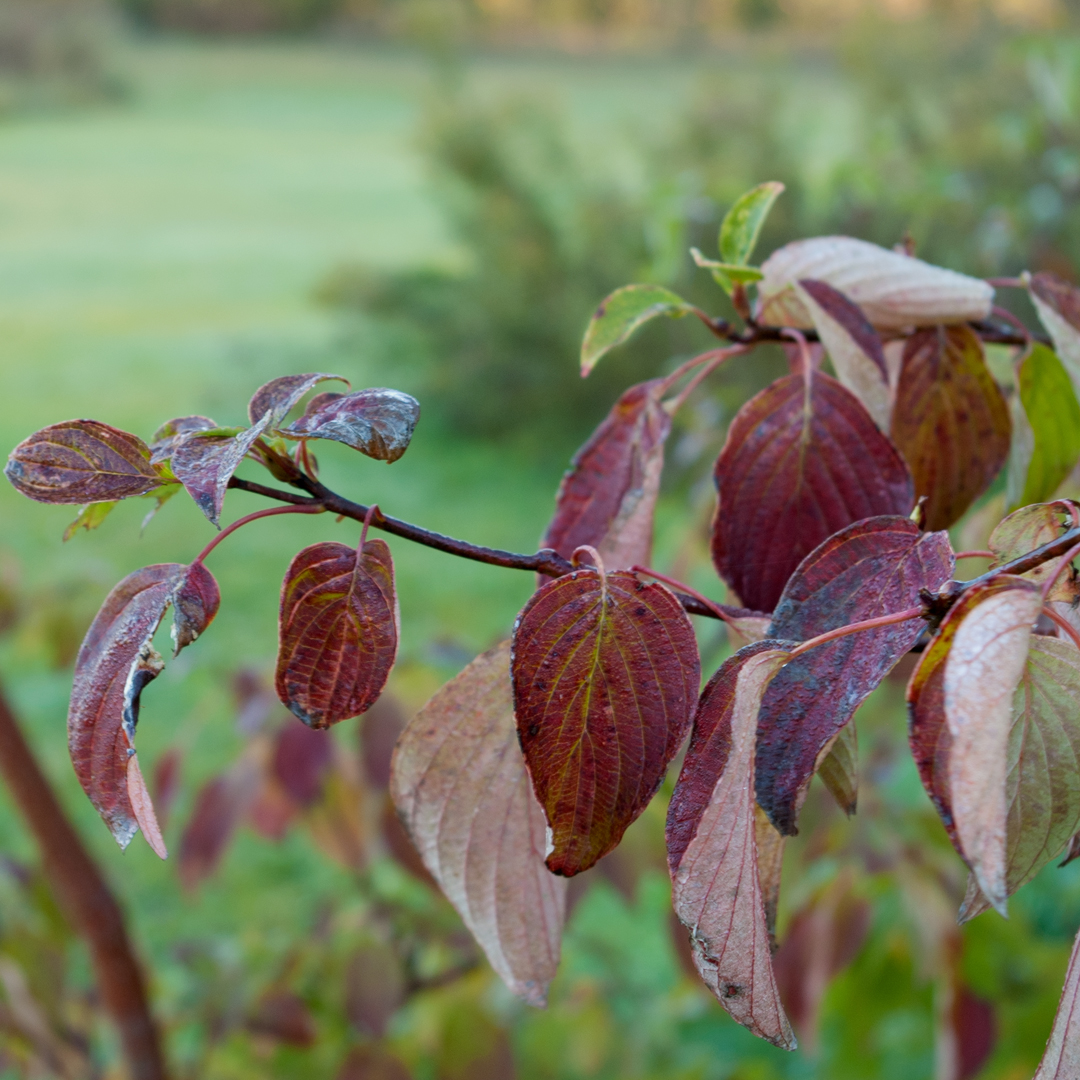
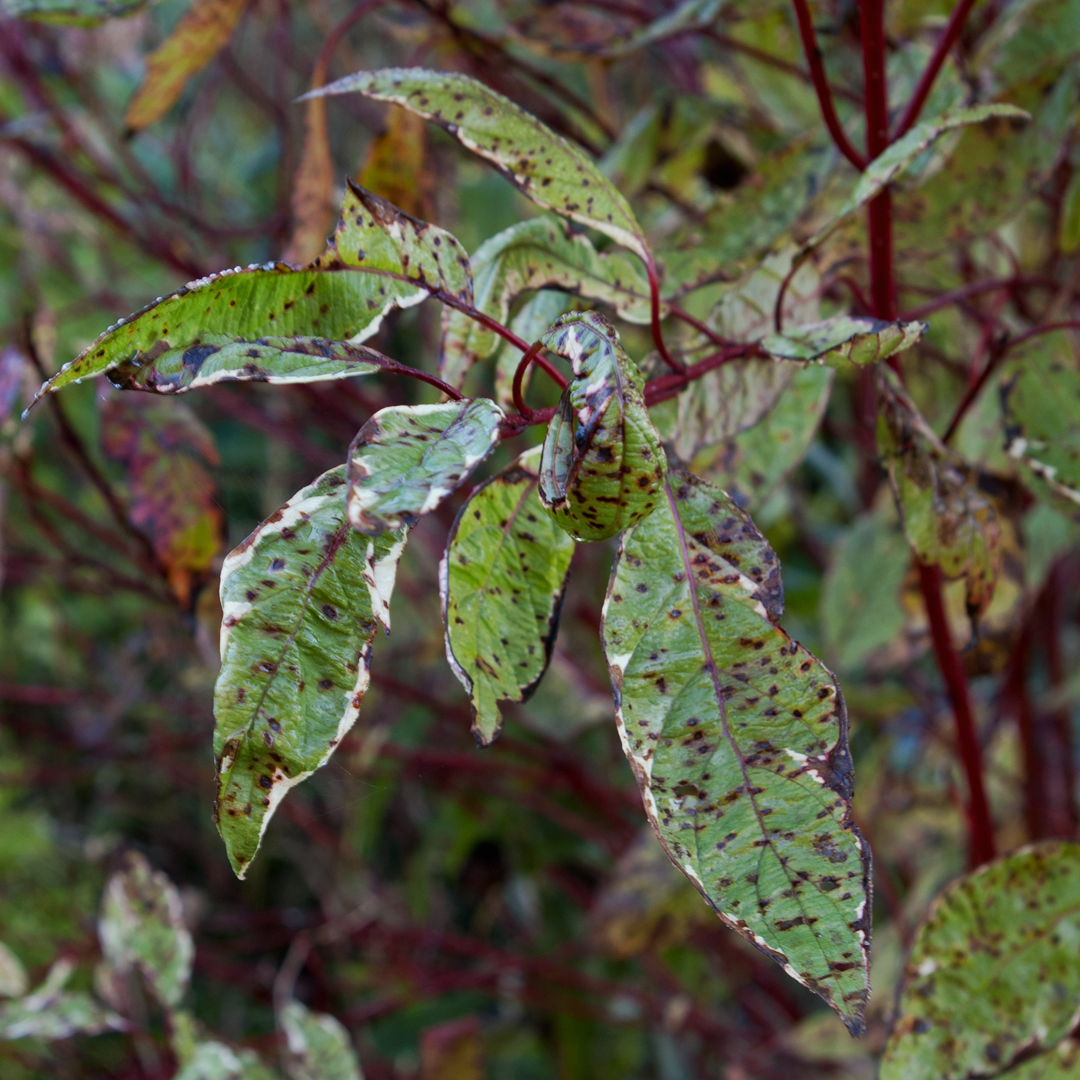
A few dogwoods don’t do much in my garden. The leaves of this C. alba – Siberian dogwood – for example, usually get mottled like this, then shrivel up and fall.
Not that mottled leaves can’t be attractive. I like how the foliage of Kentucky Coffeetree – Gymnocladus dioicus – look as it starts to decompose. These leaves are huge, and described as ‘doubly compounded, with secondary leaflets also compounded.’ In a few weeks this young tree (just a few metres high at the moment) will look like a big stick coming out of the ground. It’ll branch out as it gets older, but will still be quite identifiable by its lack of twigs and small limbs.

It’s Pumpkinfest Saturday in Wellington (Ontario) today – I’ll be heading out to enjoy the festivities in a bit. Hope everyone has a lovely weekend!
 County Gardening
Sumac is one of our most dependable sources of autumn color. Without the spectacular maples and such, we make do with what we have! I laughed at your comment about the dogwood getting mottled, then shriveling up and falling. I’m not falling yet, but a little mottling and shriveling is more noticeable than I’d like!
LikeLiked by 1 person
The native Cornus florida has been decimated by a wood borer in these parts although I do have one good representative in my yard. It is nice layered and colorful this week aided by the shade of some Southern loblolly pines.
LikeLike
glorious colours all over. How lucky we are!
LikeLiked by 1 person
Quite a variety and many colorful leaves in your yarden. A pumpkin fest sounds like fun.
LikeLiked by 1 person
It was a great day!
LikeLike
Some lovely colours today, I especially like the cornus sericea.
LikeLiked by 1 person
Birds like it too! They drop the seeds all over, keeping me well supplied with bright red twigs for the winter.
LikeLiked by 1 person
I love the eye you have for the changing fall foliage and the artful photos you took. Yes, how curious and pretty the coffeetree is.
LikeLiked by 1 person
Thank you Lisa! I enjoy trying to get/see the garden in different ways…
LikeLike
Hi Chris, ah the beautiful fall colors of Quebec… I love them !
The Rhus wins this weekend, 👏
LikeLiked by 1 person
I thought you;d like that!
LikeLiked by 1 person
Beautiful autumn colours, Chris. Enjoy your Pumpkinfest!
LikeLiked by 1 person
Thanks – it was great!
LikeLike
Great autumnal/fall colours.
LikeLiked by 1 person
Love to see fall! Thank you. Glad you’re enjoying our balmies, we’re having a cold front at about the same temp.
LikeLiked by 1 person
LOL – it’s all about context eh? We have a few more days of 20 degree, sunny days this week – and no frost forecast for at least the next 10 days. My dahlias are still blooming!!!
LikeLike
Well, I suppose it is that time of year. It always seems too early for it. We are getting color here, but more from the last summer warmth than from chill.
LikeLiked by 1 person
Fabulous colours and temperatures! Hope you had a happy pumpkinfest.
LikeLiked by 1 person
It was great, thanks!
LikeLiked by 1 person
Lovely colours, especially the Sumac. It grows wild in a few spots near us, and we would love some to settle in to the garden… not too near the house though as I know it can spread a little too vigorously! The golden maples are just as pretty as the red in my view. A pumpkin festival sounds good and hopefully involved some delicious food. 😃
LikeLiked by 1 person
Well…there was certainly lots of pumpkin pie at the festival! Plus food vendors of all sorts…it was a great day!
LikeLiked by 1 person