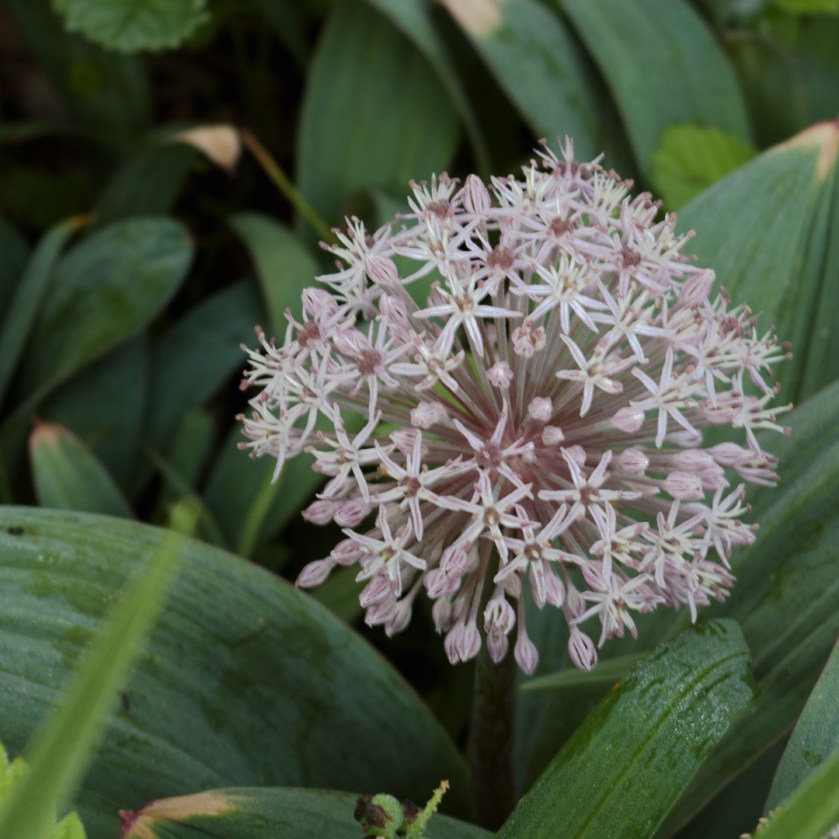
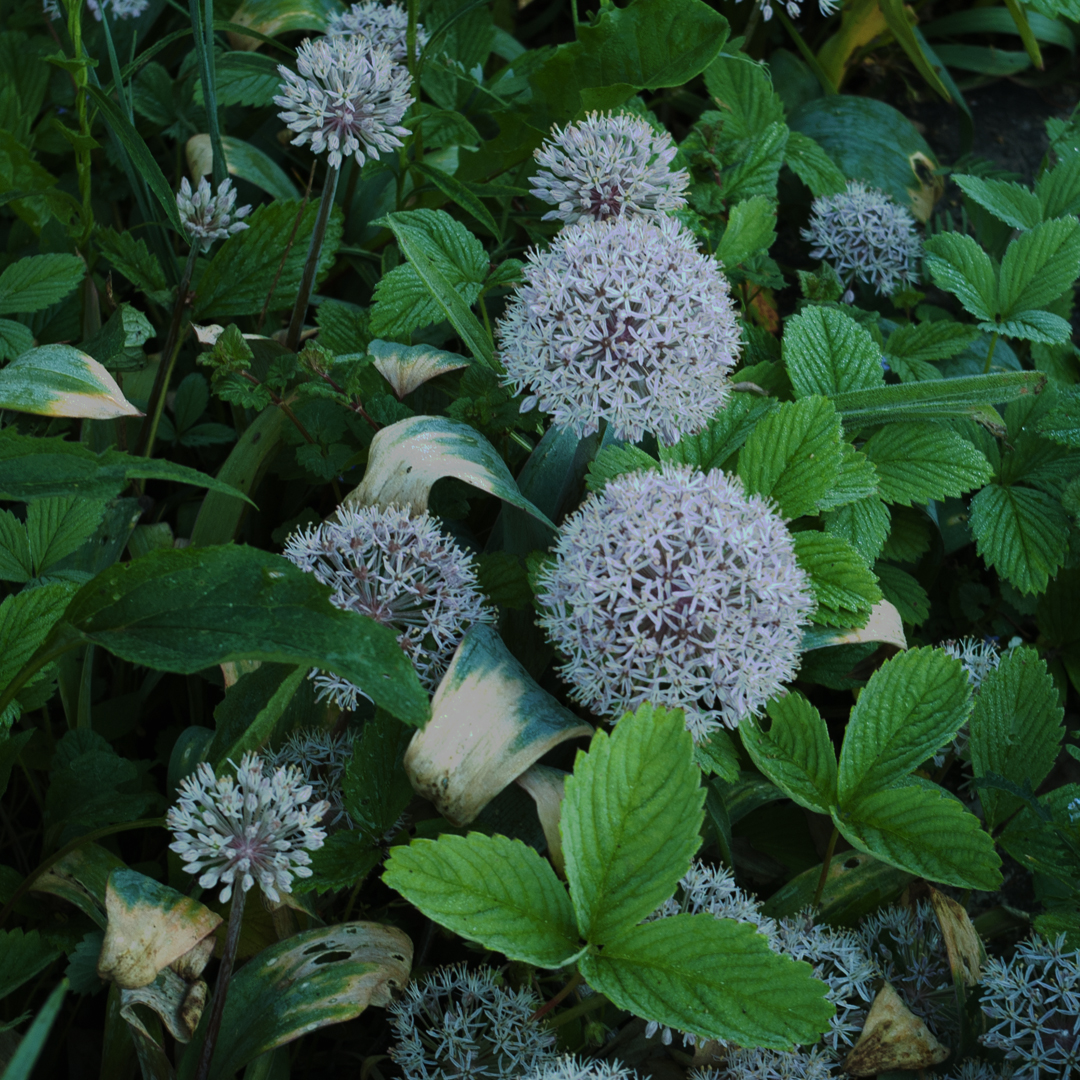
Alliums, or flowering onions, seem to spread either by offset (bulbs multiply and send up new leaves and flower stalks while attached to the parent bulb) or by seed, occasionally both ways. I’ve not noticed A. karataviense multiply via offset, but it does set a copious quantity of seeds. New plants start to bloom in about three years and, as you can see, I now have a small colony in this section of my side patio garden. It has a short flower stalk but lovely large leaves that are somewhat mottled. Honey bees and bumblebees really love these flowers!
Every Thursday this winter I’m posting an image or two taken last summer. I found that 2024 sped by so quickly and was filled with so many events, both happy and sad, that I feel I didn’t have time to simply enjoy it – especially the garden. And so I’d like, for just a few moments a week this winter, to pretend it’s still summer. To remember and re-live for an instant the sun’s warmth, the insect and birdsong, the heavy fragrances on humid, moist, slow moving air. Feel free to join me! I’m going to try to find photos I haven’t already shared, which may prove difficult, I know, and just write a line or two of explanation.
 County Gardening
Pretty bluish-lilacy (to me) color, that I’m not familiar with. Happy thought to think of busy Honeys and Bumbles on them. And I was going to add and 🍓🍓!! but then saw that you wrote ‘wild 🍓🍓🍓’ underneath your photo. Do you ever get to eat them, or do the furries or feathered-ones get them first?
LikeLiked by 1 person
I have sampled the wild strawberries – they grow in abundance here – but they’re too small to gather, really. And quite sour, until they’re not when, as you say, the critters get them before I can!
LikeLike
I knew generally what to expect when I read Allium, but these certainly look nothing like our wild onions, which have much smaller blooms and quite different leaves. These remind me of our blue stars (Amsonia spp.) which can develop the same ball-like flower heads.
Like your wild strawberries, ours are tiny, sour, and not tasty off the plant, although they are sometimes called Indian strawberries and have been eaten in the past. I’m on the lookout for the first blooms, which ought to be appearing soon, if they already haven’t.
LikeLike