Two thirds through spring, daffs and tulips are all but gone and, for a week or two, flowering shrubs take centre stage. Let’s start with a prologue though, an amuse-bouche for the eyes as I join Jim at Garden Ruminations in showcasing six things in my garden today.
The first is Camassia quamash in front of some Ipheion [post edit – or maybe better identified as Star of Bethleham – Ornithogalum umbellatum]. Both lovely when you get close up and personal; the Quamash stays in place, slowly multiplying via offsets, while the Ipheion [Ornithogalum umbellatum] seems to wander all over, seeds carried by insects perhaps. Also, slugs or rabbits like to nibble the tips of Ipheion [Ornithogalum umbellatum] leaves as they emerge very early in the spring.

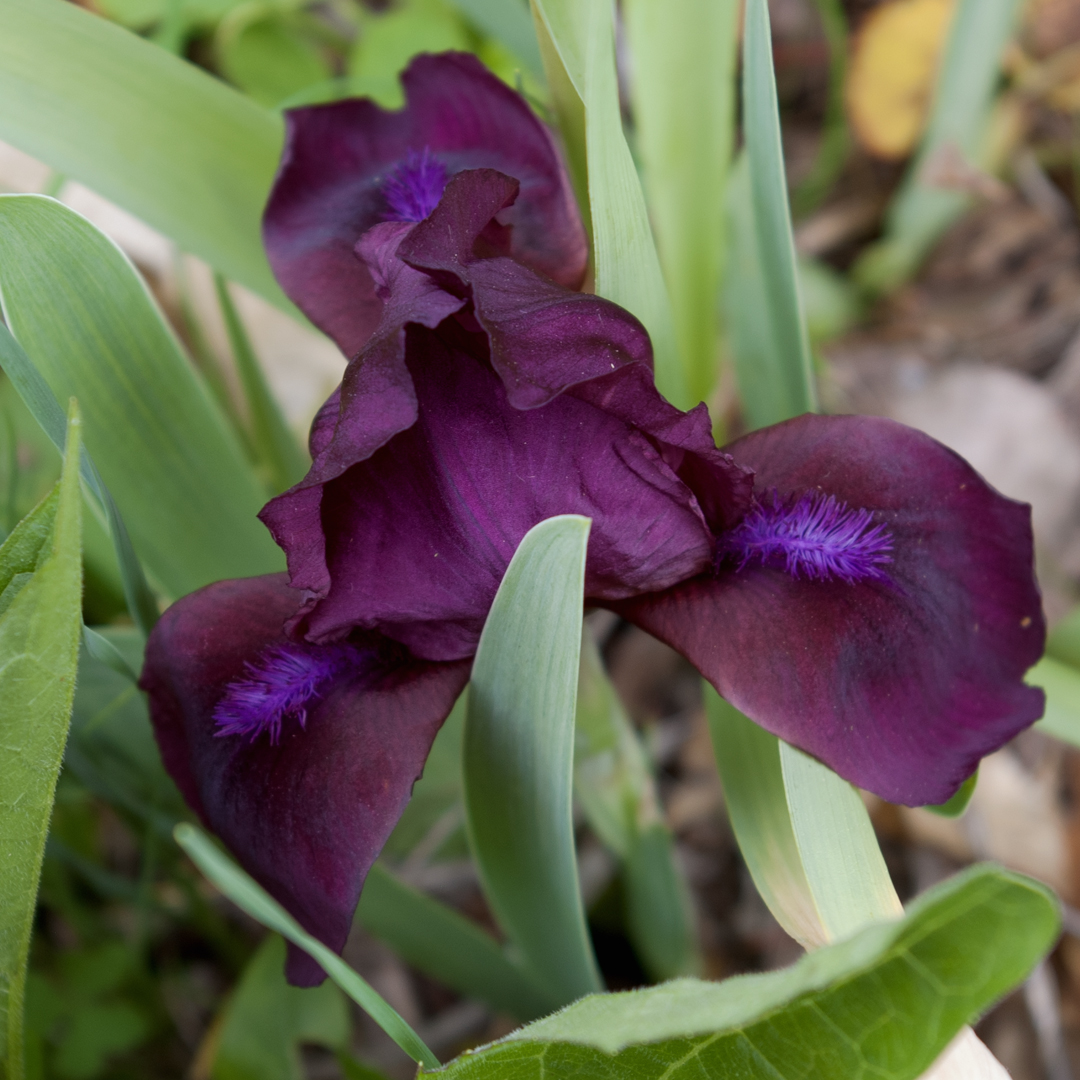
While we wait for tall bearded Iris to step into the spotlight (any day now, thanks to warm days and regular rainfall), dwarf iris are still blooming, as is this medium (or intermediate) bearded Iris. Name unknown, unfortunately, and this photo doesn’t do justice to the deep velvety purple of the standards and falls (official nomenclature of the upper and lower petals), plus the blue-ish fuzzy beard:
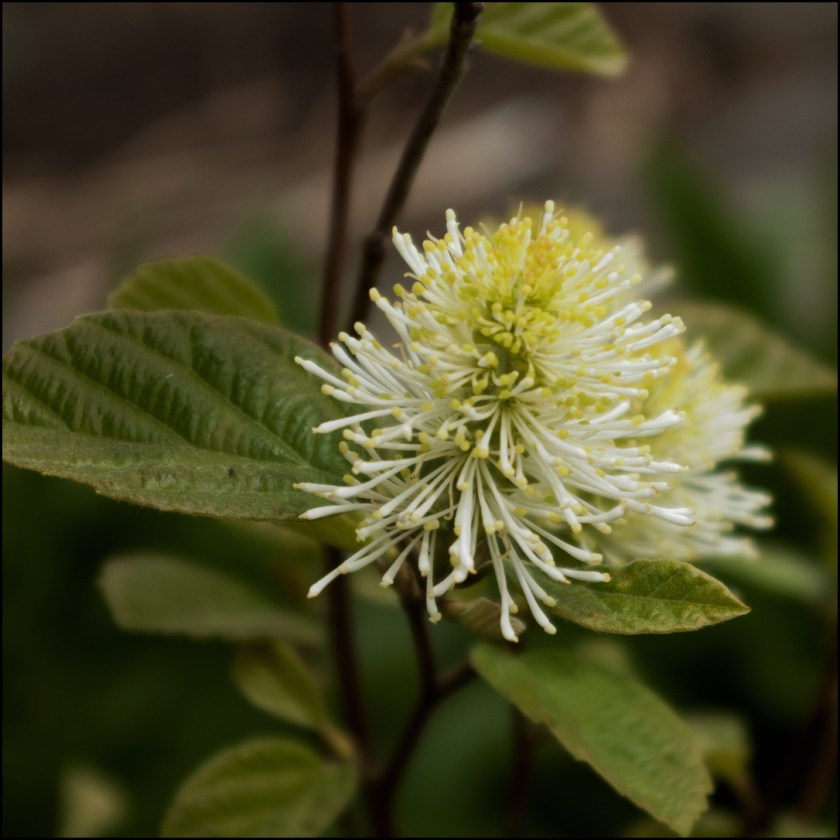
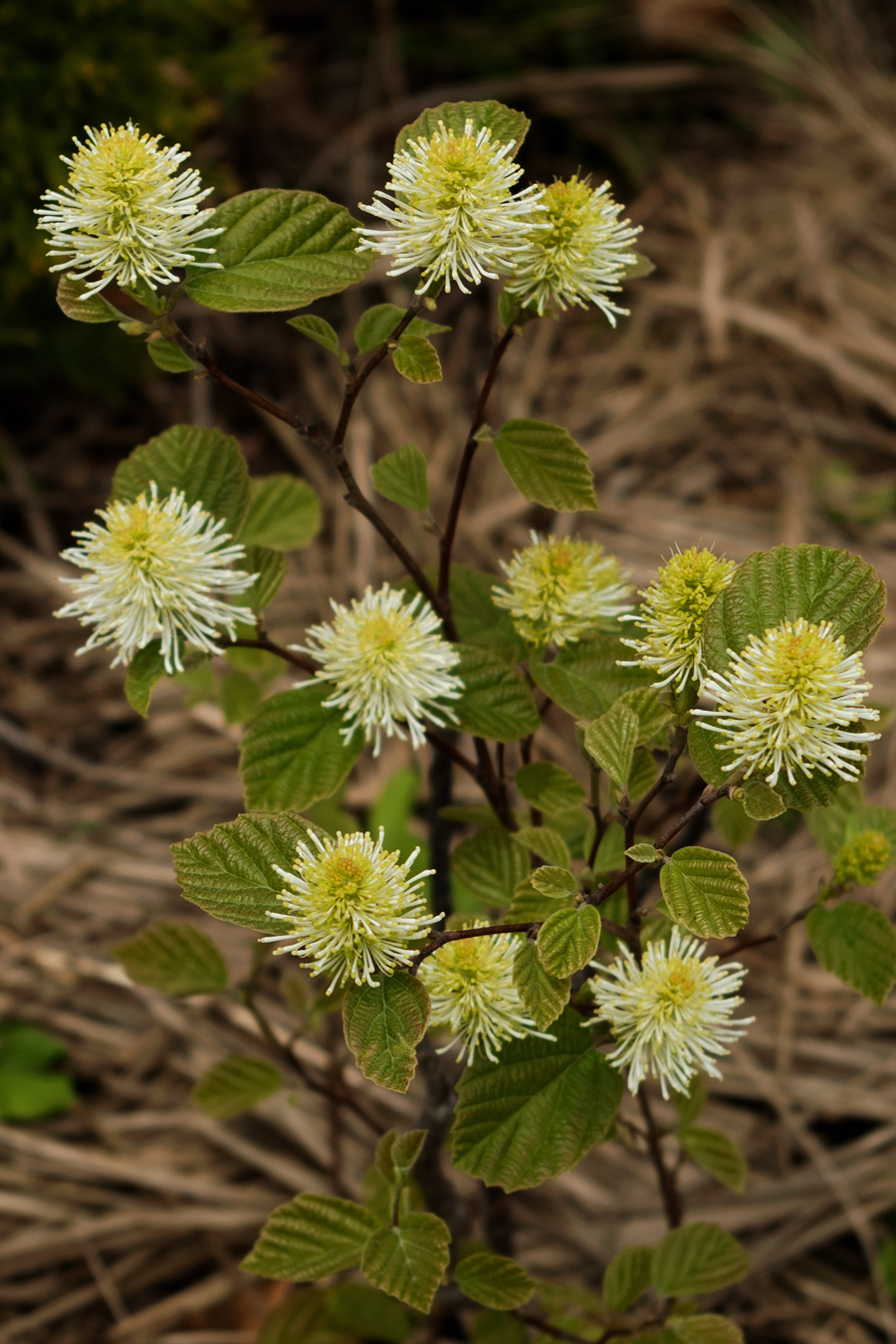
Enough with the appetizers – on with the main course! In August or September it’s hard to remember that so many shrubs were flowering in May. But here we are, and here are four of my favourites, starting with this Fothergilla. I planted it five years ago and it was marvelous – but then rabbits discovered it and chomped it down to just a few twigs. I moved it two springs ago and it’s just now starting to stage a come back. Love its bottlebrush flowers, and as chlorophyll flees the leaves in the fall, they turn brilliant shades of orange and red.
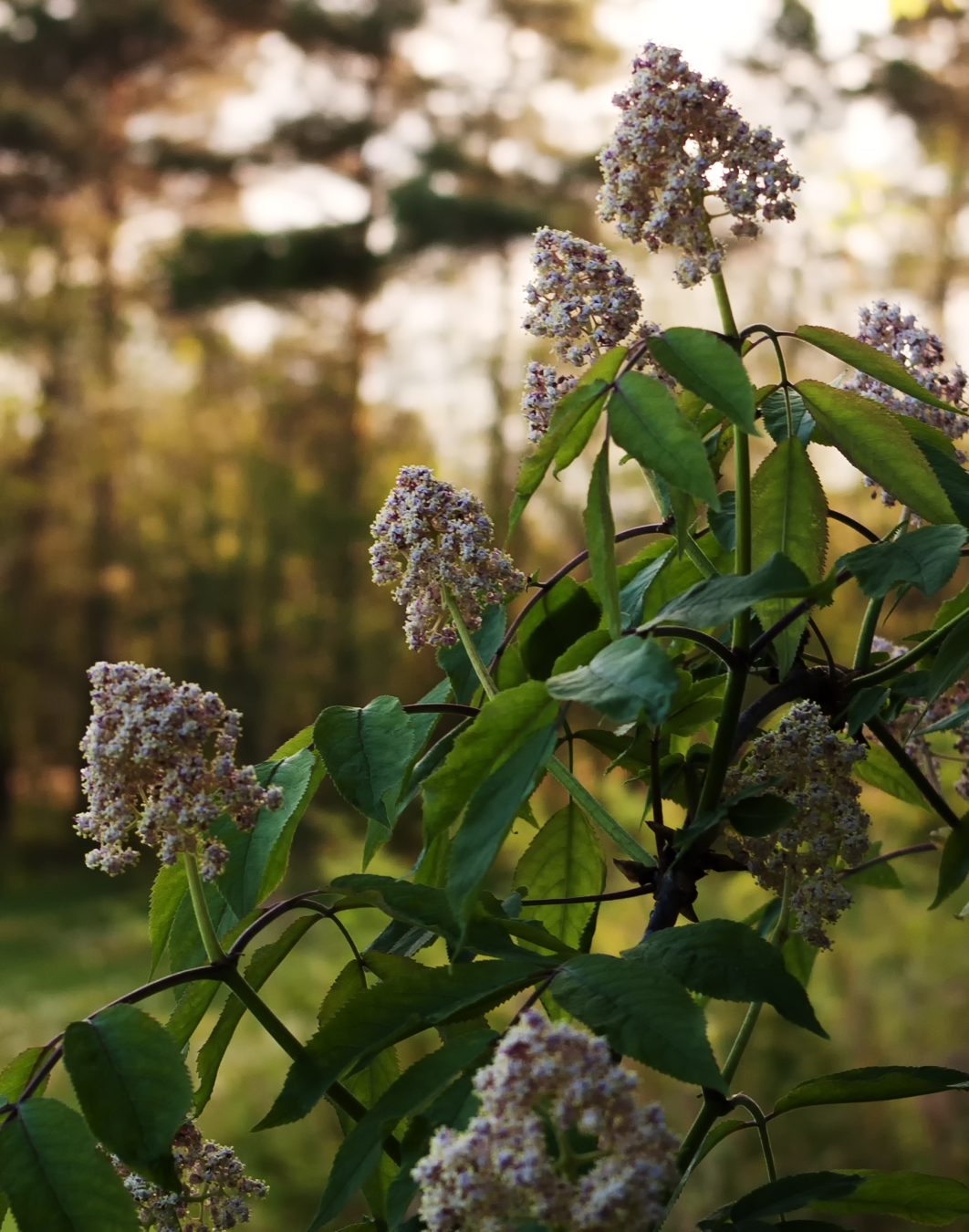
Another white flowering shrub is something that I didn’t plant – it just started growing one year and I haven’t had the heart to pull it yet, despite its close proximity (ie right against) the house. It’s a red elderberry, Sambucus racemosa, native here and, interestingly, I’ve also noticed them growing right against my neighbour’s barn, as if it needs to be rubbing against a building.
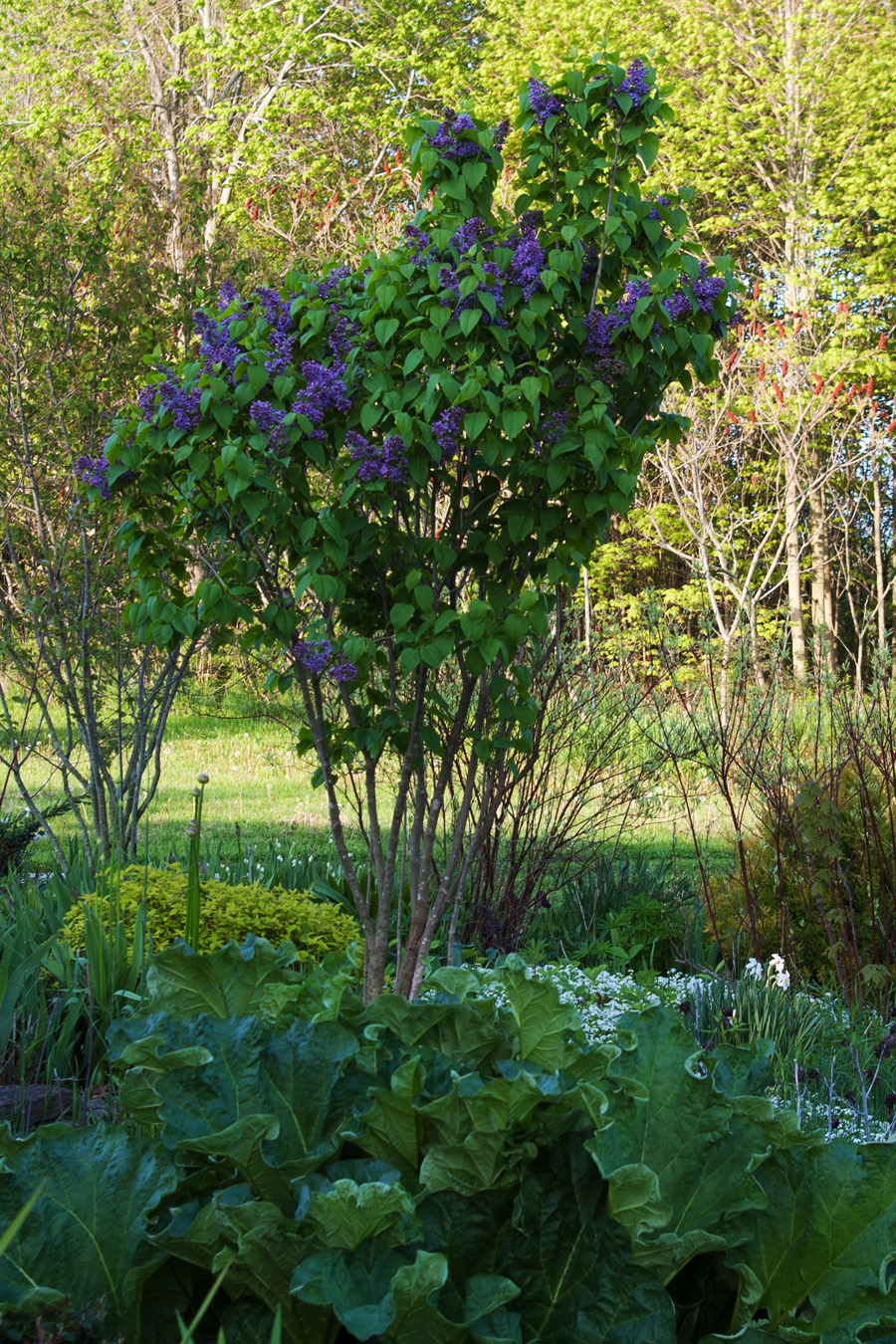
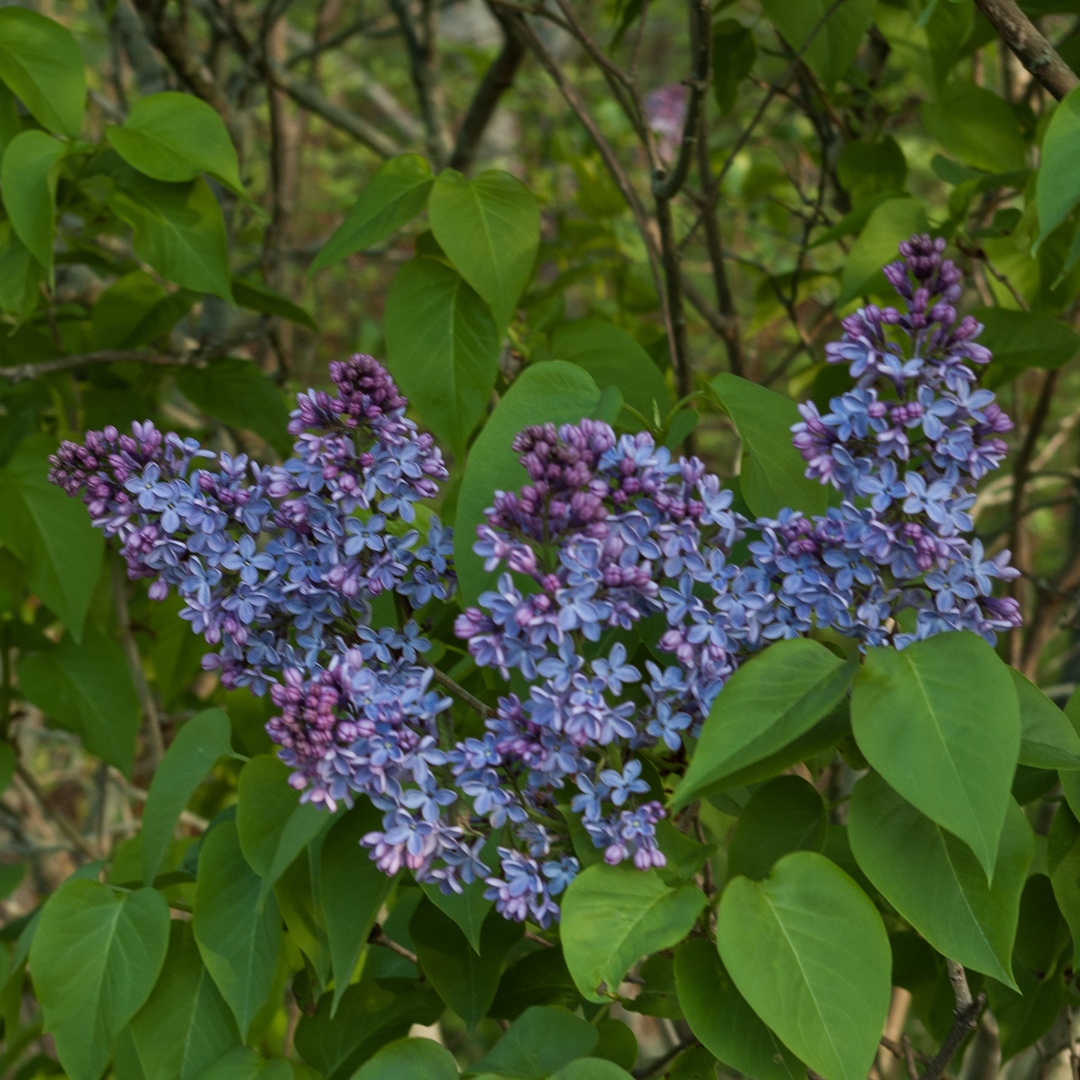
Right on schedule for the long weekend (Monday is Victoria Day in Canada – the unofficial start of summer and the traditional day to rush about getting everything into the garden) are lilacs, coming into their peak over the next few days. I’ve planted them in half a dozen spots around the yard, different shades of mauve and also white, but perhaps my favourite is this one, an accidental tourist so to speak, that arrived as a three inch seedling in a clump of Siberian Iris I transplanted from under a much larger bush by the driveway. It’s grown taller than me now, and I’ve kept it pruned up so that things growing under (it’s at the edge of the asparagus and rhubarb bed…) get some light. Trying to make it more of a small tree than the bushy shrub it wants to be. Yes, the fragrance is heavenly!
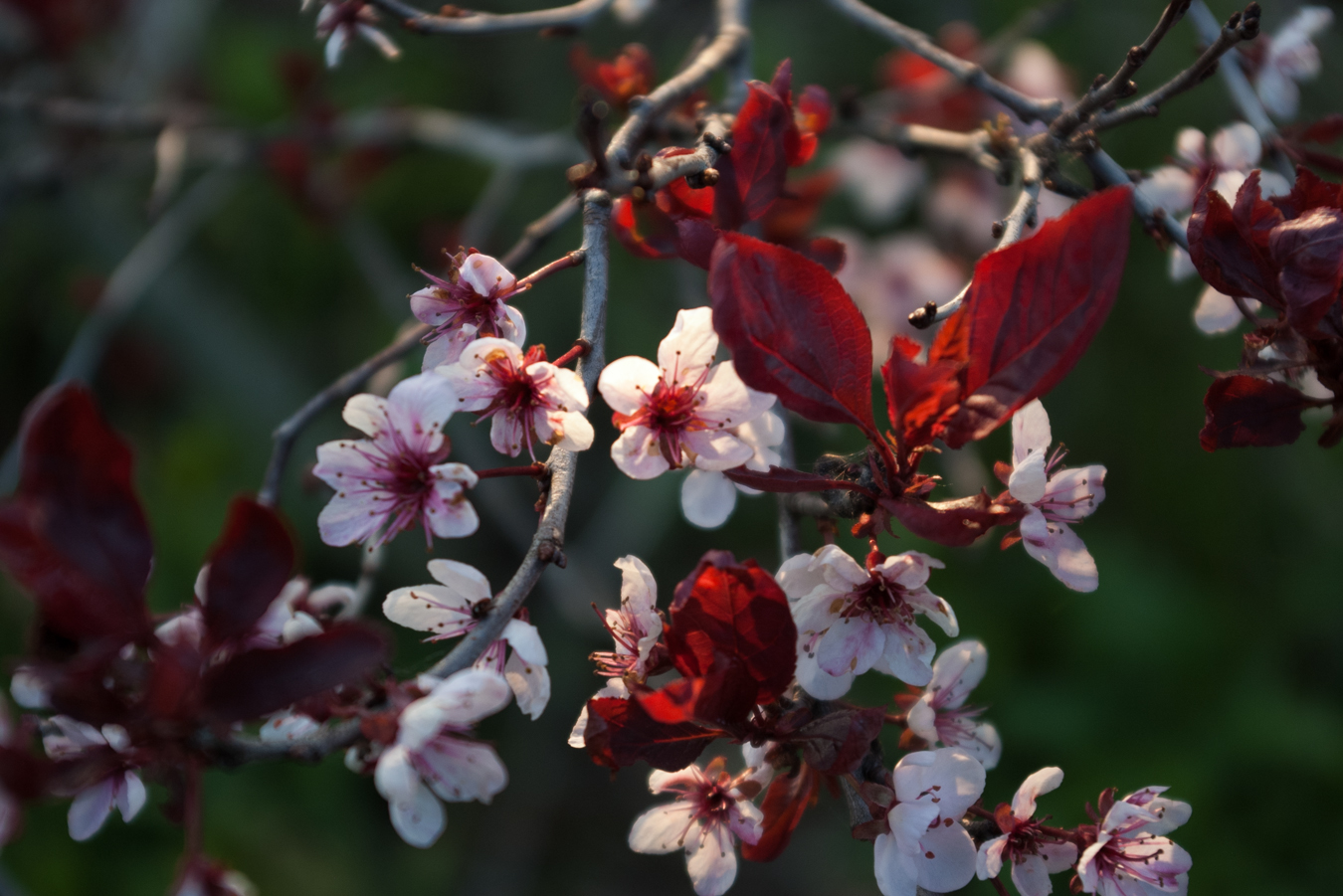
Finally, something that’s pretty in pink, but only for a few days – the pink flowers against the deep red (can someone provide the exact shade?) foliage of purple leaf sand cherry – Prunus x cistena. Have a lovely weekend everyone!
 County Gardening
I enjoyed reading your Saturday story and looking at your photos. Not familiar w/ ‘Ip’ & ‘Qu.’ Iris is a beauty and a very unusual color. Envious of your Elderberry (I buy the tea)…so many uses for the plant. Keep enjoying all your flowering shrubs and have a Happy Victoria Day.
LikeLiked by 1 person
Thanks Alice – I’m thinking this may actually be Ornithogalum umbellatum – Star of Bethlehem…
LikeLike
When I saw the ‘Star’ in your photo, that’s what I was thinking…because I have a very small patch, that just started blooming a few days ago…looked your flowers up, but didn’t see the ‘Star’ name!
LikeLiked by 1 person
Lovely selections! I need to show my little bare root lilac a picture of yours so it gets the idea! It is not growing very fast yet, and the old Beauty of Moscow next to it is very much going to be the next to go. I may cut it to ground this fall and give it one last chance to put out strong new growth, then pull it in spring if nothing is forthcoming. Pop in another purple one, or something native.
LikeLiked by 1 person
Lilacs really do grow like a weed here – they’re lining the sides of roads making for lovely road trips…so much nicer than the other non-native and much more invasive roadside shrub – buckthorn!
LikeLiked by 1 person
Buckthorn is a nasty one – no redeeming value. My father in law and I used to surreptitiously eradicate it in an open space where we used to hike. Could never get it all though, so I am sure it came back with a vengeance after he passed.
LikeLiked by 1 person
The seeds are viable on the ground for several years, which means even if you cut back a large shrub/tree there will be seedlings for years. Not to mention to sprouts that’ll come off the stump…Keeping them under control is a never ending task here…I’ve come to appreciate the selective use of glyphosate!
LikeLiked by 1 person
Just be careful using it – it is a dangerous chemical and one needs to avoid getting it on their skin or breathing it in. When I have used it in the past, I always grab some PPE from work. Secretly wishing I could take a PAPR home (a plastic hood one wears while filtered air is pumped in. Way more comfortable that chemical masks that fit tightly and have cartridges for whatever the hazard is. )
LikeLiked by 1 person
I keep coming across ‘standards’ and ‘falls,’ but I’ve never been absolutely certain of which parts of the iris were meant: thanks for the clarification. I’ve never seen a lilac pruned like yours, but I really like it. I miss lilacs. Their fragrance always has been a favorite, but it’s been decades since I’ve come across them. Even when I’ve been in their native territory, it’s been the wrong season.
LikeLiked by 1 person
One benefit of this new fangled internet thingy is the ability to open a new tab and quickly find a diagram of plants and flower parts. 20 years ago I’d have a heavy book (or 2 or 3) at the side of the desk, as well as a dictionary…
Lilacs do blend into the general roadside shrubbery, don’t they, when not in bloom? Easy to identify when walking but not when driving or cycling by, so if you;re not there for those two weeks in May when in bloom, you;e out of luck!
My kitchen garden lilac really wants to be a big old bush, suckering and spreading just like its forebears…but I aim to keep it under control…looks really fabulous from the dining room window right now. It’ll be interesting to look back 10 years from now and see if it’s still there…
LikeLiked by 1 person
A lovely purple iris.
LikeLiked by 1 person
It is!
LikeLike
What beautiful spring things! The fothergilla is my favorite too and I’m glad I bought one about 20 years ago. It is now almost my height and is growing slowly. Luckily no predators eat it here. Superb bearded Iris.
LikeLiked by 1 person
Two and a bit metres in 20 years – that is a slow grower! I just looked up the one I planted – it’s called Fothergilla major ‘Mount Airey’ – and should get only to about 2 metres.
LikeLiked by 1 person
Mine doesn’t have a described variety, but it was noted on the label 1.50- 2 m max after 10 years, which is more or less the reality.
LikeLiked by 1 person
I have a Fothergilla “Mt Airy” that I transplanted two years ago and it is thriving. Fortunately, the rabbits do not disturb it. I spent several wonderful days in Niagara-On-The-Lake some years ago. I can smell the lilacs that were blooming then.
LikeLiked by 1 person
Mine is also a Mt Airy – I hope its new location, in the kitchen garden, where it’s easy to see both flowers and fall foliage, plus has great soil, will suit. Supposed to only grow (slowly) to about six feet high and wide so if I can just keep the rabbits away it should be good!
LikeLike
May is a hopping time in the garden for sure. Love the lilacs and fothergilla, mine are blooming, too. Happy days!
LikeLiked by 1 person
We actually had had humidex days here this week! Summer is dropping in very quickly!!
LikeLiked by 1 person
Beautiful, Chris.
LikeLiked by 1 person
Thank you!
LikeLike
Ooh, the lilac! I don’t see lilacs here much although ‘Miss Kim’ is supposed to do okay. Your photo of Prunus x cistena is lovely.
LikeLiked by 1 person
Thank you! Walking or even driving with the windows open around the county the third and fourth week of May, every year, is a real treat.
LikeLike
That Lilac is looking good. I wish they grew that well in my garden. The iris is a stunner.
LikeLiked by 1 person
I say the same things about rhododendrons in Ontario vs the pictures I see of them growing in the UK!
LikeLiked by 1 person
your Camassia is such a gorgeous blue and I think your Iris is beautiful, like the little blue beard!
LikeLiked by 1 person
The blue beard is quite captivating!
LikeLike
Oh, what a gorgeous Fothergilla! Your lilacs are looking great – well done finding the seedling and then getting it to grow to become a tree. My lilacs should be in bloom right now. One is showing the start of flowers, one has no flowers (so far) but my big disappointment is my tree Syringa ‘Belle de Nancy’. It produced two blooms and nothing since. I’m not sure what’s going on.
The RHS describe the colour of the leaves of your prunus as “red-purple, deepening in the summer and brighter in autumn”. Whatever colour it is – it’s a beautiful cherry!
LikeLiked by 1 person
I’ll happily go with the RHS description then! That’s too bad about Belle de Nancy – it looks like a beauty (pun intended!)… I have two large french hybrids growing side by side, literally, touching, and they’re frequently not in sync when it comes to blooming. This year, one is covered in flowers, the other only has a few..go figure.
LikeLiked by 1 person
Red elderberry, or a subspecies of it, is native here also, but I had never seen it until I brought some from farther north. Because I had never seen it before, I do not know what to expect from it. The native blue elderberry supposedly grows below eaves because that is where its seed falls from roofs where birds ‘deposit’ it. Besides the native blue elderberry and the (imported) native red elderberry, I really want to grow the American black elderberry from Eastern North America. I already grow two ornamental cultivars of European black elderberry, but only because someone else got one for a landscape, and I later got it a pollinator. They are ‘Black Lace’ and ‘Madonna’. (Googling ‘Black Lace’ and ‘Madonna’ together gets some . . . interesting results.)
LikeLiked by 1 person
LOL! Black Lace, the plant at least, is often sold here as well. So interesting to hear about why they turn up right under the eaves – I had no idea but it kinda makes sense.
LikeLiked by 1 person
Feral Mexican fan palms grow more within easements for utility cables than anywhere else because birds that take the small fruits loiter on the cables as they chew the fibrous fruit from the inedible seeds, which they spit out onto the ground below. The feral palms then grow up and get decapitated as they reach the utility cables above. Some of them could be exemplary specimens if only a few feet beyond the easements. Like the elderberries, they appear where birds disperse their seed. I do not know why elderberries are so common under eaves, but this theory makes sense, and applies to several species that produce fruit that birds like.
LikeLike
The ‘no-name’ plants often do best, don’t they! In any case, a free lilac that hitchhiked into your garden is a real bonus. Love all your spring blossom and flowers!
LikeLiked by 1 person