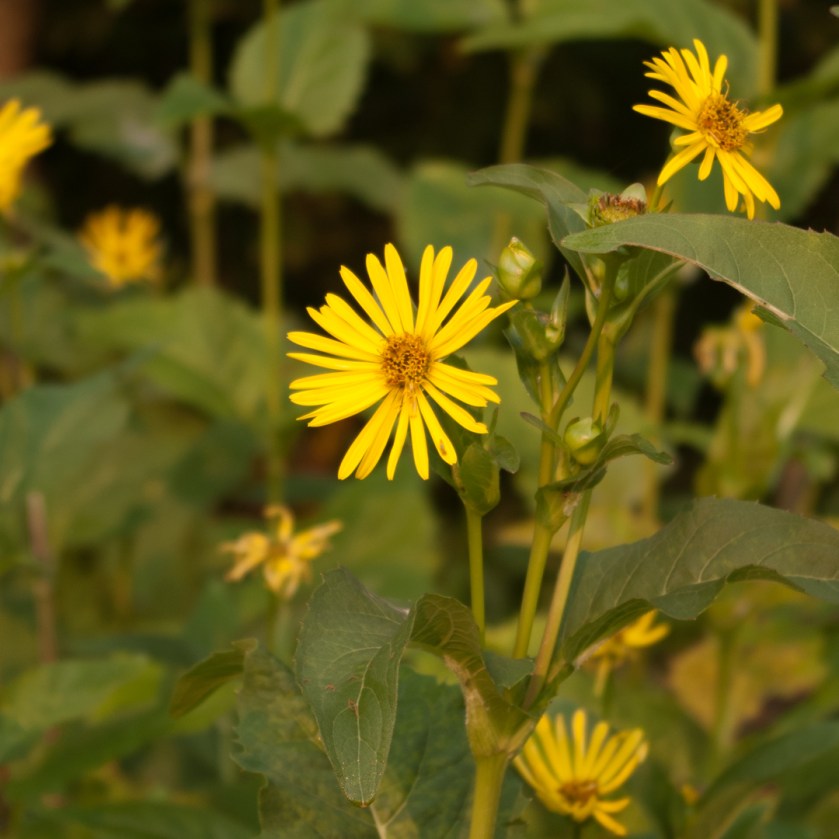
At the beginning of August, before the summer drought sunk its ragged, unclipped talons deep into the soil, flowers on the taller-than-me stalks of Silphium perfoliatum started to open. The cup plant gets its common name from the way pairs of leaves join at the base, enveloping the stalk to create a cup. The daisy-like flowers attract many flying pollinators and the seeds seem to be tasty for certain small birds. It spreads easily by seed and a few stalks will quickly become a very large clump if happily situated.
I’m joining Cathy all week as she hosts seven days of colour to remind us of the beauty from the past spring and summer – all with the goal of making a cold and perhaps grey and snowy December a bit more bearable.

 County Gardening
A lovely burst of sunshine this dreary day 🙂
LikeLiked by 1 person
😊😊
LikeLiked by 1 person
So purposeful of plants, to self-sow, so there’s more of them to enjoy.
LikeLiked by 1 person
This is one of those plants that could take over the world, given the chance and given good growing conditions. Love it!
LikeLike
A lovely yellow daisy type flower. I wondered why they are called cup plants. I do have one in my garden, but failed to notice the leaves. I must pay more attention next year. Thanks for sharing! 😃🌼☀️
LikeLiked by 1 person
It’s a stunner Cathy!
LikeLiked by 1 person
The sunshine comment is spot on, the yellow is so cheery!
LikeLiked by 1 person
😊😊
LikeLike
🤩🌼💛✨😌🌼🙌🏼
LikeLiked by 1 person
😊
LikeLiked by 1 person
Hey, I remember when you wrote about the cup plant.
LikeLiked by 1 person
Yup!
LikeLiked by 1 person
I think I remembered about the height from one of your previous postings. This isn’t one of our native species, but it’s interesting how similar its buds are to our Silphium radula, the rough-stemmed rosinweed. I like the slender rays of this one, as well as the sunny color.
LikeLiked by 1 person
That’s a great photo of S. adulation…yes, very similar flower.
LikeLiked by 1 person