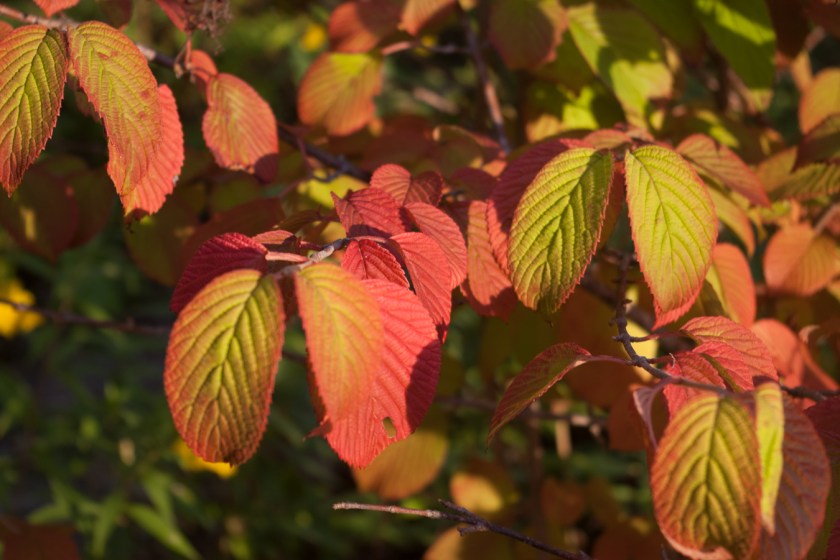
We’ve had some rain; not enough to satisfy thirsty trees and shrubs but enough to wake grass and dandelions from summer dormancy. The damage was done though, and let me say it just once: leaves turned red or brown and fell in August; some flower stalks are half the height they’d normally be; sow thistle is having a very good year.
Nights are cool again, field edges are ablaze with goldenrod, blue jays are screeching about and firewood is getting stacked…yes, it’s September. I’m joining Jim at Garden Ruminations today, showing six things in my September garden.
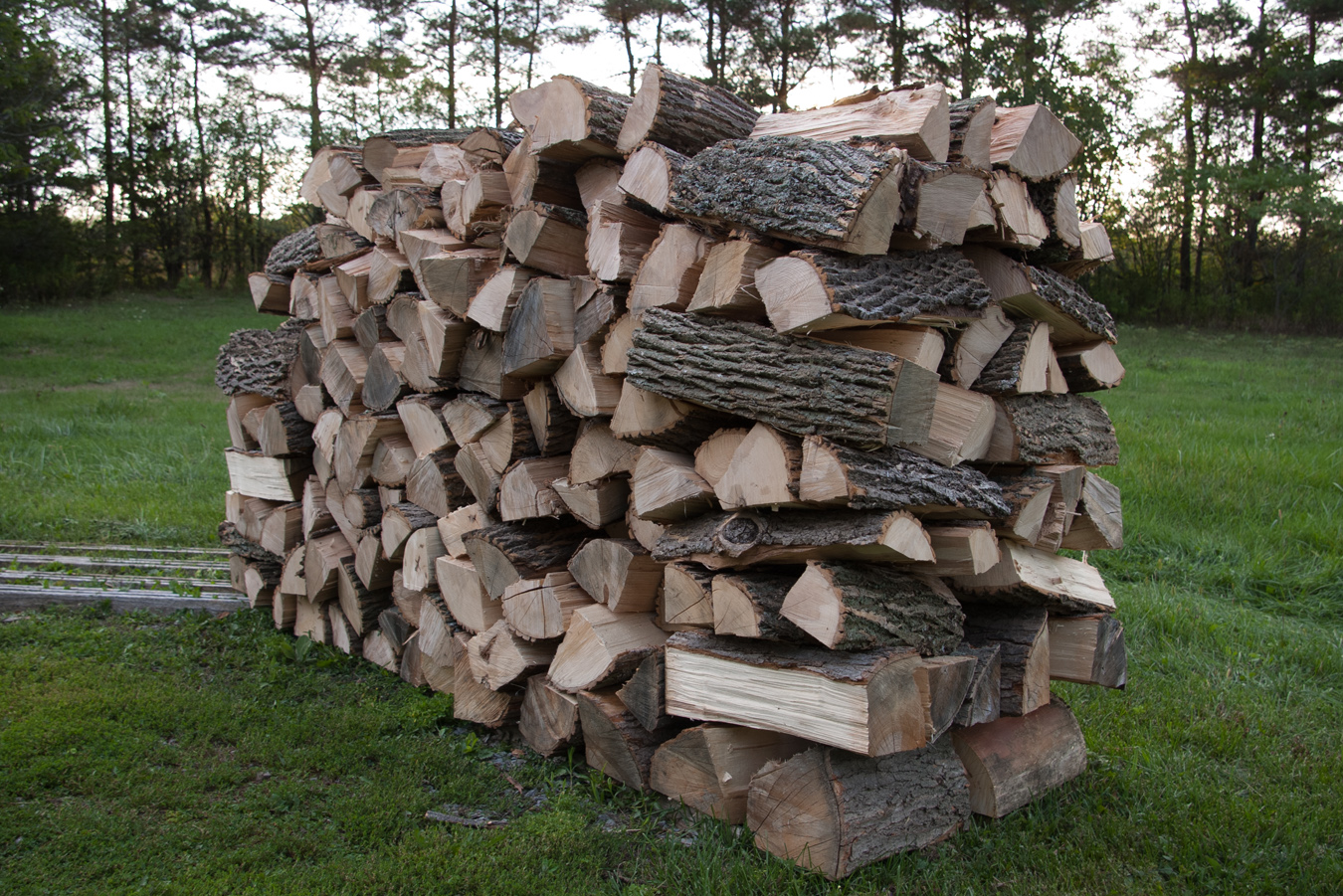
Speaking of firewood – the one and only silver lining resulting from the invasion of the deadly Emerald Ash Borer is that a dead ash tree burns really well in a wood stove or fireplace. Here’s the first third of the wood I’ve been splitting and stacking this week:
The last few flowers of the year have started to make an appearance, including my Japanese anemone. I was quite impressed that the foliage remained intact this year with no supplemental watering (even as the flower stalks are half their usual height…oops…now I’ve said it twice…):

Another late summer blooming perennial is, of course, Hylotelephium (Sedum) spectabile. I have quite a few large clumps around the garden (they divide so easily in early spring); too many, I sometimes think, but then, come the end of August/beginning of September, when I see the hundreds of bees swarming their flowers, I’m happy to have them. Here are three red leaved versions at the edge of my side patio garden:

One of my favourite annual vines is Lablab purpureus– the Hyacinth bean vine. The leaves are gorgeous, front and back, the flowers splendid and the bean pod impressive. The beans themselves are edible with the correct, exact, time-consuming preparation…I’ve never tried. I grow it up the back porch trellis, where earlier in the year snow peas and then cucumbers grew:

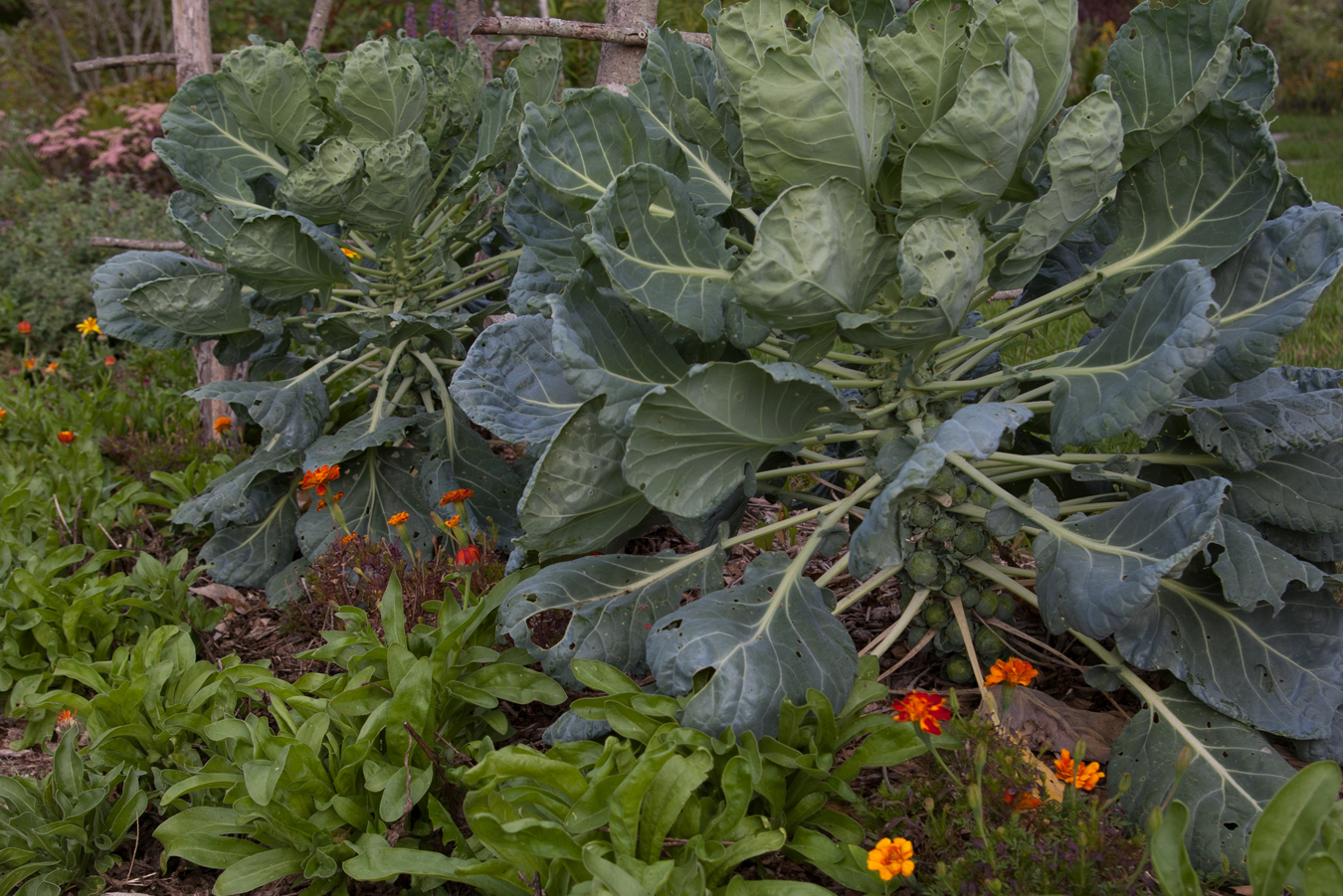
Something that I do eat are Brussels Sprouts. Two plants in my kitchen garden survived the rabbits and drought this year, and are holding their own against the white cabbage moth. I should be able to harvest enough for a meal or two in mid October – just in time for a fine and thankful Thanksgiving feast with friends:
The last of my Six is a Shasta Viburnum – Viburnum plicatum f. tomentosum ‘Shasta.’ Like the anemone, I’m gratified it survived the summer with no supplemental watering. I love this shrub both for it’s white flowers in the spring and for its beautiful yellow/red/orange foliage in the fall late summer. Have a great week everyone!

 County Gardening
Well done on the logs – back breaking work. Hope there is a supply of g&ts.
Sent from my Galaxy
LikeLiked by 1 person
Ha! And yes!!
LikeLike
That’s a lot of work to stay warm in the winter. Did you take down the tree & saw it into logs, too? The Lablab has such gorgeous flowers & different colored leaves…reminds me of Morning Glory leaves.
LikeLiked by 1 person
A neighbour came by with a chainsaw and we cut the logs into 16″ lengths. Then I used a wood splitter. Has powered…a lot of fun!
LikeLike
That’s an impressive lot of wood splitting and stacking. I’m very tempted to try removing one of those logs ‘Jenga’ style to see what happens!
LikeLiked by 1 person
😆😆😆 Yes….removal from the top only!
LikeLiked by 1 person
Why anyone would grow Brussels sprouts is beyond me. I think I’ve tried every way of making them palatable, and still haven’t found a way to appreciate them. That’s all right — more for those of you who appreciate them! I was astonished by your Sedum. When I come across that word I think of a plant that’s low-growing, fleshy, and yellow: Sedum nuttallianum. It’s a central and west Texas native, and quite pretty.
LikeLiked by 1 person
I have a short yellow stonecrop as well…I wonder if it’s the same… what used to be known as Sedum spectabile is SO common here…likely because it’s so hardy. And the stems stay upright through winter snows although the fleshy leaves die and fall of course.
Brussels sprouts…chopped or sliced thinly, sautéed with scallions, a bit of bacon and a whallop of dry vermouth. Delicious!!
LikeLiked by 1 person
Ah, wood burning season, lots of work but so worth it on the frigid days and nights. Nothing like a cosy wood fire. Your pieces look big… or is it the photo? Or maybe you have a wood furnace? We have a ’75 Defiant and love it.
LikeLiked by 1 person
We have a wood stove which is the main heat source from December through March…its box will take 16″ pieces, which is what these mostly are. Just love it!!!
LikeLiked by 1 person
👍🏼
LikeLiked by 1 person
You got some enviable specimens this week! My Japanese anemone does not perform like ‘that’! Actually, I am not so keen on its pale bloom. I got a picture of it this week, and am determined to find a spot that it is happy in! Sedum looks nice in abundance like that. So does autumn foliar color of Viburnum. It will be a while before we get any color, and it is not so impressive here.
LikeLiked by 1 person
Thanks Tony…September is possibly my favourite month…loving the colours as well.
LikeLiked by 1 person
Those Brussel Sprouts look good, mine went in very late due to the drought, so I hope they perform.
LikeLiked by 1 person
Fingers crossed for you Rosie!
LikeLiked by 1 person
Your Brussels sprouts are beautiful! Here, I won’t have any cabbage this winter, because my broccoli, Brussels, and kale are all dead, having been eaten by caterpillars… Good luck with the rest of the logs ! Necessary for a good winter fire
LikeLiked by 1 person
Of all the vegetables I’ve grown, Brussels sprouts may be my favourite just because how they look and grow. Hopefully these will be tasty as well!
LikeLiked by 1 person
There is so much to admire here! I have some of the lighter-leaved stonecrop, and would like to figure out where I might plant hyacinth bean — yours are inspiring me all the more! Your Japanese anemone looks very vigorous, compared to mine; I’ve been trying to figure out if mine are lacking water, food and/or light. But they do always surprise me right about now when they bloom!
The viburnum is also inspiring. I have a “snowball bush” viburnum and sometimes its fall color is splendid. All in all, your whole post is an Autumn Joy.
LikeLiked by 1 person
Thank you so much!!! Definitely recommend the Hyacinth bean vine if you have the room!
LikeLike
That is a very impressive stack of logs, I agree, ash is the best for burning. The colours of the viburnum are amazing, autumn has arrived!
LikeLiked by 1 person
Thanks Pauline! I have several different Viburnum and the fall colour is beautiful on them all!
LikeLike
Yes, the Hyacinth Bean vine is special. It’s beautiful, a great climber, and propagates well from the prior year’s seeds. I’ve never tried it as an edible either. Sorry about the Ash tree loss, but you are making the best of a tough situation.
LikeLiked by 1 person
Lablab is on my permanent List of Things to Grow. If only because the name makes me smile 😃
LikeLike
Thank you for a taste of fall! Your sedum looks marvelous.
LikeLiked by 1 person
My Pleasure! 😊😊😊
LikeLike
Your Sedum look wonderful Chris! Such valuable plants, resisting heat and drought and filling gaps early in the season too. Well done for getting your sprouts so far! I have given up on anything in the cabbage family as they just get decimated, even with netting! Enjoy your late summer sunshine. 😃
LikeLiked by 1 person
Thanks Cathy! The leaves on the sprouts look horrendous – I didn’t even bother to go worm picking every day like I did last year…but the small round sprouts Might be OK 🤞
LikeLike